Proxies in Market Analytics: How to Build a Stable Data Collection System for Competitor and Price Monitoring
 ·September 24, 2026·5 min read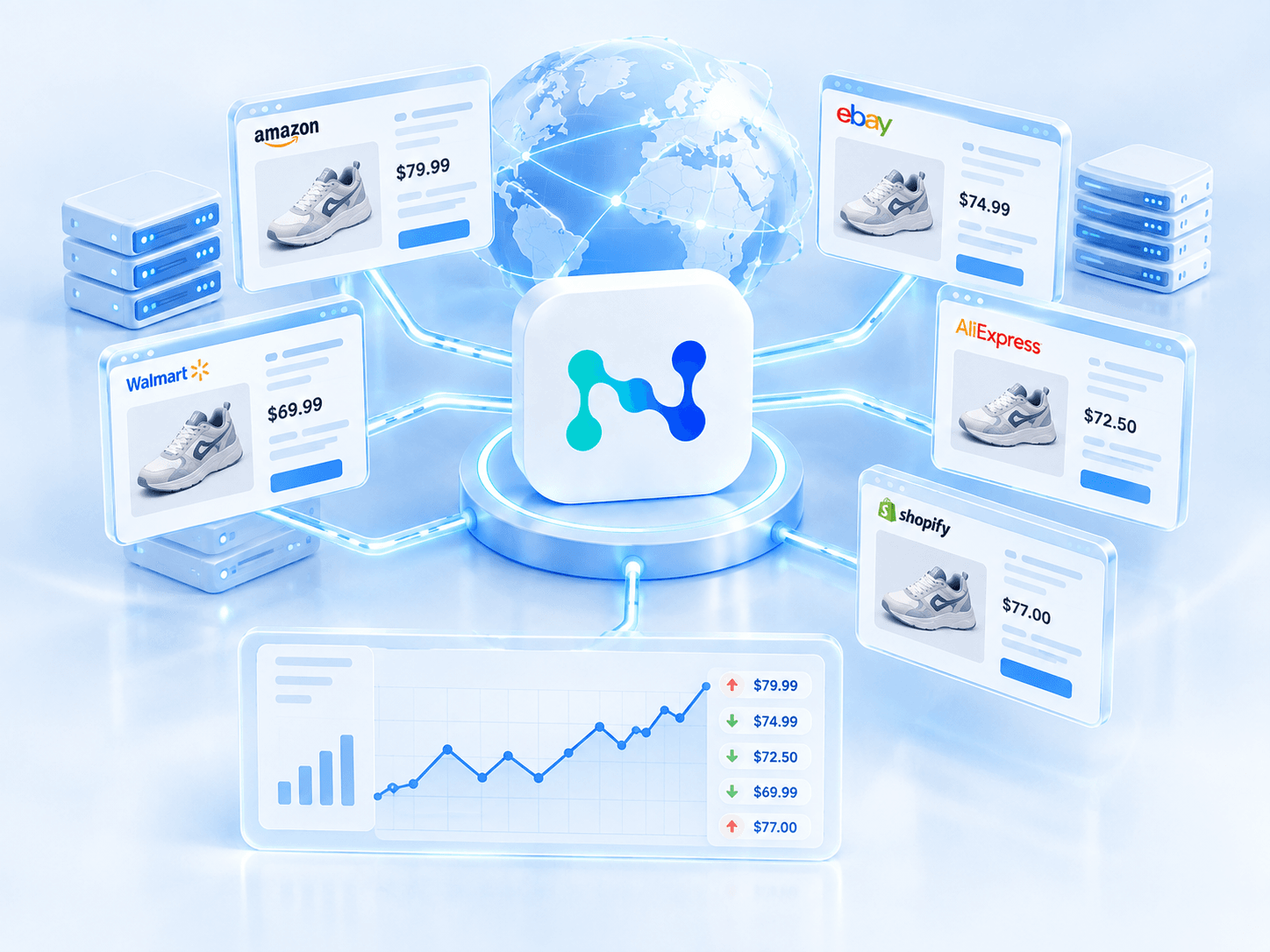
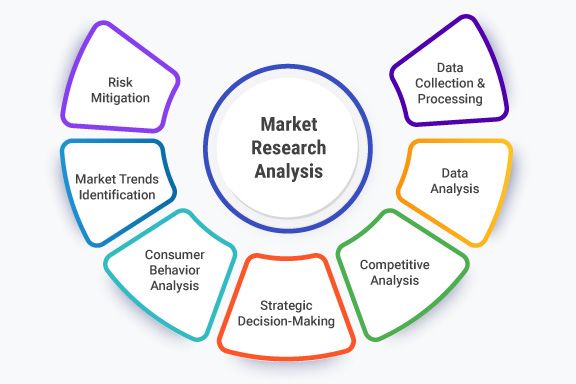
Market research does not begin with reports and charts, but with obtaining source data. As long as a company manually reviews competitors’ websites, compares prices, records product assortments, and checks search results by region, the volume of information can still be controlled. But as soon as monitoring becomes regular and covers dozens of sources, the manual approach stops working. Data quickly becomes outdated, some changes go unnoticed, and the process itself begins to take too much time.
This is exactly the stage at which the question of the technical organization of data collection arises. For large-scale monitoring, it is not enough to simply write a parser or connect browser automation. It is necessary to ensure stable access to sources, distribute the load, take regional differences into account, and minimize the number of failures while crawling pages. This is the task that proxies solve.
The Role of Proxies in Market Research
A proxy server acts as an intermediary node between the data collection system and the target website. Requests to the resource do not go directly, but through an external IP address. In practice, this is needed not for the sake of replacing the address itself, but for process control: when requests are distributed through different exit points, monitoring operates more steadily and does not run into the limitations that arise when multiple requests come from a single IP.
For marketing analytics, this is especially important. Modern websites track request frequency, repeated behavior patterns, the number of requests from one address, and other technical signs of automation. If the system detects unnatural activity, it begins to restrict access: it slows down responses, returns CAPTCHAs, closes part of the pages, or blocks the connection entirely. With regular data collection without proxies, such situations become almost inevitable.
Choose Your IP
Residential and datacenter proxies with flexible location selection.
In Which Tasks Proxies Are Truly Useful
Proxies make sense where what is needed is not a one-time website visit, but systematic work with a large volume of data. First of all, this concerns several areas.
Price Monitoring
For companies in e-commerce, distribution, and retail, it is important to understand not only the current price of a competitor’s product, but also how it changes over time. Comparisons by day, week, and region make it possible to see price fluctuations, seasonal adjustments, local promotions, and the market’s response to changes in demand.
Assortment Tracking
Price by itself is not very informative if assortment is not taken into account. In market analytics, it is important to record the appearance of new products, the disappearance of items, changes in configurations, updates to product cards, and stock availability. When such data is collected automatically and regularly, the company gains a more accurate understanding of competitors’ strategies.
Search Results Analysis
Search engines show different results depending on region, language, search history, and other parameters. If the task is to assess the visibility of brands or pages in different locations, comparison will be inaccurate without the correct geography of the exit point.
Comparison of Local Website Versions
Many platforms adapt pages to a country, city, or even a specific network. This applies not only to currency and language, but also to catalog structure, product availability, price levels, selections, banners, and advertising blocks. Proxies make it possible to see these differences not in theory, but in actual results for the required region.
Information about how websites determine your location data is collected in our article "IP Geolocation: How Location Data Is Determined".
Monitoring Advertising Activity
In different markets, companies may use different texts, visual materials, and landing pages. If analytics includes evaluating promotion, it is useful to see exactly how a brand is presented in a specific geography rather than relying on an averaged picture.
Why Large-Scale Data Collection Quickly Runs Into Limitations Without Proxies
When data is collected at scale, the typical risk is load concentration on a single IP address. For a website, this looks like a stream of repeated actions that differs from the behavior of an ordinary user. Even if the pages are publicly available, the very pattern of access may be recognized as automated.
The problem becomes worse if requests are sent on a strict schedule, at identical intervals, and without natural pauses. In that case, the protection system accumulates signs of unnatural activity more quickly. As a result, some data stops loading, monitoring becomes unstable, and the dataset becomes incomplete.
Proxies do not eliminate all technical risks, but they make it possible to remove the main problem: the process’s dependence on a single address and a single exit point. Because of this, data collection becomes more flexible, and the monitoring scheme itself becomes scalable.
Which Proxies Are Most Commonly Used in Market Analytics
The choice depends on how actively the required websites are protected, how much data needs to be collected, and how important geography is.
Datacenter Proxies
This is a fast and relatively affordable option. Such IPs are convenient where websites do not impose high requirements on traffic type and the task is not connected with complex protection mechanisms. They are suitable for testing, basic monitoring, and auxiliary scenarios.
However, datacenter addresses have an obvious limitation: they are easier to identify as technical infrastructure. On resources with sensitive filtering systems, this leads to more frequent restrictions.
Residential Proxies
Residential IPs usually look more natural to a website because they are associated with ordinary internet providers. That is why they are more often chosen for tasks where stability, geography, and a high percentage of successful requests matter. This format is well suited for regular analysis of competitors, marketplaces, catalogs, and local search results.
You can purchase high-quality residential and datacenter IPv4 proxies on our website node-proxy.com.
Mobile Proxies
This option is used in more complex scenarios, where work through a mobile environment is especially important or where maximally stable access is needed on resources with a cautious filtering system. They are useful for checking mobile pages, analyzing advertising, and certain scenarios related to mobile traffic.
What Matters More: A Static IP or Rotation
For market research, the type of address matters, but the mode in which it is used is no less important.
Static proxies are used where the process needs the same IP throughout a long session. This is convenient for certain scenarios in which a constant exit point is important.
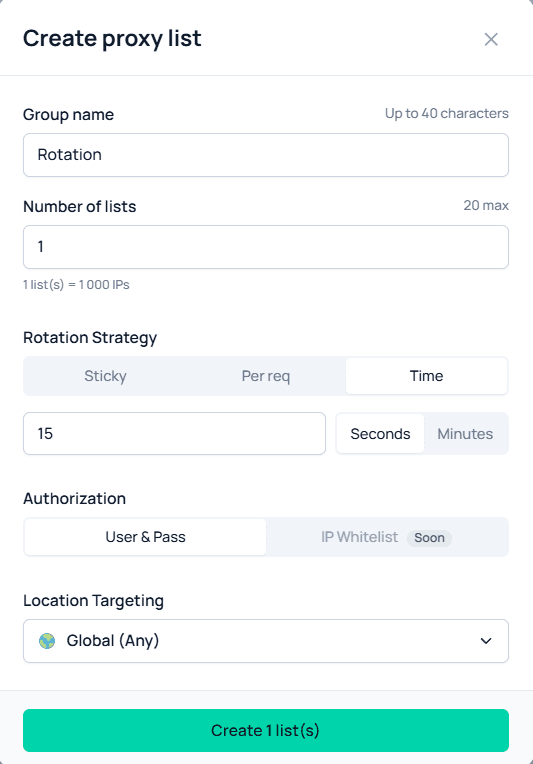
But in most monitoring tasks, rotating proxies work better. In this model, the IP changes automatically: by time, by number of requests, upon a new connection, or according to a specified logic through an API. This provides several advantages at once. First, the load on a single address is reduced. Second, scaling becomes easier. Third, there is no need to manually update lists of working proxies in the parser.
For regular price collection, catalog crawling, product card tracking, and search result analysis, rotation usually proves more practical than a static approach.
Which Option Most Often Turns Out to Be Optimal
If we are talking about serious market analytics, then in most cases the most balanced solution is paid rotating residential proxies. They are suitable for a wide range of tasks, from competitor monitoring to checking regional versions of websites. Such a solution combines manageable rotation, acceptable stability, and an IP type that looks more natural to websites.
Mobile proxies are useful in targeted and more demanding scenarios. Datacenter proxies are suitable in cases where it is possible to save money without losing data collection quality.
There is no universal setup. The same type of proxy can show different results on different sources. Therefore, the final choice should always be based on testing in a specific task, not only on general characteristics.
How to Organize Data Collection So That Proxies Work Effectively
Even a high-quality IP pool will not save a project if the monitoring logic itself is poorly structured. Proxies produce results only as part of a properly configured system.
First, one should not overload a single resource with a dense stream of identical requests. The intervals between requests should be irregular, and the load should be distributed. If there is a large amount of data, it is more reasonable to split the process into parallel sessions and assign each one its own exit point.
Second, the type of proxy should be selected not by popularity, but by the reaction of a specific website. In some cases, an inexpensive datacenter pool works without problems. In another case, it becomes clear from the start that stable results will not be possible without residential addresses.
Third, for websites with dynamic content, not only HTTP collection is often required, but also full browser-based page processing. If data is formed after scripts are executed, an ordinary parser may receive incomplete code. In such a situation, headless browsers or other rendering tools are needed.
Fourth, not only the IP matters, but also the overall technical profile of the request. Request headers, the logic of transitions between pages, crawl depth, and the sequence of actions must look consistent. If proxies are selected correctly, but the rest of the scheme still reveals automation, monitoring stability will remain low anyway.
Which Difficulties Are Encountered Most Often
One of the main problems is content differences by region. If this factor is not taken into account, one may compare non-equivalent pages and receive distorted analytics.
The second problem is unstable pool quality. Even with paid providers, some addresses may perform worse than others, so the supplier should be evaluated not by advertising claims, but in a real usage scenario.
The third is an attempt to collect too much data in too short a period. Excessive speed rarely helps. A scheme in which the flow of requests is calculated with the source’s limitations in mind and does not cause mass failures is much more effective.
Conclusion
Proxies in market research are not a minor auxiliary detail, but a tool that makes systematic data collection technically feasible. They are needed where a company regularly tracks prices, assortment, search results, advertising materials, and local website versions. Without them, large-scale monitoring quickly begins to lose stability, and the data loses completeness.
For most practical tasks, paid rotating residential proxies deliver the best results. They provide more flexible geography, make it possible to distribute the load evenly, and are suitable for long-term monitoring. But the final decision should always be made with the specific sources, the project structure, and the data requirements in mind.