Errors When Parsing Websites: What Most Often Breaks Data Collection and How to Build a Resilient Process
 ·September 13, 2026·6 min read
Parsing is often perceived as a technical task at the level of “write a script and run it on a schedule.” In practice, it is much more complex work. It is not enough simply to retrieve HTML pages and extract the required fields from them. You also need to take into account the resource’s rules, rate limits, content loading specifics, resilience to layout changes, the quality of the resulting data, and how that data will be stored.
Ignoring website rules and legal restrictions
One of the most underestimated mistakes is starting data collection without checking the resource’s terms of use, access policy, and restrictions on automated information processing. On many websites, these conditions are specified in the user agreement, the Terms of Use section, or related documentation.
The issue here is not only the risk of being blocked. If the collection involves user data, reviews, contacts, or other sensitive information, personal data protection regulations come into effect. Even technically successful parsing does not mean that further use of the collected dataset is permissible.
There is only one practical approach in such cases: before launching the project, check the resource’s rules, assess which data is actually needed, and exclude the collection of anything that clearly falls outside the bounds of permitted use. If the website has an official API, it should be considered first. This is not always cheaper, but it is almost always more stable and transparent from an operational standpoint.
Residential IPs for Automated Data Collection
Use web crawlers and scrapers through IPs from different locations.
Attempting to work without proxy infrastructure
Another typical mistake is running a parser from a single IP address or a limited set of addresses. To the website, this looks like anomalous activity: one source quickly and regularly makes a series of similar requests. Monitoring systems can easily identify such a profile.
The absence of proxies leads to several consequences at once. First, the likelihood of being blocked increases. Second, scaling becomes more difficult: as soon as the load grows, the resource begins to respond more slowly, return errors, or restrict access. Third, it becomes difficult to collect data that depends on the display region.
Resilient collection is usually built through a pool of addresses with rotation. What matters is not only the IP change itself, but also the logic of how it is applied: for some scenarios, changing the address between sessions is sufficient; for others, it needs to happen more often. At the same time, using unstable random solutions almost always makes the result worse: the number of timeouts, connection drops, and corrupted responses grows.
It is worth remembering high-quality proxies, which you can purchase on the website node-proxy.com.
Excessively high request frequency
Many parsers break down not because they are written incorrectly, but because they operate too aggressively. When a script accesses a website significantly faster than an ordinary user, this quickly becomes noticeable. The server responds with 429 or 503 status codes, enables restrictions, slows down delivery, or starts returning verification pages.
In addition to the risk of being blocked, there is another problem: excessive speed degrades the stability of the collection itself. Connection errors, incomplete responses, and missed pages begin to accumulate, and the resulting dataset becomes fragmented.
Request frequency needs to be regulated in advance, not after the first failures. This is usually done by adding delays between requests, avoiding strictly identical intervals, monitoring server responses, and being able to automatically reduce intensity if the resource begins signaling overload. If the project runs in multiple threads, it is necessary to control not only each individual thread, but also the total load.
Ignoring dynamic content
A regular HTML request has long ceased to guarantee that a page will contain all the required content. Many websites load data after the page is opened: through background requests, lazy-loaded blocks, pagination, or infinite scrolling. If the parser is designed only for static markup, it may collect incomplete output or fail to find key fields altogether.
This is exactly why situations often arise in which the script has “completed successfully,” but the results contain no prices, product cards, reviews, or part of the list. Formally, there are no errors; in practice, the useful data was never loaded.
Before developing the collection logic, you need to understand exactly how the website delivers information: directly in HTML, through embedded JSON structures, or through separate network requests. In some cases, it is enough to access an internal endpoint directly; in others, browser automation must be used and the page must be allowed to finish rendering completely. Without analyzing the loading mechanics, any further configuration will be unreliable.
Neglecting anti-bot protection
Websites are increasingly using not a single protective measure, but a combination of them: they analyze behavior, monitor repeated actions, evaluate headers, check cookies, may insert hidden elements, or display verification pages after a series of requests. The mistake here is not that such protection exists at all, but that it is not taken into account at the design stage.
If a parser acts too straightforwardly, sooner or later it starts receiving responses other than those it expects. Sometimes this is obvious — pages with access restrictions appear. Sometimes it is less noticeable — the website changes its reaction to requests, returns incomplete data, or forces the script to interact with false interface elements.
That is why resilient collection requires analysis not only of the page structure, but also of the resource’s behavior in response to automated actions. Request headers, cookie support, the sequence of actions, pauses, and repeatability of routes across the website all matter. The more uniform the parser’s behavior appears, the easier it is to distinguish from normal user activity.
Using the same User-Agent and identical behavior patterns
Even when proxies are in place, a parser remains noticeable if all requests look the same. A repeating User-Agent, an identical transition sequence, strictly identical intervals between actions, and the same page traversal route form a simple pattern for detection.
In practice, this means that the infrastructure may be configured correctly, but the website will still begin filtering such requests as automated. This happens especially quickly on projects with advanced traffic monitoring.
To avoid this problem, you need to consider the entire request profile: not only the IP, but also headers, cookies, request rhythm, and behavioral patterns. The more diverse and carefully constructed the request flow is, the lower the likelihood that the parser will stand out against ordinary traffic.
Dependence on fragile markup
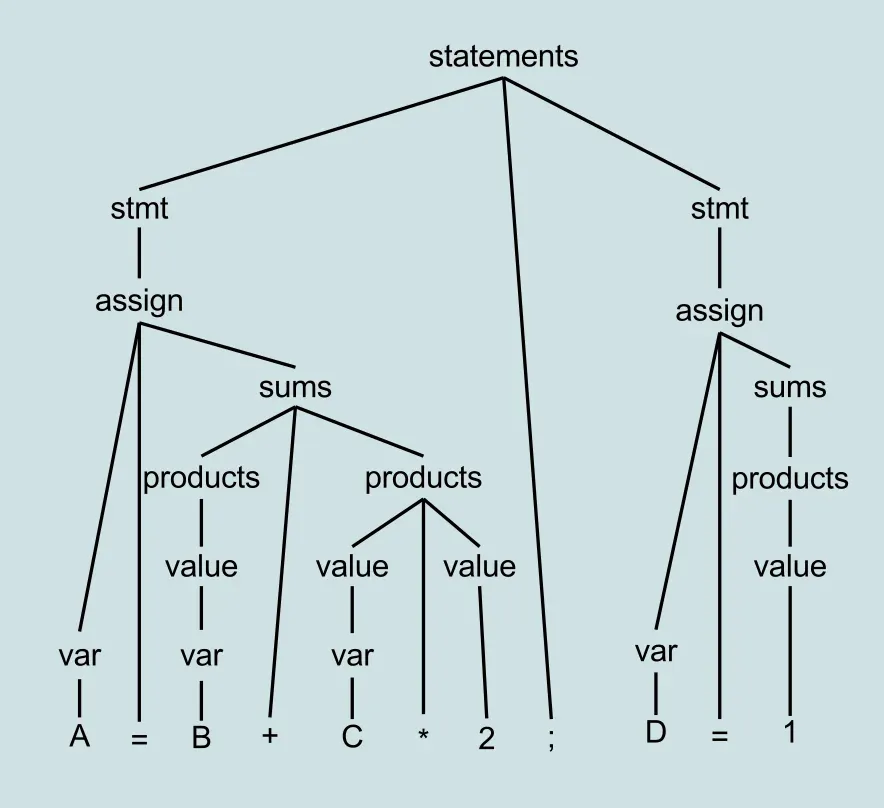
One of the most common technical miscalculations is hard-coding parsing to the current page structure. As long as the markup does not change, everything works. After a redesign, CSS class renaming, or a small rearrangement of blocks, the parser continues to run but starts collecting empty or incorrect values.
This is especially dangerous because the failure does not always look like a script crash. Sometimes the process completes without errors, but individual fields disappear from the export, the record structure becomes inconsistent, or some cards stop being recognized.
A more resilient approach is to rely not on the most unstable indicators. If it is possible to use identifiers, semantic attributes, element labels, or several alternative search scenarios, that is exactly what should be done. It is also useful to regularly check page samples and track markup changes in advance, so that you do not learn about a failure only after defects appear in the data.
Lack of exception handling, logs, and retries
A parser that cannot respond properly to errors sooner or later becomes a source of unreliable data. Connection issues, timeouts, 5xx responses, partial page loads, unexpected redirects — all of this inevitably occurs in real-world operation.
If such situations are not logged and handled, two extremes appear. Either the script crashes on the very first error. Or it continues running silently, skipping pages and returning an incomplete export with no obvious signs of failure.
A reliable process always includes logging, clear error messages, counters for processed pages, and a retry mechanism for temporary failures. This is needed not only for debugging. Without such information, it is impossible to understand how complete the collected dataset is and at what stage losses occurred.
Collecting everything instead of target data
A common mistake is extracting the maximum amount of content available on a page and only then trying to figure out what is actually useful. As a result, along with the required fields, the dataset ends up containing menus, advertising blocks, service elements, duplicate cards, navigation fragments, and other noise.
This approach quickly creates problems at the next stage. Cleaning takes more time, the data becomes heavier, and analysis quality declines. The higher the share of noise in the raw dataset, the greater the likelihood of getting a distorted picture after aggregation.
Lack of normalization and deduplication
Even if the data is collected without technical failures, it often turns out to be incomparable. Identical values may be recorded in different formats: dates in different notations, prices with different separators, company names in full and abbreviated form. Without normalization, such a dataset is difficult to merge, compare, and analyze.
A separate problem is duplicates. They appear because of repeated page crawling, mirrored cards, pagination specifics, or the merging of several sources. If they are not removed, final metrics begin to be overstated, and reports lose accuracy.
That is why, after data extraction, a mandatory stage of conversion to a unified standard is needed. Numbers must become numbers, dates must become dates in a single format, and text fields must be очищаться from unnecessary characters and spaces. For deduplication, it is better to define uniqueness keys in advance: entity ID, URL, SKU, a combination of fields, or another stable identifier.
Poorly thought-out storage strategy
Problems begin not only at the data acquisition stage, but also afterward. If results are stored chaotically — in random CSV files, in process memory, or in one large unstructured array — they quickly become difficult to work with.
The storage format should depend on the tasks. For small one-time exports, simple files are sufficient. For regular accumulation and conditional queries, databases are more convenient. For large volumes, it is better to think in advance about formats suitable for batch processing and subsequent analysis.
What matters is not only where to store the data, but also how to organize versioning, backups, and reloading. When a project moves from test mode to operational mode, the lack of a well-thought-out storage strategy becomes one of the reasons for data loss and chaos in updates.
Lack of an update plan
Many datasets become outdated quickly. Prices, stock levels, product cards, news, catalogs, contact information, and other types of data change constantly. If parsing was run once without a strategy for subsequent updates, its value quickly declines.
The problem is that updating cannot be reduced to a full repeated collection of the entire dataset. This is expensive in terms of time, load, and infrastructure. In addition, repeated full passes significantly increase the risk of errors, blocks, and duplicates.
It is much more effective to determine in advance the frequency of changes by data type and configure an appropriate update mode. In some cases, it is enough to periodically check only new pages; in others, to track card changes based on update indicators; in others, to store version history. Without such a scheme, parsing remains a one-time export rather than a working data source.
Choosing the wrong tool and underestimating task complexity
Some problems are built in before the first line of code is even written. If an unsuitable stack is chosen for a complex project, and the data format, source volume, and support requirements are not assessed, patchwork solutions begin to accumulate. What initially looked like a simple script turns into a set of fragmented solutions that are difficult to scale and maintain.
Parsing from a single source and building a system that reliably collects data from dozens of resources are different tasks. In the second case, it is necessary to take architecture, error management, updates, reconciliation of data from different formats, and infrastructure support into account.
Why the main risk is not blocking, but poor-quality data
Many people believe that the main threat to parsing is a ban or an access error. In reality, there is a more dangerous scenario: the parser continues to operate, but collects distorted or incomplete data, and the team notices this too late.
It is this type of problem that most often causes the main damage. When data enters analytics, reports, or internal processes without sufficient verification, the error is carried further down the chain. Outwardly, the system is working, but decisions are already being made on the basis of an incorrect picture.
Therefore, the task of parsing is not simply to extract as much information as possible, but to ensure manageable data quality at all stages: from access to the source to cleaning, normalization, storage, and updating.
Conclusion
Website parsing has ceased to be a purely technical technique for quickly exporting pages. Today, it is a full-fledged process in which access rules, logic resilience, load control, understanding of the source structure, error handling, and the quality of the resulting dataset all matter.
Most failures are associated with recurring miscalculations: the parser works too quickly, does not account for dynamic content, keeps no logs, collects unnecessary data, and does not convert it to a unified format. Taken individually, each of these mistakes looks solvable. Together, they make the entire project unstable.
Reliable data collection is built differently. First, the boundaries of permissible access and the structure of the source are defined; then a resilient request mechanism is designed; after that, data quality control, storage, and updates are built in. Only within such a scheme does parsing become a working tool rather than a one-time export with an unpredictable result.