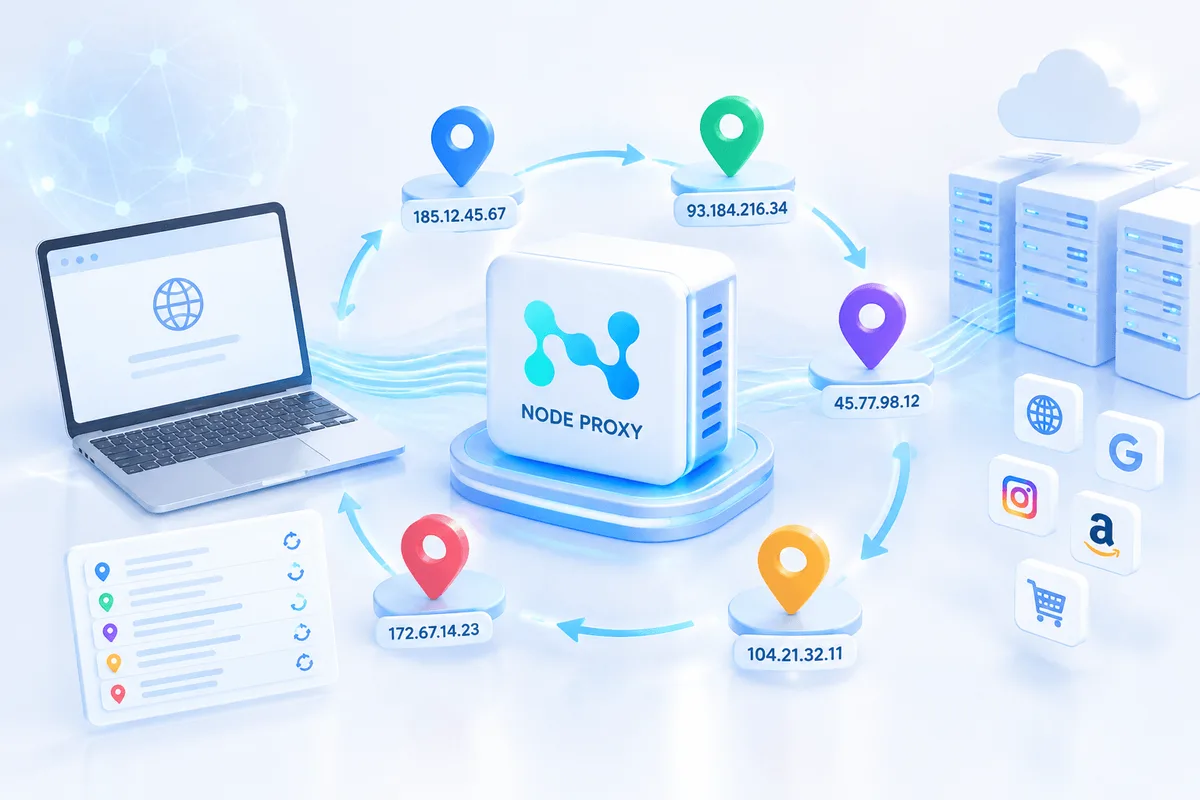
IP Geolocation: How It Works, Accuracy, and Uses


IP geolocation is a technology that links a device’s IP address to its presumed geographic location. It is used in a wide range of digital scenarios: from content localization and interface configuration to risk assessment in online operations and compliance with regional restrictions. At the same time, it is important to understand the key point: IP geolocation does not function as a precise navigation tool, but as a system of probabilistic location detection based on a set of network data and external databases.
What Is IP Geolocation?
An IP address serves as a device’s network identifier on the internet. By itself, it does not contain readable information about a user’s city, street, or exact location. To turn a technical address into a geographic reference, specialized databases are used in which IP address ranges are matched with countries, regions, cities, time zones, providers, and other parameters.
IP geolocation is built on exactly this matching process. A service receives an IP address, checks it against its own database, and returns an estimated location. In some cases, this is supplemented with data about the provider, autonomous system, routing, and network infrastructure.
Configure Your Proxy Your Way
Choose your GEO and the right residential IP rotation mode.
Where Geolocation Data Comes From
The foundation of IP geolocation is not a single source, but a combination of several data streams. At the highest level, IP address allocation takes place through the international system of internet registries. Address blocks are then assigned to telecom operators, hosting providers, corporate networks, and other organizations. At this stage, the basic logic of linking addresses to countries and regions is already formed.
The data is then supplemented from other sources: operators’ service information, Whois records, route data, network telemetry, user data, and the results of the internal analytics of the geolocation services themselves. Some platforms also take into account information about Wi-Fi networks, mobile infrastructure, and previous observations of specific address ranges.
As a result, a database is formed in which the same IP range is linked not simply to abstract geography, but to the probable area of presence of a user or network node.
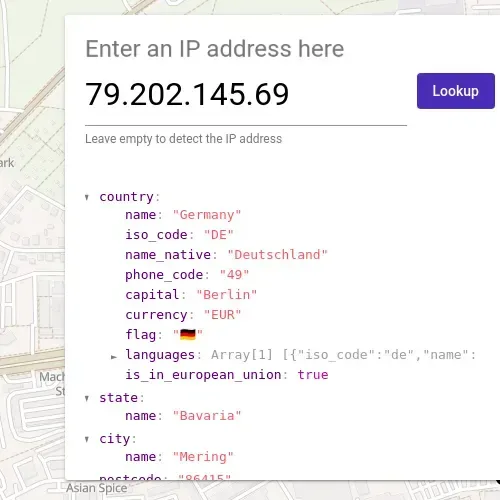
How Location Determination by IP Works
When a user opens a website or application, the system receives their IP address and matches it with a geolocation database. The address is then converted into more understandable parameters: country, region, city, postal code, time zone, and sometimes coordinates and provider information.
This process may be supplemented by an analysis of the network route and related technical indicators. If the platform uses a more sophisticated model, it can refine the results based on accumulated statistics and traffic behavior. But even in that case, this is not about an exact physical point. IP geolocation usually shows an estimated territory rather than the actual location of a device with metric precision.
Why IP Geolocation Is Not Always Accurate
The accuracy of this technology depends not only on the quality of the service, but also on the nature of the network data itself. At the country level, the results are usually quite reliable. At the city level, accuracy already varies noticeably. The smaller the scale, the higher the likelihood of discrepancies between the database and the real situation.
There are several reasons for this.
- First, databases are not updated instantly. If a provider has redistributed an address pool or changed its network architecture, information in geolocation services may be updated with a delay.
- Second, one address range may serve a large territory rather than a specific point.
- Third, some addresses belong not to end users, but to infrastructure nodes, and this also affects accuracy.
Mobile internet plays a separate role. Devices move, switch between base stations, and receive different addresses, and the address in the system does not always coincide with the user’s current position. A similar problem also arises when dynamic addressing is used, where the same address may over time serve different subscribers or different areas.
What Data IP Geolocation Usually Returns
Depending on the service, the result may include a different set of parameters. Most often, these are:
- country;
- region or state;
- city;
- postal code;
- time zone;
- latitude and longitude;
- internet service provider;
- network type or address range type.
However, the presence of these fields does not mean that all of them are equally reliable. In practice, the most dependable data points are usually the country, provider, and broad region. More precise details require cautious interpretation.
How to Check Your IP Geolocation
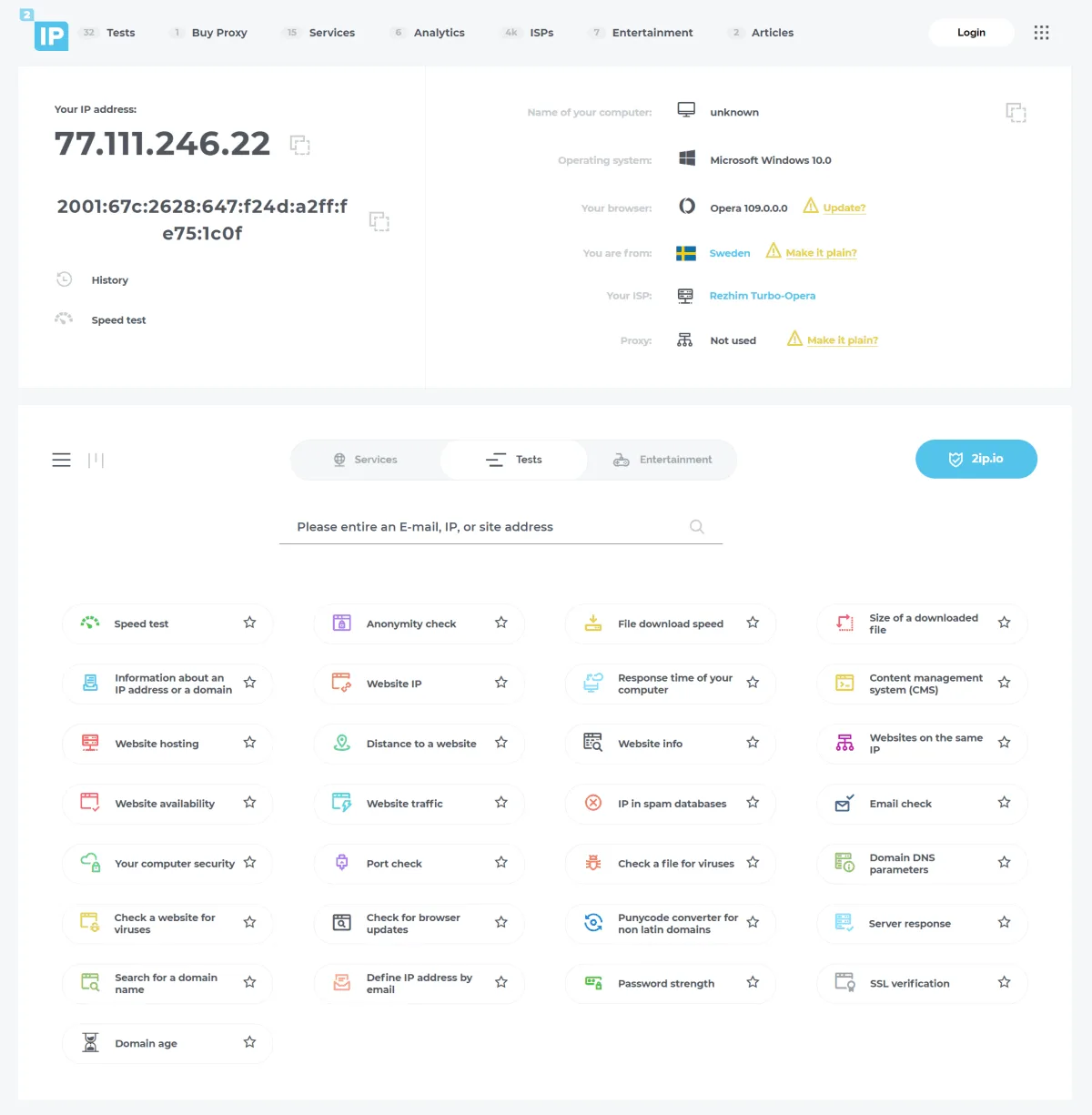
To see how websites locate you, open any IP lookup service: it shows the country, region, city, and provider associated with your current IP address. If you work through a proxy, check the proxy itself: our free proxy checker shows whether a proxy is alive, its exit IP, and its location. A step-by-step guide is in How to Check Proxy Geolocation.
Where IP Geolocation Is Used
The main value of IP geolocation for business is the ability to adapt a digital service to a user’s location without requiring complex actions on the user’s part. This makes it possible to display the interface in the appropriate language, use the local currency, account for taxes and delivery conditions, and correctly display business hours and regional restrictions. We describe the approaches in how to adapt a website to the user’s location.
Its analytical role is no less important. Companies assess audience geography, demand distribution, marketing effectiveness by region, traffic structure, and the behavioral characteristics of users in different countries and cities.
Another area is security. Geographic analysis of network activity helps identify atypical login scenarios, suspicious transactions, and deviations from normal behavior. At the same time, IP geolocation is almost never used in isolation: it works in combination with other risk signals.
In addition, geolocation is important for complying with regional rules governing access to content and services. This is relevant for media platforms, e-commerce, financial products, and any systems where operating conditions depend on jurisdiction.
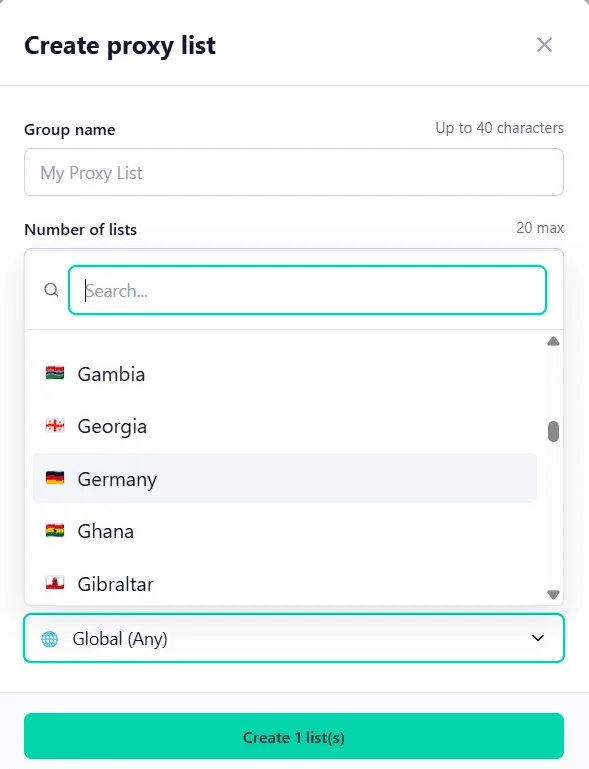
With a proxy, you can change your IP geolocation and use an IP address from a specific country. Node Proxy offers residential proxies with a choice of GEO; the available countries are listed on the proxy locations page.
Geoblocking as a Practical Application of Geolocation
One of the most visible applications of the technology is geoblocking. This is the restriction of access to content, features, or goods depending on the user’s region. The reasons may vary: licensing terms, legal requirements, characteristics of the local assortment, differences in pricing policy, or restrictions on the distribution of certain materials.
From a technical point of view, geoblocking is built on the same principle: the system determines the user’s presumed geography based on the IP address and makes an access decision. The problem is that any errors in the geolocation database automatically turn into access errors. A user may be in a permitted region, but the system may determine otherwise. Therefore, the quality of geolocation data directly affects not only personalization, but also the correctness of business logic.
Why It Is Important to Distinguish Between Types of IP Addresses
For geolocation quality, not only the address itself matters, but also the type of network to which it belongs. Addresses from home connections, corporate networks, mobile operators (mobile proxies), and large data centers (datacenter proxies) behave differently in terms of stability and geographic association.
- Static addresses are usually more stable: they maintain their connection to specific infrastructure for longer periods, which is why static proxies keep the same location.
- Dynamic addresses change more often and therefore require more frequent updating of database records.
- Mobile addresses are harder to interpret because of the constant movement of subscribers and the architectural characteristics of operator networks.
For this reason, geolocation is not simply the search for a point on a map by IP. It is an interpretation of the network environment in which the same level of accuracy cannot be guaranteed equally for all addresses.
What Should Be Taken Into Account When Working with IP Geolocation
If IP geolocation is used in a product, analytics system, or decision-making system, it is important to treat it as a probabilistic source of data rather than an absolute fact. In practice, this means several basic rules.
- First, critical conclusions should not be based on a single geolocation signal alone.
- Second, it is useful to regularly verify the quality of the database being used and compare the results of different providers.
- Third, delays in data updates and the characteristics of specific address types must be taken into account.
- Finally, the more serious the consequences of an automated decision, the greater the need for additional verification.
IP Geolocation FAQ
How accurate is IP geolocation?
At the country level, IP geolocation is usually reliable. City-level results are less precise, and IP geolocation never shows an exact street address.
Can IP geolocation show my exact address?
No. An IP address is linked to a network and an internet provider, not to a building. Geolocation services return an estimated area: a country, region, or city.
How can I change my IP geolocation?
Connect through a proxy or VPN server in the country you need. Websites will then see the location of the proxy IP address instead of yours.
Why does a website show the wrong location for my IP?
The geolocation database may be outdated, your provider may route traffic through another city, or you may be on a mobile network where one address range covers a large area.
Conclusion
IP geolocation is an important infrastructural tool of the modern digital environment. It helps adapt services to a user’s region, improve analytics, comply with territorial restrictions, and enhance the quality of protective mechanisms. But its effectiveness directly depends on the quality of the underlying data, the frequency of updates, and the correct interpretation of the results.