Public Proxy Server: How It Works, Where It Is Used, and What Its Limitations Are
 ·September 30, 2026·5 min read
A public proxy server is an open intermediary server through which internet requests can be routed without purchasing a subscription or dedicated access. Such solutions are primarily attractive because of their accessibility: they are free, quick to configure, and suitable for basic tasks where high stability and guaranteed performance are not required.
At the same time, a public proxy should not be regarded as a universal tool. It has strengths, but it also has noticeable limitations: shared IP addresses, unstable speed, frequent blocking by websites, and unpredictable connection quality. For this reason, choosing it is justified only in cases where ease of connection and the absence of cost matter more than uninterrupted operation under load.
What a Public Proxy Is
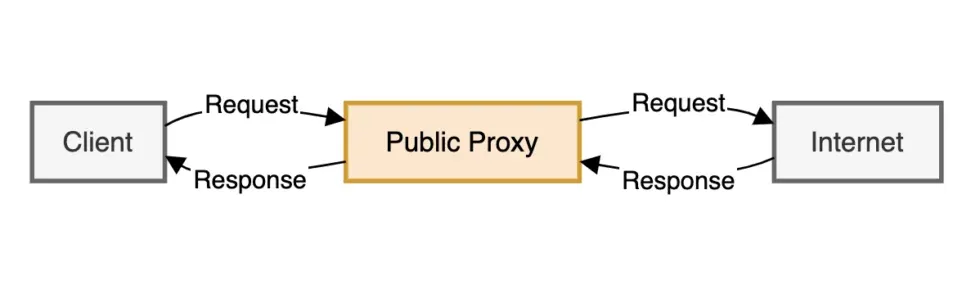
A public proxy is a shared-access server that receives a request from a user, forwards it to the required website, and then returns the response back. From the perspective of the target resource, the request comes not directly from the user’s device, but through an intermediary server.
The main feature of such a solution is that the same proxy is often used by many people at once. This is exactly how such services remain free: the provider distributes the infrastructure among a large number of connections and does not provide a separate channel for each user.
Unlike private and dedicated solutions, public proxies usually do not offer a predictable level of quality. Today, such a server may work quickly, and after some time it may become overloaded, disconnect, or stop opening the required websites.
How a Public Proxy Works
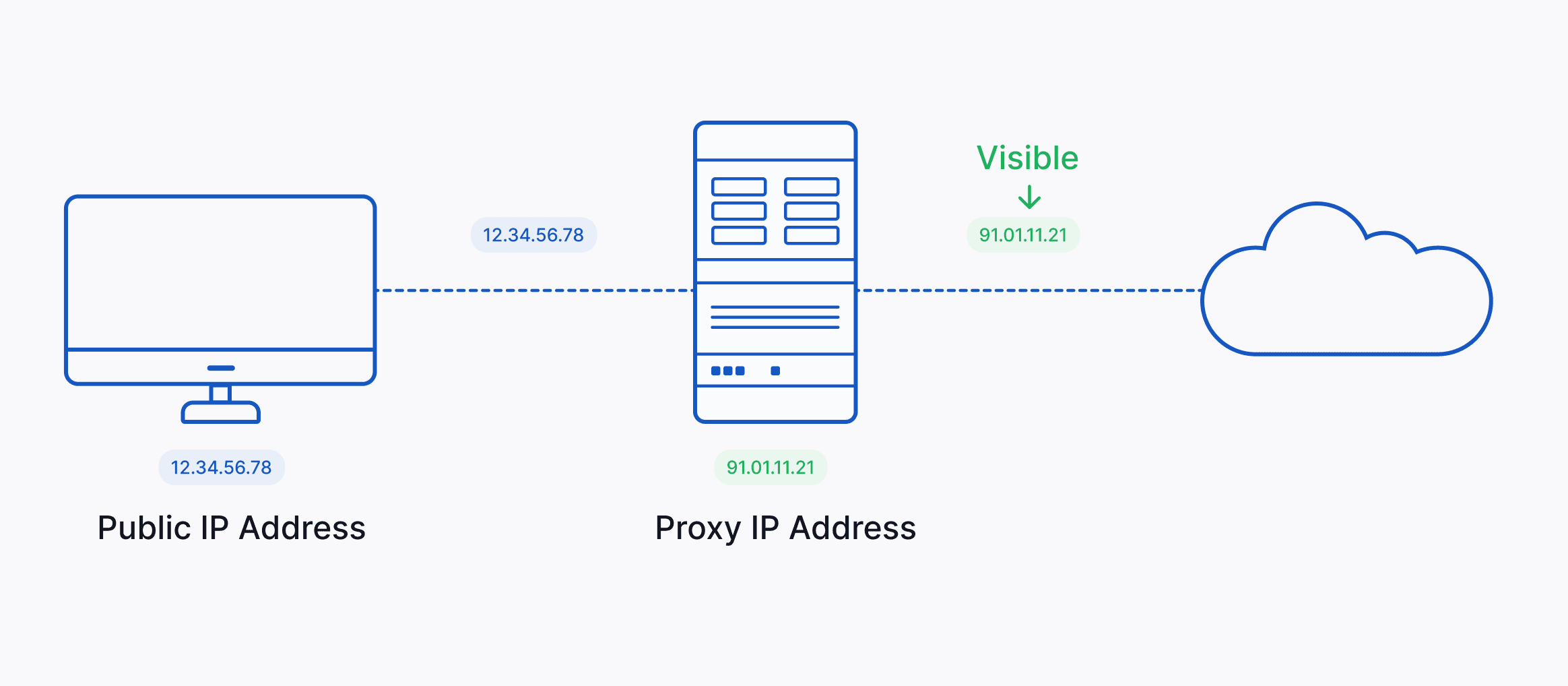
The operating scheme of a public proxy is quite simple. The user specifies the proxy server address and port in the browser or the system. After that, requests first go to the proxy, and only then are redirected to the destination website.
In practice, this means the following:
• the user accesses the website indirectly;
• the target resource sees the address of the proxy server rather than the original device;
• all traffic passes through an intermediary point;
• the quality of the connection depends not only on the destination website, but also on the condition of the proxy itself.
That is why a public proxy can both simplify access to a needed resource and become an additional source of delays.
Datacenter IPv4 or Residential IP?
Node Proxy offers both.
Main Features of Public Proxies
Public proxies have several characteristic features that make them easy to distinguish from other types of proxy servers.
Free access
This is the main advantage of public proxies. The user gets the opportunity to connect without payment, registration, or lengthy preparation.
Shared IP addresses
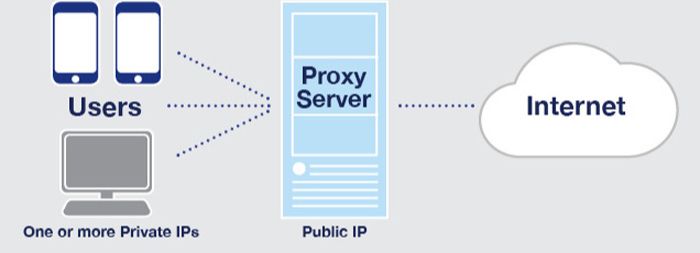
One address is used by several users simultaneously. Because of this, the load on the server increases, and speed and stability become noticeably worse.
Simple setup
In many cases, it is enough to specify the IP address and port in the browser or operating system settings. Most often, no separate account is required.
Limited reliability
Since public proxies are designed for mass use, they often operate unevenly. Some servers quickly stop responding, others provide excessively low speed, and still others are available only for a short time.
Limited set of protocols
The most common are HTTP and HTTPS proxies. SOCKS5 is less common among public solutions, although it is more convenient for a wider range of traffic and certain application tasks.
Types of Public Proxies
Public proxies differ not only in quality, but also in the way they operate.
Transparent proxies
Such servers are usually used within the network infrastructure of organizations or providers. They do not always require separate configuration on the user’s side, but they also do not substitute connection parameters in the same way as other types of proxies do. Most often, they are used for filtering, routing, and traffic control.
HTTP and HTTPS proxies
This is the most common option. They are suitable primarily for working with web pages, browser requests, and ordinary access to websites.
SOCKS5 proxies
These are less typical for the free segment, but they do exist. This format is more flexible in terms of the types of traffic transmitted and can be used not only for a browser, but also for other applications.
We wrote more about the differences between HTTP and SOCKS5 protocols in one of our previous blog articles.
Advantages of Public Proxies
Despite their limitations, public proxies have clear practical use cases.
Accessibility at no cost
This solution does not require a subscription and is suitable in cases where one-time or irregular work through a proxy is needed.
Quick start
Connection usually takes just a few minutes. There is no need to sign a contract, top up a balance, or choose a tariff plan.
Suitable for testing
Public proxies are useful when it is necessary to understand the basic principle of how a proxy server works, check service compatibility, or carry out a one-time experiment without purchasing paid access.
Convenient for simple tasks
If the matter concerns basic website browsing, checking the availability of a resource from another network point, or uncomplicated manual work, a public proxy is often sufficient.
Limitations and Disadvantages
This is precisely the part that determines whether it is worth using a public proxy at all for a specific task.
Unstable speed
Open proxies are often overloaded. The more users work through the same server at the same time, the higher the latency and the lower the response speed.
Frequent connection drops
Free servers may disconnect without warning, change parameters, or become unavailable at any moment.
Low predictability of quality
Even if the proxy works at the beginning of a session, this does not guarantee that it will maintain the same performance an hour later or the next day.
Blocking by websites
Public IP addresses are well known to many websites and services. If an address has already been added to restriction databases, access through it may be difficult or completely blocked.
Limited management capabilities
Public solutions rarely include automatic address rotation, statistics, backup channels, or technical support. The user has to search for working options independently and, if necessary, change them manually.
Where Public Proxies Are Actually Appropriate
The use of a public proxy is justified not in all cases. It is best suited for tasks with low reliability requirements.
Checking website availability
If you need to quickly see whether a resource opens through another network node, a public proxy can be a convenient option.
Testing the display of web resources
Developers and website owners sometimes use such solutions for a basic check of how a resource opens when accessed through different IP addresses or network points.
Simple monitoring tasks
When manually checking pages, catalogs, or product cards, a public proxy can be used as a temporary tool if a high request frequency and stable operation under load are not required.
How a Public Proxy Differs from Other Types
If public proxies are compared with other options, the difference usually comes down to four parameters: cost, speed, stability, and manageability.
Private proxies cost more, but provide more consistent performance and are better suited for continuous operation. Shared paid proxies occupy an intermediate position: they are cheaper than dedicated ones, but usually more stable than public proxies. Residential and mobile solutions belong to a higher segment and are used where high availability and a low probability of blocking are important. Datacenter proxies are more often chosen for speed and scalability.
Against this background, a public proxy is primarily a starting and auxiliary tool. It is convenient because it is free, but it almost always falls short of paid solutions in terms of connection quality and predictability of results.
When It Is Better to Choose Another Option
A public proxy is not suitable for tasks where a stable connection, high speed, постоянный access to the same address, or operation without manual control are critical. If a proxy is needed for regular processes, automation, business tasks, or prolonged load, it is more reasonable to use paid solutions with clear service parameters.
Conclusion
A public proxy server is an accessible way to connect to a website through an intermediary server without payment and without complex setup. Its strengths are simplicity, open access, and convenience for one-time tasks. But these advantages come at the cost of instability: speed may drop, the connection may be interrupted, and the addresses themselves may quickly fall under restrictions.
Therefore, public proxies are better regarded not as a universal solution, but as a tool for basic scenarios: checks, tests, familiarization with the technology, and simple work in a browser. In all cases where reliability and a predictable result matter, they are noticeably inferior to more manageable types of proxies.