IP Rotation: How It Works and Where It Is Used

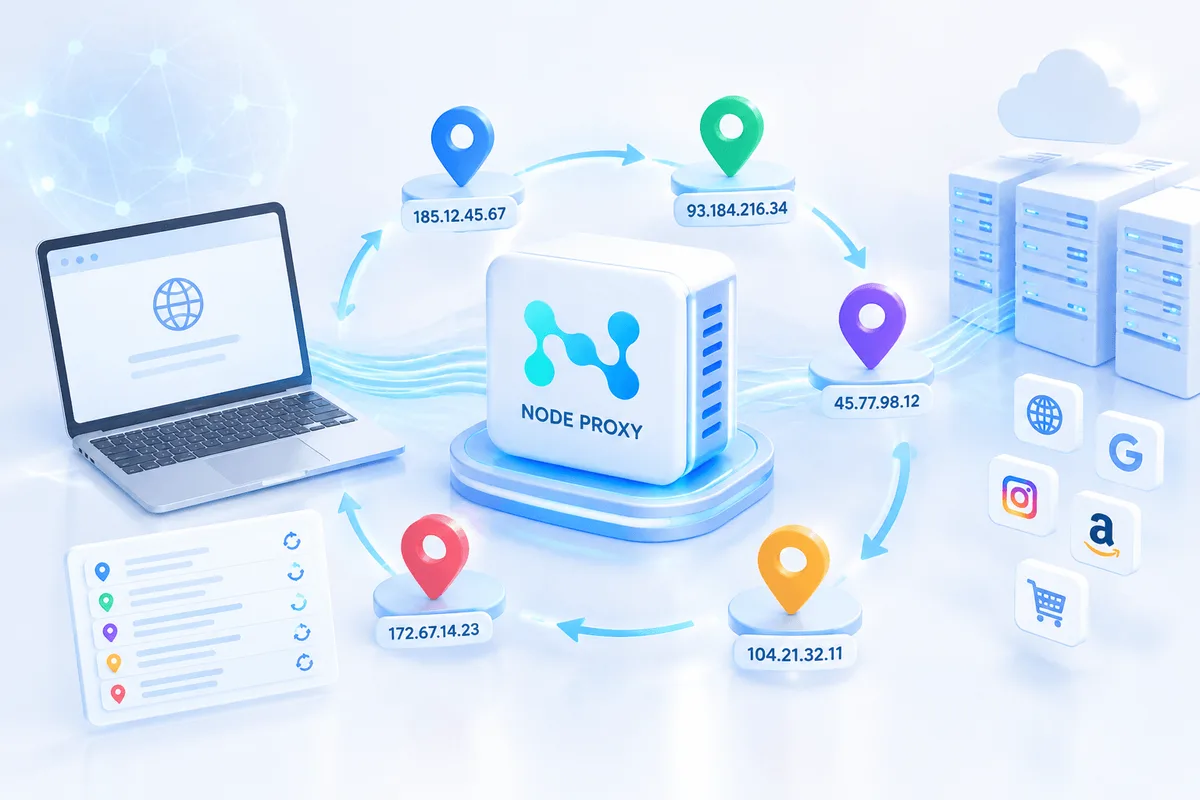
IP rotation is a mechanism in which different addresses from an available pool are used sequentially for connections or individual requests. In practice, this makes it possible not to tie all network traffic to the same IP and to distribute requests flexibly depending on the task, settings, and operating scenario.
This approach is used where connection stability, operational scalability, and control over network load are important. This primarily refers to data collection, SEO monitoring, digital service testing, analysis of regional search results, work with geo-dependent content, and support for distributed IT infrastructure.
What IP Rotation Means
Every device uses an IP address when connecting to the network. In some cases, this address remains constant over a long period; in others, it may change according to the rules of the provider or service. IP rotation is based precisely on the managed replacement of addresses: the system assigns a new IP at a specified interval, after a certain number of requests, or in response to an event.
If the same address is used too intensively, external resources begin to perceive such activity as atypical. As a result, restrictions may be triggered: reduced speed, additional checks, or temporary access denials. Rotation makes it possible to distribute the load across several addresses and thereby reduce the likelihood of failures when performing large-scale or repetitive operations.
Try Node Proxy
Rotation of proxies to suit your needs
How Rotating Proxies Differ from Regular Proxies
A regular proxy uses one fixed IP until the user changes it manually or ends the session. A rotating proxy works differently: the address changes automatically—by time, by number of requests, or by command through an interface or API.
The main difference here lies not only in the IP change itself, but also in the operating model. A rotating proxy is initially designed for repetitive network actions where it is important not to overload a single address. This makes it a convenient tool for tasks involving regular access to websites, services, and distributed data sources.
How Rotation Works in Practice
The rotation mechanism is usually built on one of several principles.
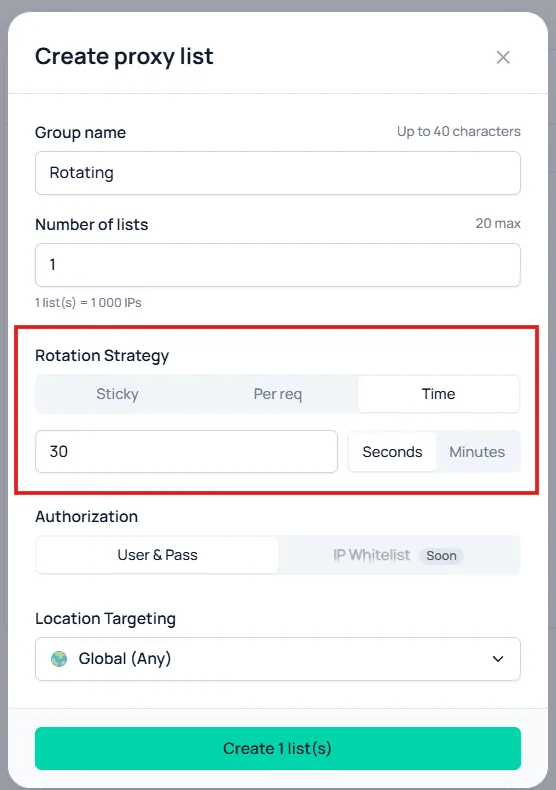
By time
The IP address changes at predefined intervals, for example every few minutes or hours. This option is suitable for regular processes with a predictable load.
By number of requests
The change occurs after a certain number of requests. This method is convenient where it is important to meter the load and avoid bringing activity from one address to the threshold of restrictions.
By event
A new IP is assigned when a condition is triggered: an access error, an increase in the number of checks from the website, a connection drop, or another trigger. This format is often used in automated scenarios.
At the user’s request
The address is changed manually—through the control panel, browser settings, a proxy manager, or code. This method provides full control, but requires more attention and is not suitable for all workflows.
In Node Proxy, proxy rotation can be configured based on time and on per request.
Main Methods of Organizing Rotation
Rotation can be implemented at different levels—from manual configuration to built-in provider tools.
Manual address switching
The simplest option is to switch IPs manually. This can be done through system settings, the browser, a proxy manager, or the service provider’s control panel. The method is suitable for targeted tasks, but scales poorly.
Configuration through code
To automate rotation, scripts and libraries can be used. This approach is often applied in Python and other languages when addresses need to be changed according to the application logic: on a schedule, upon errors, or depending on the request type.
Built-in rotators
Many providers offer ready-made rotation on their side. In this case, the user gets access to a pool of addresses and specifies only the rules: rotation frequency, session type, geography, and other parameters. This removes a significant part of the technical burden and simplifies implementation.
Where IP Rotation Is Actually Useful
IP rotation is not used for its own sake, but as a tool for the stable operation of network tasks.
Data collection and updating
When monitoring a large number of pages, product cards, catalogs, listings, and other sources, requests are distributed across addresses. This helps maintain a stable processing pace and reduces the risk of the process stopping because of restrictions on the resource side.
SEO and search result analysis
Search marketing specialists use rotation to check website rankings, analyze results in different regions, and track changes for key queries. In such tasks, it is important to see the local picture and not route all requests through a single IP.
You can learn more about using SEO proxies for search analytics in our previous article.
Market research
Companies collect data on prices, product assortments, stock availability, advertising activity, and competitors’ local offers. Rotation is useful where large volumes of information from different sources and regions need to be processed.
Digital product testing
Developers and QA teams use different IPs to test how services work in various geographic locations, connection scenarios, and access conditions. This is especially relevant for platforms with region-based content display logic.
IT infrastructure support
In distributed systems, rotation helps manage outgoing traffic, divide network load, and build more flexible connection schemes for automated processes.
Types of Rotating Proxies
The choice of proxy type depends on the requirements for speed, stability, and the nature of the traffic.
Residential
Such addresses are associated with ordinary user networks of internet providers. They are often used in tasks where the natural appearance of traffic and work with regional scenarios are important.
Datacenter
These addresses are provided by server infrastructure. They are usually faster and more affordable, which makes them suitable for high-volume operations where performance and scale are important.
Mobile
Mobile proxies use IP addresses of cellular operators. They are in demand in certain professional scenarios where mobile network addresses are needed, IP changes by session or schedule are required, and service performance in a mobile environment must be tested.
What to Consider When Choosing a Solution
The effectiveness of rotation depends not only on the fact that the IP changes, but also on the quality of the infrastructure. When choosing a service, several parameters are usually assessed:
• the type of addresses and their origin; • available countries, cities, and operators; • connection speed and channel stability; • rotation rules: by time, by requests, by event; • traffic volume and session limitations; • availability of an API, control panel, and integration tools; • the ability to check and replace non-working addresses.
For tasks involving regular processing of a large number of requests, it is especially important that rotation be manageable rather than random and uncontrolled. Otherwise, instead of stability, you may get unstable sessions and unpredictable results.
How to Check Whether Proxies Are Working
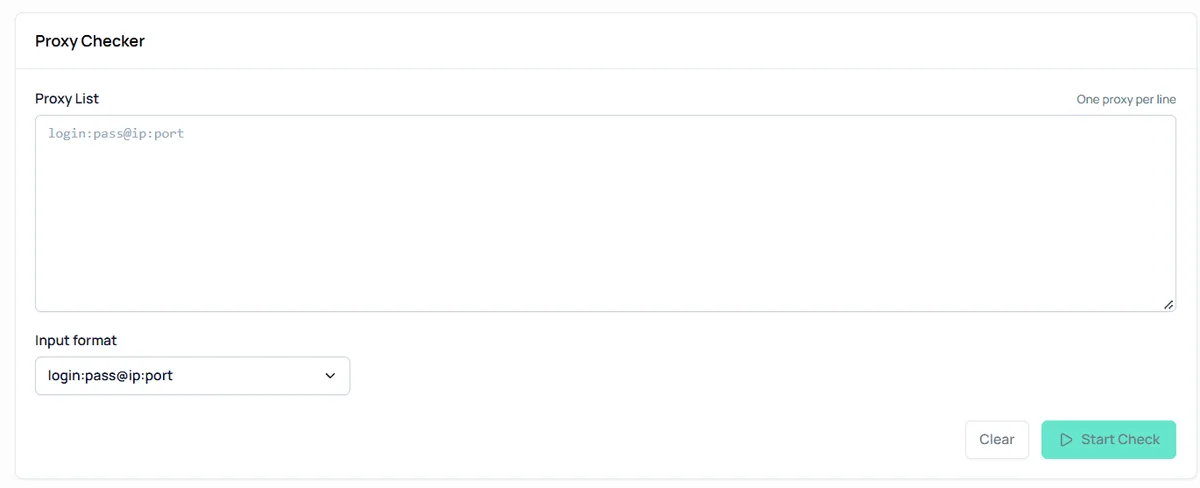
Before launching production scenarios, proxies are usually tested. For this, special checker tools are used to determine:
• address availability; • response speed; • supported protocols; • IP geolocation; • connection stability in a series of requests.
Such checks are needed not only at the time of purchase, but also during operation. Even a high-quality pool of addresses requires regular monitoring if it is used in high-load tasks.
IP Rotation and Static IP: Which to Choose
Rotation is not a universal replacement for a static address. These are two different tools for different scenarios.
A static IP is convenient where a persistent session, predictable connection, and a fixed access point are important. Rotation, by contrast, is useful in processes involving multiple requests, load distribution, and work across several regions or sources.
Therefore, the choice depends not on which option is “better,” but on which task needs to be solved. If a stable постоянное connection is required, it is more reasonable to use a static address. If the issue concerns scalable network operations, monitoring, data collection, or regional analysis, rotation often turns out to be the more practical option.
Conclusion
IP rotation is a practical mechanism for cases where one address is not enough for the stable execution of network tasks. It makes it possible to distribute requests, reduce the load on individual IPs, maintain process continuity, and configure access to resources from different regions more precisely.
Rotation is most beneficial in data collection, SEO analytics, service testing, competitive environment monitoring, and the operation of distributed IT systems. At the same time, the result depends not only on the type of proxy, but also on the quality of the address pool, the logic of IP replacement, and the overall infrastructure setup.