Transparent Proxies: How They Work, Use Cases, Advantages, and Limitations
 ·September 17, 2026·6 min read
A transparent proxy is a network node that intercepts and processes traffic between a user’s device and a target resource without requiring manual configuration on the client side. The user does not change browser or operating system settings: the entire logic is implemented at the network level and managed by administrators. That is why such proxies are called transparent—they operate within the infrastructure without being noticeable to the end device.
This technology is widely used wherever centralized traffic control is required: in corporate networks, educational institutions, public access points, by telecom operators, and in service infrastructures. A transparent proxy makes it possible to filter requests, speed up access to frequently used resources, collect technical logs, and enforce uniform security policies without deploying settings on every client device.
What a Transparent Proxy Is
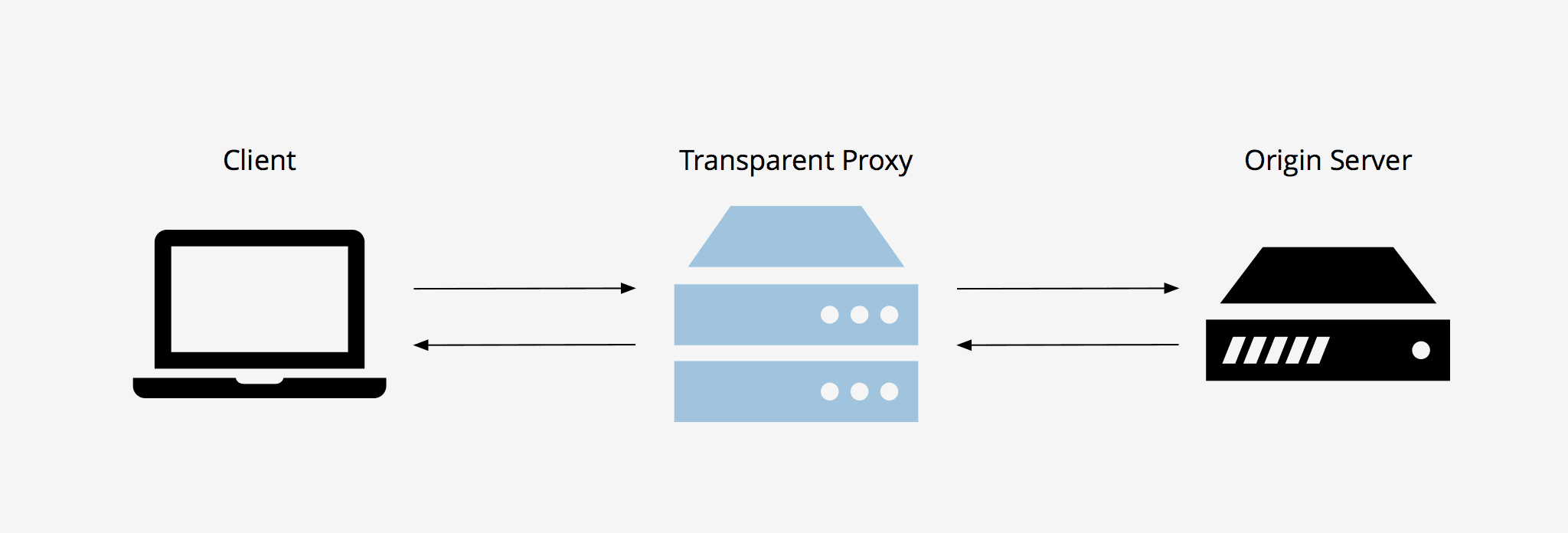
In essence, a transparent proxy occupies an intermediate position between the user and the internet resource. When a device sends a request, it first reaches the proxy server, where it can be checked, matched against routing rules, filtered, logged, or processed by other mechanisms. After that, the request is either forwarded further or rejected.
The key feature here is that the intervention takes place without explicit configuration on the user’s side. Unlike conventional proxy setups, where the server address and port are specified manually or through auto-configuration scripts, a transparent proxy is built into the network architecture and receives the traffic passing through it on its own.
In many cases, such a proxy does not alter the client device’s network parameters and does not change the usual operating pattern of applications. For the user, the connection appears normal, although in practice the traffic is already passing through an additional processing layer.
Choose Your IP
Residential and datacenter proxies with flexible location selection.
How a Transparent Proxy Works
Its operating mechanism is based on network-level traffic interception. The administrator configures the infrastructure so that requests are automatically redirected to the proxy server. After that, the proxy begins performing the set of functions defined by the organization’s policies.
The process looks like this:
1. The user accesses a website or online service.
2. Network equipment or routing rules redirect the request to the transparent proxy.
3. The proxy analyzes the request in accordance with the configured rules.
4. If the request is allowed, it is forwarded to the target server.
5. The response may be delivered to the user directly or through the cache if the required data has already been stored locally.
As a result, a single node can become the control point for all outgoing web traffic. In practice, this simplifies network administration because policies are applied centrally rather than separately on each device.
How a Transparent Proxy Differs from a Non-Transparent Proxy
The main difference is related to the method of deployment and the degree of client involvement.
A transparent proxy:
• operates without manual configuration on the user’s side;
• is implemented at the network level;
• usually does not conceal the original parameters of the client connection;
• is used as a tool for centralized traffic control and processing.
A non-transparent proxy:
• requires configuration by the user or through corporate configurations;
• explicitly participates in request routing;
• is more often used as a managed intermediate node with predefined connection parameters.
In other words, a transparent proxy is an infrastructure-level solution, while a non-transparent proxy is more often a client-side or hybrid model in which the very fact of proxy use is accounted for on the device or application side.
Where Transparent Proxies Are Used
Content Filtering and Access Control
This is one of the most common scenarios. An organization can restrict access to certain categories of websites, services, or domains in accordance with internal rules. For example, a school may block entertainment platforms during study hours, while a company may restrict resources unrelated to work tasks or associated with elevated risk.
This approach makes it possible not only to limit undesirable content but also to reduce the likelihood of users accessing malicious pages if those pages fall under the filtering rules.
Authentication Gateway
A transparent proxy is often used as an intermediate access verification point. The user attempts to open a website but first receives a login page or a form confirming access rights. After successful authentication, the proxy allows the connection to continue.
This is a typical mechanism for guest networks, public Wi-Fi, corporate segments, and other environments where user identification is required before internet access is granted.
Caching and Performance Improvement
If many users request the same resources, the proxy can store them locally and serve them again without contacting the origin server. This is especially useful for frequently visited pages, static files, images, scripts, and other recurring elements.
The result is twofold: the load on the external communication channel is reduced, and content loading is accelerated for users. In networks with a high volume of repeated requests, this produces a noticeable effect both in terms of speed and bandwidth consumption.
Centralized Traffic Monitoring
A transparent proxy makes it possible to collect technical logs, track traffic structure, analyze the frequency of resource access, and identify unusual patterns. For administrators, this is a convenient way to see the overall picture of network activity and respond more quickly to deviations.
Such monitoring is useful not only from an operational standpoint but also for diagnostics: logs make it easier to identify routing errors, problems accessing specific resources, and overloaded network segments.
Protection of Network Infrastructure
A proxy can serve as a preliminary filter, screening out suspicious requests before they reach internal servers or services. This helps reduce the load during abnormal traffic spikes and provides an additional layer of protection within the overall security architecture.
A transparent proxy by itself does not replace full-fledged security tools, but it can be part of a setup that uses anomaly detection rules, request rate limiting, and other network control mechanisms.
Processing of Corporate Email
In some infrastructures, transparent proxies are used at mail gateways. They make it possible to analyze incoming and outgoing messages, inspect attachments and links, block suspicious correspondence, and integrate with email traffic protection tools.
As a result, the proxy becomes part of the overall filtering framework in which emails are checked before they reach the user’s mailbox.
How a Transparent Proxy Is Configured
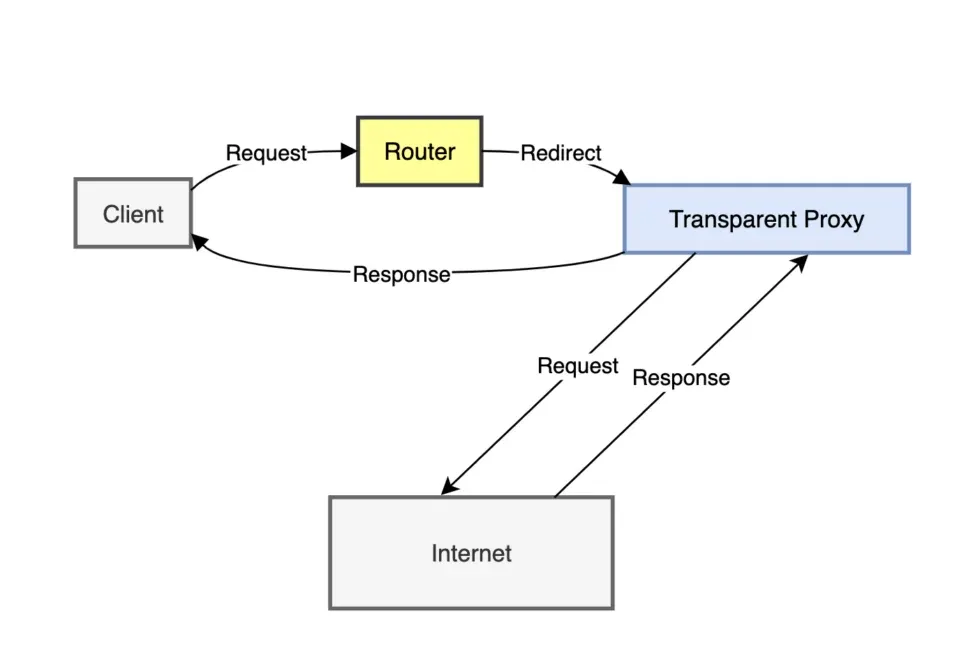
Configuration is performed not on client devices but at the network and server infrastructure level. The specific implementation depends on the software in use, the routing scheme, and the deployment objectives, but in general the process includes several stages.
First, a proxy server is deployed based on suitable software. Then network traffic redirection is enabled, and NAT, firewall, or router rules are configured to send requests to the proxy. After that, policies are defined: which resources are allowed, what is cached, which events are logged, and which types of traffic require additional processing.
The final stage is load testing and continuous monitoring. For a transparent proxy, this is especially important: configuration errors can affect the entire network segment at once rather than a single user.
Advantages of Transparent Proxies
Centralized Management
The administrator gets a single control point for a large volume of traffic. This simplifies the deployment of rules, their updating, and the monitoring of compliance with corporate policies.
No Manual Configuration on Client Devices
There is no need to change settings on every device. This is especially important in large networks, where manual configuration of hundreds or thousands of clients would be too costly.
Faster Access to Frequently Used Resources
Through caching, a transparent proxy can reduce latency and relieve the external channel. In repeated usage scenarios, this provides a real performance gain.
Reduced Network Load
Local delivery of cached data reduces the number of identical requests to external servers and helps use bandwidth more efficiently.
Support for Security Policies
A proxy helps filter out undesirable or potentially dangerous traffic and also makes network activity more manageable and observable.
Limitations and Disadvantages
Risks to User Privacy
Since traffic passes through a managed control point, questions arise about the transparency of the monitoring practice itself, the scope of logging, and access to the collected data. If the rules governing its use are not clearly defined, this creates organizational and legal risks.
Possible Impact on Performance if Misconfigured
If the proxy is overloaded, caches content incorrectly, or uses poor redirection rules, it may slow down the network instead of optimizing it.
Complexity of Proper Deployment
Although the technology is convenient on the client side, for administrators it requires competent network architecture, careful routing configuration, and continuous monitoring of the system’s condition.
Risk of Compromise of the Central Node
If the proxy server is not sufficiently well protected, it becomes a critically important point in the infrastructure. Problems at this level can affect a large volume of data and a significant share of network traffic.
Limitations for Certain Protocols and Scenarios
Not all types of traffic are equally easy to handle through transparent proxying. In some cases, additional mechanisms, rule exceptions, or a more complex integration scheme are required.
How to Tell That a Transparent Proxy Is Being Used on a Network
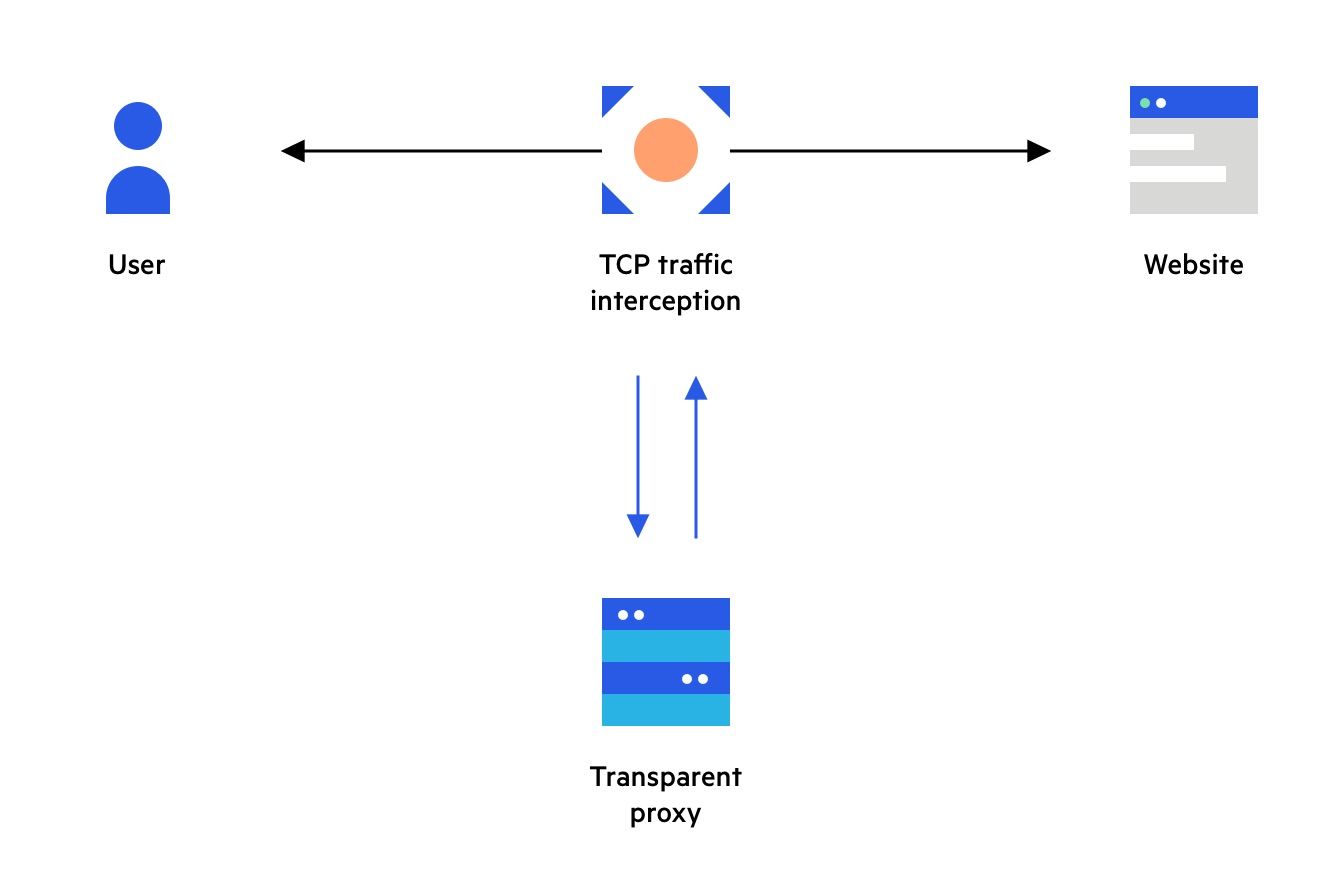
In practice, the presence of a transparent proxy can be suspected from several signs. One of the most common is an unexpected redirect to an authentication page when trying to open any website. This behavior is often found in public networks and guest segments.
The use of a proxy may also be indicated by non-standard HTTP headers or atypical responses when trying to open a nonexistent address. Another indirect sign is a discrepancy between the expected and actual behavior of the connection, especially if this occurs repeatedly only within one specific network.
We've compiled details and practical aspects of proxy server operation in our article, "Proxy Server: What It Is, How It Works, and How to Choose One."
For accurate diagnostics, network tools are usually used to analyze the route, response headers, and connection configuration.
Conclusion
A transparent proxy is not a user tool but an infrastructure mechanism for traffic management. Its main value lies in the fact that it makes it possible to apply network rules centrally without manual configuration of client devices. As a result, organizations gain control over access to resources, the ability to cache content, collect technical logs, and strengthen the overall resilience of the network.
When implemented properly, transparent proxies help solve performance, administration, and security tasks simultaneously. But their effectiveness directly depends on the quality of configuration, the correctness of policies, and how responsibly the organization approaches traffic management and the related data.