Are Free Proxies Safe: Real Risks and Reasonable Alternatives

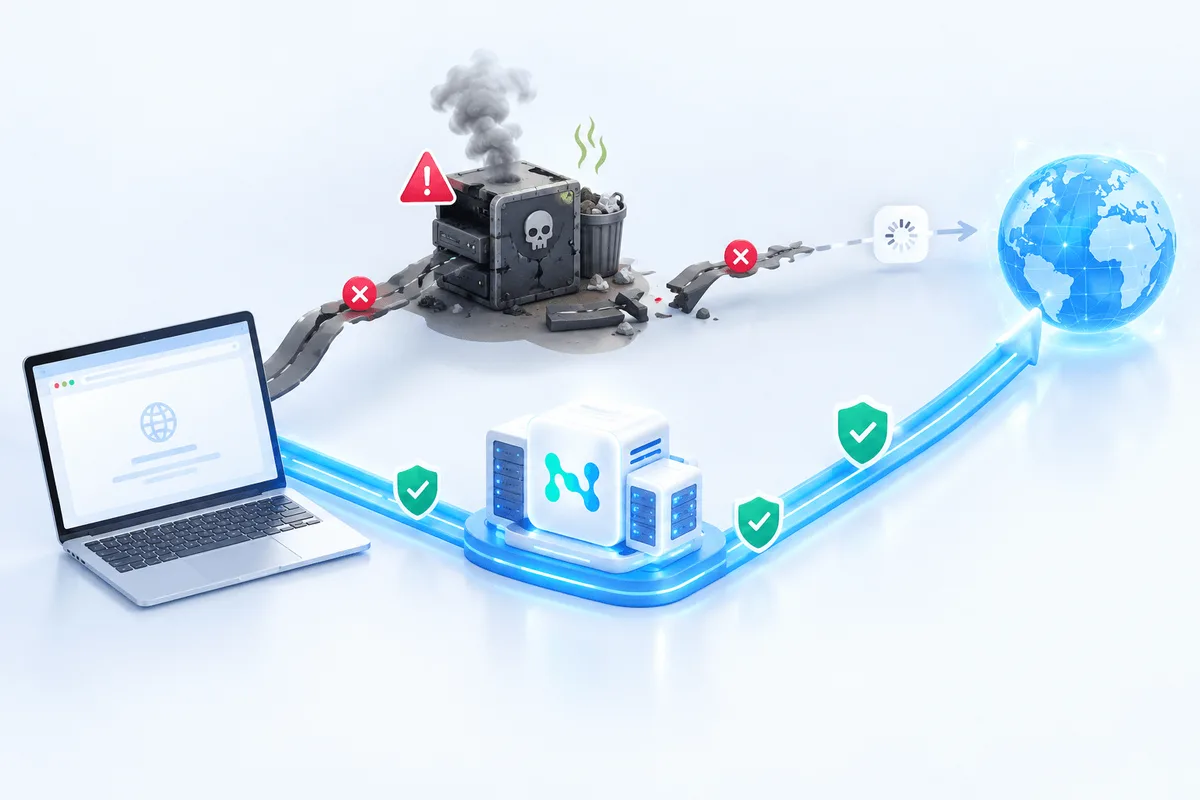
Free proxies are appealing primarily because they involve no direct cost. For one-off tasks, tests, and simple checks, this seems like a convenient option: there is no need to pay for a plan, register a paid account, or spend a long time dealing with settings. But this model is exactly where the main problem lies. Maintaining proxy infrastructure requires resources, and if a service does not charge the user directly, it almost always compensates for that in other ways — through user data, service quality, or connection security.
In practice, free proxies are rarely suitable for serious work. They fall short of paid solutions in stability, speed, predictability, and level of protection. For tasks where the safety of credentials, a stable connection, and control over traffic matter, such services become more of a source of problems than a tool.
Why Free Proxies Are Still Used
The main reason is simple: they do not require payment. This is especially appealing given that high-quality proxy services can cost noticeably more if you need stable access, a large pool of IP addresses, or regular work with traffic.
Besides cost savings, free proxies are chosen for other reasons as well. They are often used for learning, testing basic scenarios, one-off tests, simple tasks, and small technical experiments. When a project is short-term and not связан with sensitive data, the temptation to use an open proxy is indeed high.
However, a low barrier to entry does not mean that such an option is safe. On the contrary, it is precisely their accessibility to everyone that makes free proxies one of the riskiest categories of network services.
The Main Risks of Free Proxies
Lack of Reliable Traffic Protection
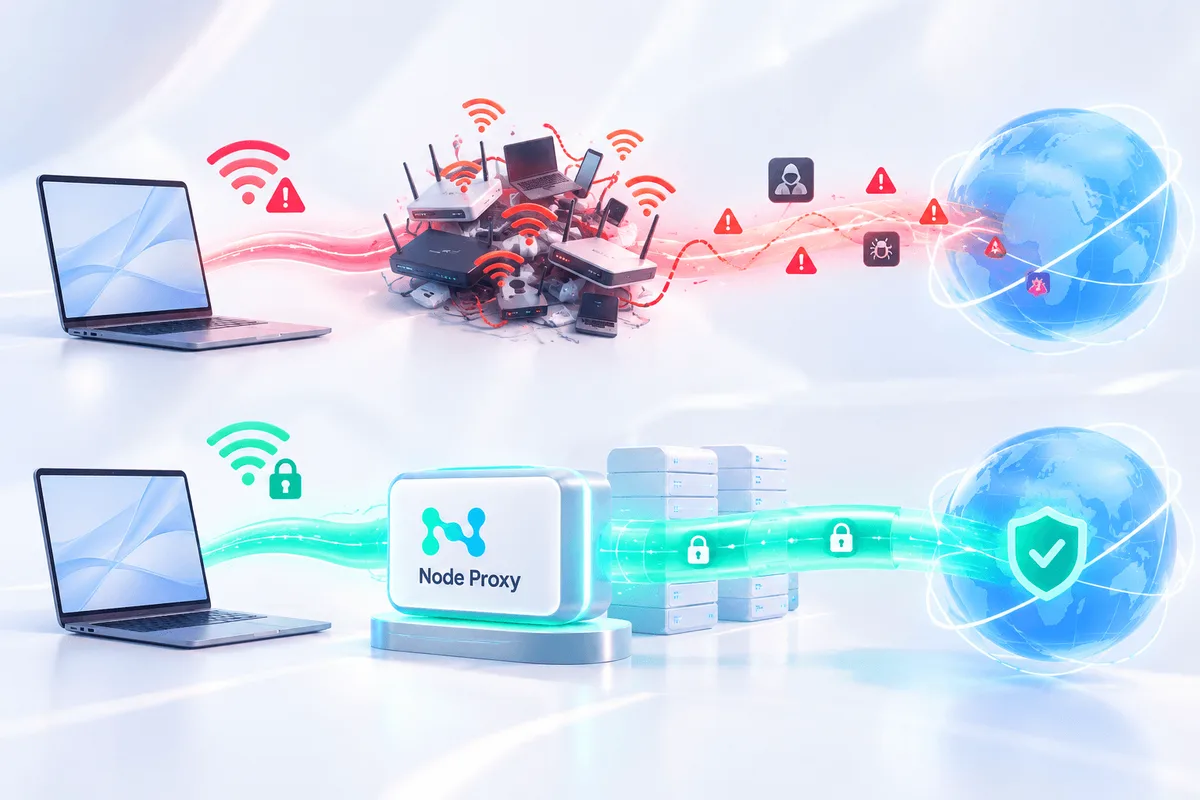
One of the main problems with free proxies is the weak implementation of connection protection or its complete absence. Many such servers simply forward traffic onward without providing an adequate level of security. As a result, transmitted data may be intercepted, viewed, or stored by third parties.
This is especially dangerous in situations where logins, passwords, form data, session tokens, and other service information pass through the proxy. Even if the service outwardly appears functional, that says nothing about how exactly it handles your traffic within its infrastructure.
From Residential IPs to Datacenter IPv4
Choose the right proxy for your specific use case.
Collection and Logging of Activity
A free proxy often becomes a point of observation over the user’s actions. The owner of such a service may record the websites visited, request parameters, timestamps, browser technical data, and other related information. This data may then be used for analytics, resale, or other purposes the user may never even learn about.
The problem here is not only the fact of logging itself, but also the complete lack of transparency. Most open proxies have no clear data handling policy, no verifiable reputation, and no obligations to the user.
Theft of Cookies and Session Data
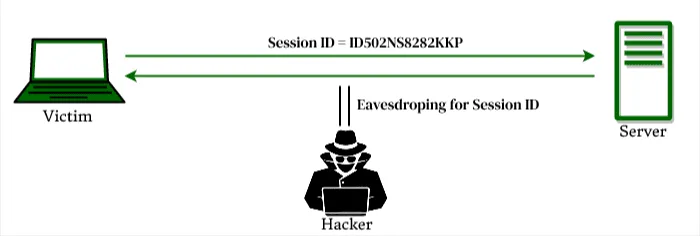
A separate risk is associated with cookies and active sessions. If a proxy controls the traffic between the browser and the website, it can theoretically gain access to authorization files or other data that maintains account access. This creates a threat of unauthorized access to the services the user accessed through such a proxy.
Even short-term use of an open proxy while working with personal accounts, email, payment systems, or corporate services can lead to serious consequences.
Malicious Injections and Content Substitution
Free proxies are dangerous not only because of data interception, but also because of interference with page content. Some services are capable of modifying HTML or JavaScript code, adding advertising blocks, redirecting the user to third-party websites, or embedding unwanted scripts.
Such interference is not always obvious. Sometimes the user sees only extra ads or strange website behavior, but behind that there may be much more serious mechanisms: data collection, link substitution, forced redirects, or delivery of malicious code.
Low Speed and Unstable Performance
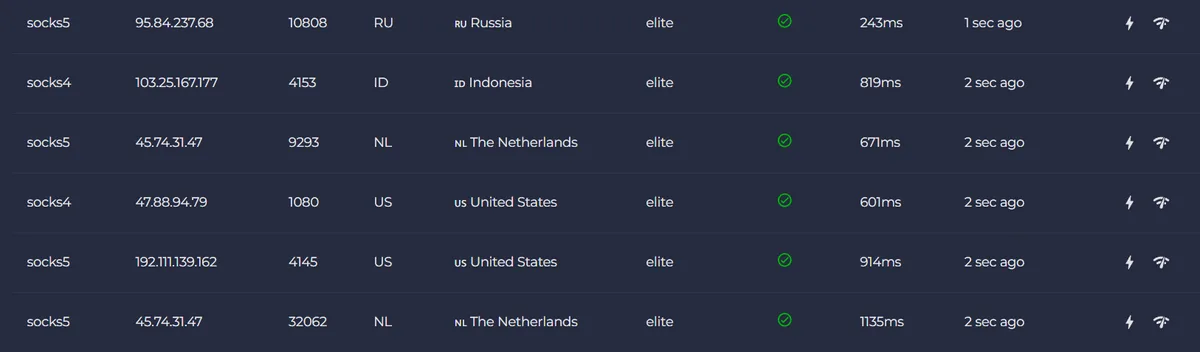
Even setting security concerns aside, free proxies are usually inconvenient for everyday work. Open IP addresses are used simultaneously by many people, which causes the load to be distributed chaotically, speed to drop, and latency to increase.
This is compounded by frequent blocks, interruptions in availability, and the rapid exhaustion of the IP addresses themselves. As a result, the connection may work slowly, break without warning, or stop performing the task at the worst possible moment. For regular work, automation, or projects with predictable load, this format is almost unsuitable.
Why a Free Service Is Rarely Truly Free
Maintaining proxy servers requires costs: infrastructure, communication channels, maintenance, monitoring, and technical support. If a provider does not receive money directly from users, it looks for another way to monetize the service. In practice, this often means collecting user activity, displaying aggressive advertising, selling data, or using questionable compensation schemes.
That is why free proxies cannot be assessed by price alone. Their real cost appears in the risks: data leaks, loss of control over traffic, instability, and possible consequences for accounts and work processes.
When a Free Proxy May Still Be Acceptable
Free proxies should not be completely ruled out in all scenarios. Under limited conditions, they may indeed be used, but only where the risk is minimal and the consequences of an error are insignificant.
The most acceptable cases are learning, one-off technical checks, configuration testing, and small experiments without transferring important information. Sometimes open proxies are also used for very small-scale tasks where failures, blocks, and instability are not critical.
But even in these cases, a free proxy should not be used as a permanent working tool. It is more of a temporary solution with clear limitations than a full-fledged service.
How to Reduce Risk If a Free Proxy Is Still Needed
If it is not possible to avoid using a free proxy, it is important at least to reduce the potential damage. The basic rule is not to use it to access sensitive services and not to transmit through it any data whose loss would create a problem.
It is advisable to run such connections only in an isolated environment: a separate browser profile, a test system, or a virtual machine. It is also not worth installing auxiliary extensions and applications offered by an unknown proxy service. It is also useful to monitor system behavior: unusual network activity, sharp load spikes, sudden redirects, and changes in page content.
These measures do not make a free proxy safe. They only reduce the scale of the potential damage.
How Paid Solutions Differ in Practice
Paid proxies offer advantages not only because of higher speed. The key difference lies in the provider’s manageability and accountability. A reliable service usually has clear terms of use, stable infrastructure, predictable connection quality, technical support, and a more transparent approach to data handling.
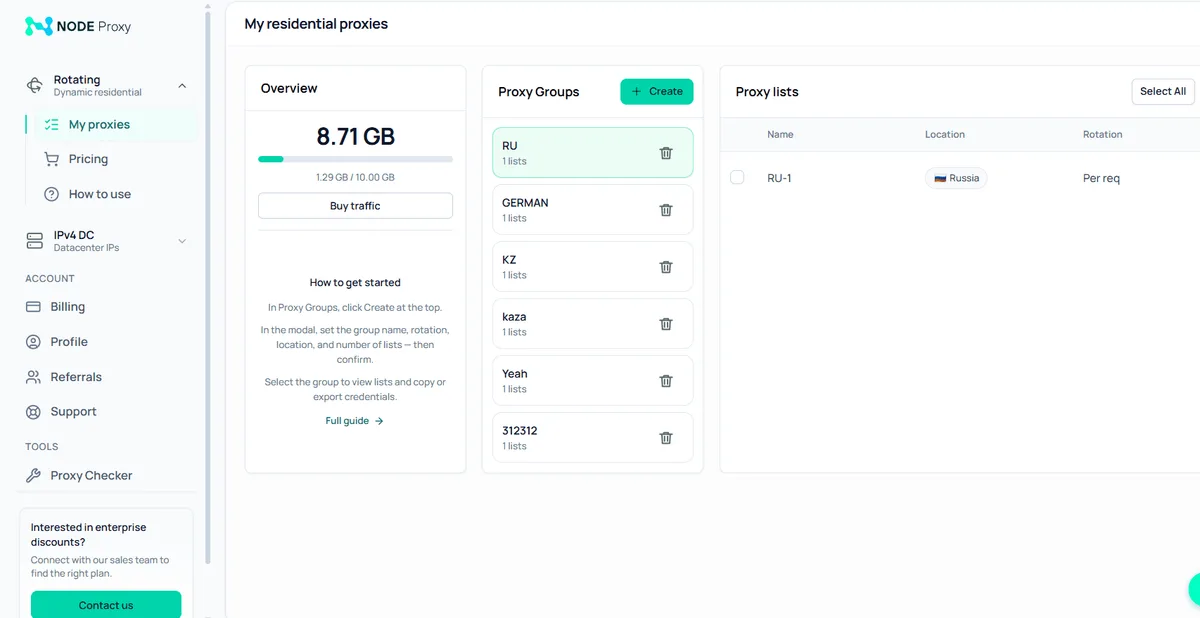
Such solutions are better suited for ongoing work, automated tasks, testing, monitoring, data collection, and other scenarios where predictability, availability, and the safety of service information matter. In addition, paid providers more often offer a higher-quality IP pool, fewer problems with blocks, and better overall service stability. You can purchase such proxies on our website node-proxy.com.
What to Choose Instead of Questionable Open Proxies
If the budget is limited, it is more reasonable to look not at random free lists, but at trial periods or free plans from well-known providers. This is a compromise option: the user gets a limited amount of traffic or a small set of IP addresses, but at the same time works with a service that is at least professionally maintained.
This approach is suitable for tests, pilot launches, and evaluating proxy quality before switching to a full plan. It is significantly safer than using public proxies of unknown origin and helps avoid many typical problems associated with open servers.
Conclusion
Free proxies look like a convenient solution only at first glance. In practice, the absence of payment often conceals weak traffic protection, collection of user activity, the risk of content substitution, theft of session data, and low connection quality. Even if such a proxy formally performs its function, its reliability and security remain highly questionable.
Using free proxies is acceptable only in limited, low-risk scenarios — for learning, testing, and simple one-off tasks without sensitive data. In all other cases, paid services or at least trial offers from verified providers are a more reasonable choice. Saving money on proxies often does not reduce costs, but shifts them into the risk zone, where the price of a mistake turns out to be much higher.