Residential Proxies: Architecture, Operating Models, and Practical Use Cases
 ·September 30, 2026·4 min read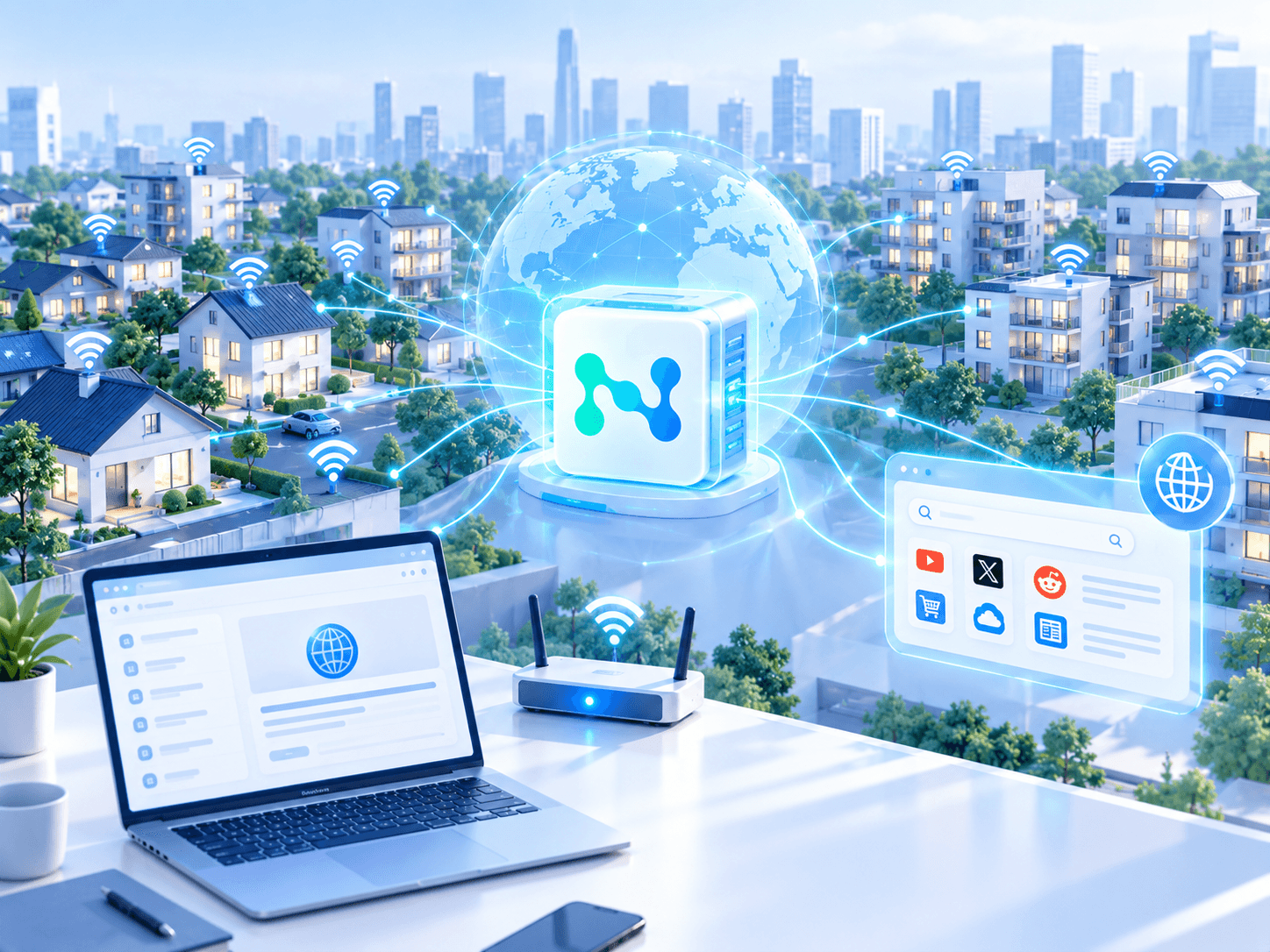
Residential proxies use IP addresses that internet providers assign to user devices. Because of this, requests sent to websites appear as ordinary connections from a specific region rather than requests coming from server infrastructure. This approach is in demand for tasks where accurate traffic geography, stable access to local versions of websites, and the ability to work with a large number of requests without relying on the same address are important.
Compared to data center solutions, residential proxies are structured differently and are used in different scenarios. They are chosen when it is necessary to reproduce the user environment more accurately, check regional search results, analyze prices across different countries, or test the operation of digital services with location taken into account.
How Residential Proxies Work
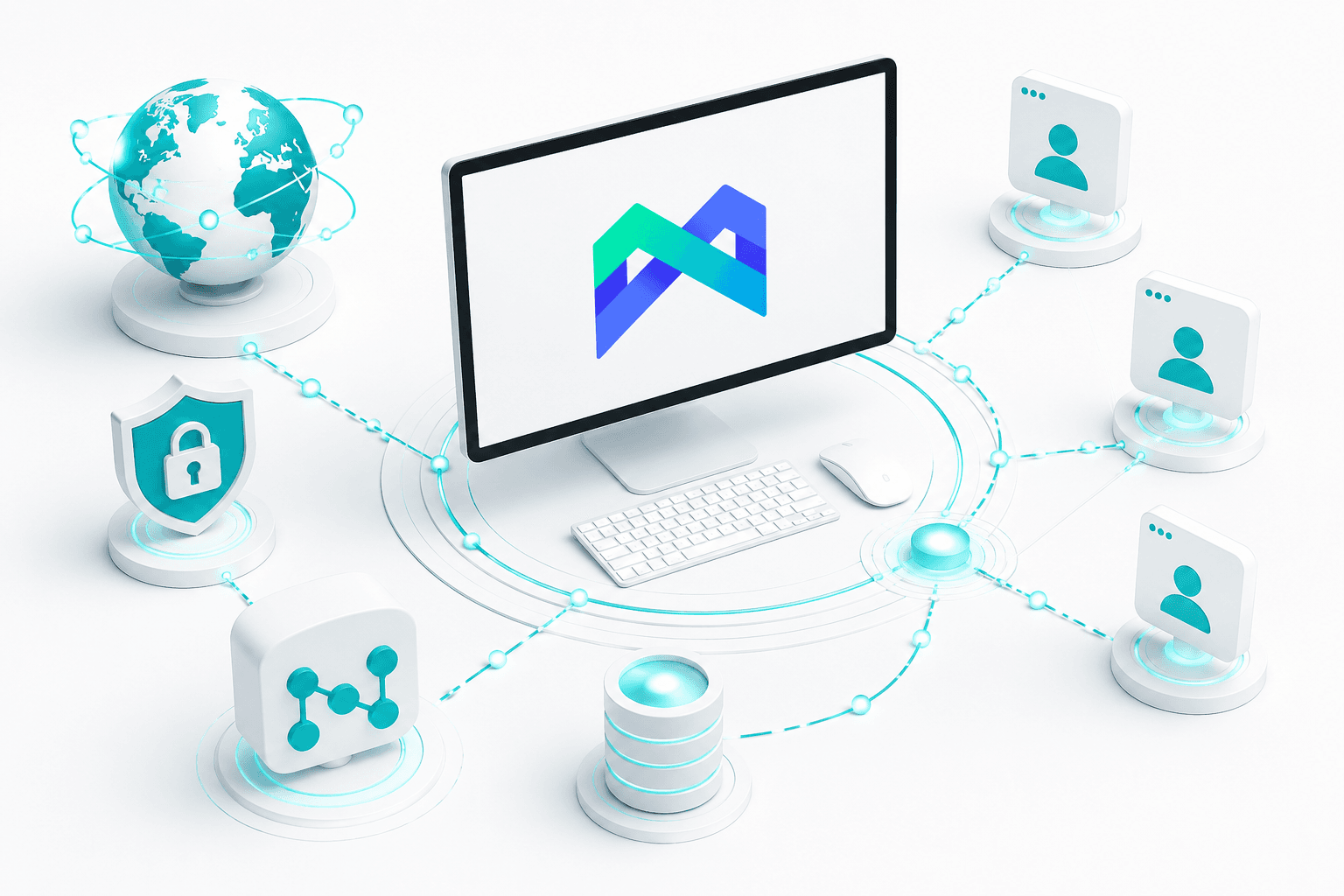
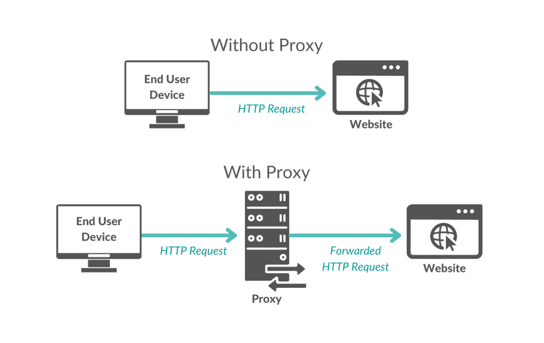
A residential proxy acts as an intermediary node between the user and the target resource. First, the request enters the proxy provider’s infrastructure, then it receives an external IP from the residential pool, and only after that is it sent to the required website. The response follows the same route in reverse.
From a technical point of view, the principle is simple: the external resource sees not the user’s original address, but an IP associated with a real device and issued by an internet service provider. Because of this, the connection is perceived as ordinary traffic from the selected location. This feature is exactly what makes residential proxies convenient for regional analysis, testing, and working with localized content.
Residential IPs and Datacenter IPv4
Node Proxy offers both proxy types for different needs.
What a Residential IP Represents
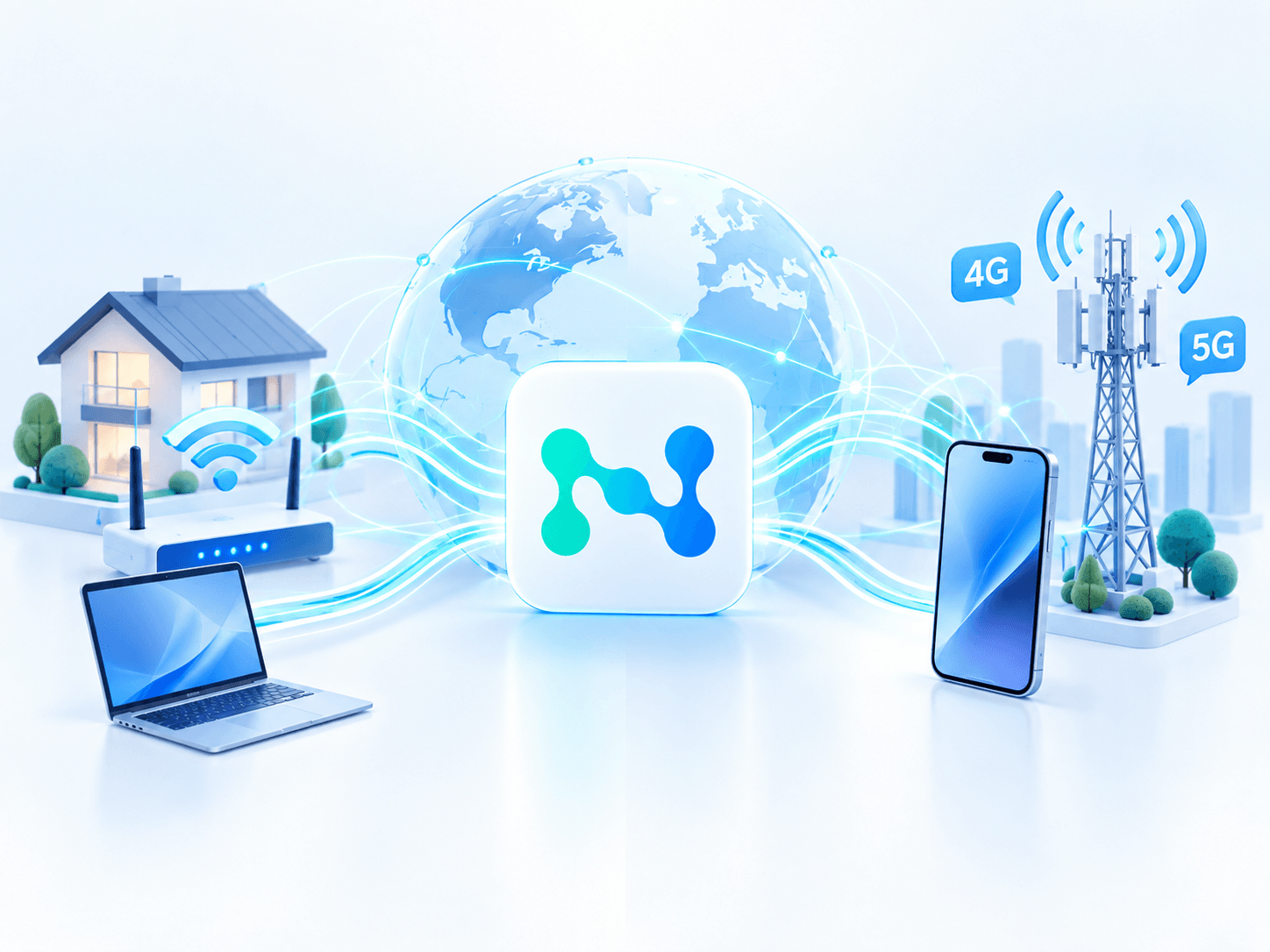
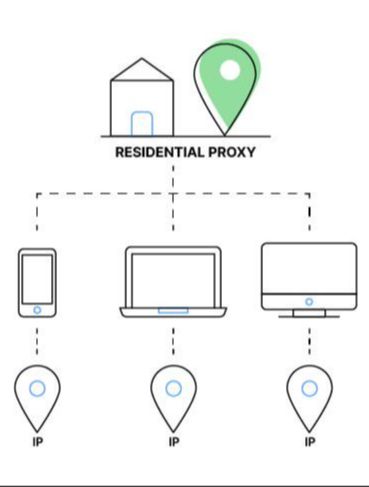
A residential IP is an address assigned by an internet provider to a home router, computer, smartphone, or another user device. In proxy networks, such addresses become the external exit point for requests.
Their value is determined by several properties. First, they are tied to a specific geography: a country, a region, and in some cases even a city. Second, websites perceive such IPs as part of an ordinary user environment. Third, they make it possible to build traffic routing flexibly when data needs to be obtained in the same way it is seen by a visitor from a specific location.
How the Process Works Step by Step
The operating mechanism of residential proxies can be represented as a sequential scheme.
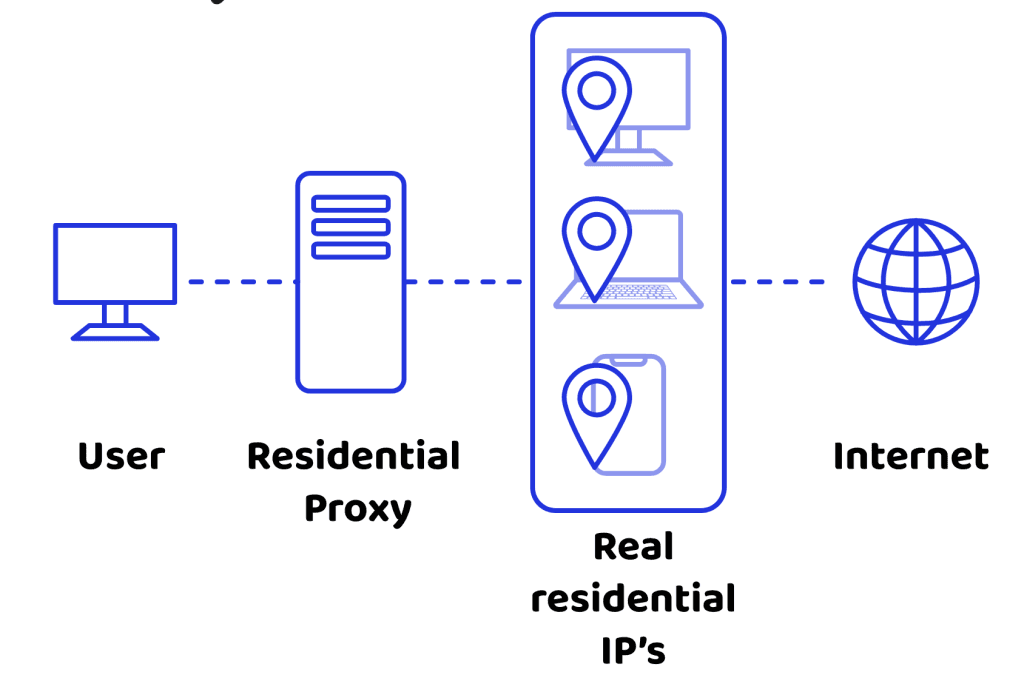
The user system sends a request through the proxy provider. Then an IP address is selected from the available pool — either fixed for the session or rotated according to specified rules. After that, the request is sent to the target website with the new external address. When the website returns the data, it is delivered to the selected IP and then passed on to the end user.
This architecture makes it possible not only to change the geography of the connection, but also to manage request distribution, choose the session format, and adapt traffic more precisely to a specific task.
Types of Residential Proxies
The main differences between types of residential proxies lie in how long one IP is retained and what type of network it is provided from.
Rotating
Rotating residential proxies automatically change the IP by time interval, number of requests, or session settings. They are used where large volumes of pages need to be processed, addresses need to be switched regularly, and the load should not be concentrated on a single exit point.
This format is suitable for price monitoring, catalog analysis, work with search results, research of open data, and other processes associated with repeated requests to web resources.
Static
Static residential proxies keep the same IP for an extended period. This option is chosen for tasks where the connection must remain consistent and predictable.
They are useful for testing user scenarios, working with services that are sensitive to frequent address changes, and in situations where it is important to maintain a single connection point without постоянной ротации.
Mobile
Mobile residential proxies route traffic through devices operating on mobile carrier networks. Usually this refers to 4G and 5G connections. This is a separate category that is in demand in cases where it is necessary to reproduce a specifically mobile environment.
Such proxies are used to verify mobile advertising, analyze how websites are displayed on smartphones, test applications, and assess user experience in mobile scenarios.
What Residential Proxies Are Used For
The practical value of residential proxies becomes clear in processes where regional accuracy, request distribution, and correct reproduction of the user environment matter.
Collection of Open Data
One typical scenario is collecting data from websites: prices, product cards, assortment parameters, catalog structure, search results, listings, and other open elements. When residential proxies are used, requests can be distributed across different IPs and a more stable access scheme to the required pages can be built.
Search Results Analysis
For international projects, it is not enough to see an averaged search result. It is important to understand what the results look like for users in specific countries and cities. Residential proxies make it possible to check local results, track position changes, and assess the effectiveness of regional SEO more accurately.
Ad Placement Verification
Marketing teams use such proxies to check how advertising materials are displayed in different countries. This helps identify geotargeting errors, compare creative display, and assess whether campaigns correspond to their display settings.
Price Comparison by Region
In e-commerce, the same product may be displayed differently depending on the country, city, interface language, or user segment. Residential proxies make it possible to collect regional data and build a more accurate picture of pricing.
We wrote about using proxies in market analysis and how to set up a stable data collection system for monitoring competitors and prices in a previous article on our blog.
Website and Application Testing
Developers and quality specialists use residential proxies to test localization, verify geo-dependent content, analyze login scenarios from different countries, and evaluate user experience in regional versions of a product.
User Traffic Modeling
In scenario-based and load testing, it is important to consider not only the number of requests but also their origin. If a service works with an international audience, it is useful to test its behavior on traffic coming from different countries and using different connection types. In this context, residential proxies help bring the test model closer to real conditions.
Differences from ISP Proxies
Residential proxies are often compared with ISP proxies because both categories use addresses associated with internet providers. However, their operating logic differs.
Residential proxies are based on the IPs of user devices. Their main advantage is address diversity and wide geographic coverage. This makes them especially useful in tasks where flexible routing and access from a large number of regions are required.
ISP proxies use provider-issued IPs but are hosted on data center infrastructure. Because of this, they usually provide more predictable performance and a more stable connection, but they are less flexible than residential solutions in terms of address diversity and geographic range.
If the main task is to obtain a wide selection of locations and work with different regional scenarios, residential proxies are more often the right choice. If connection consistency and server-side stability come first, the ISP model is more reasonable to consider.
Comparison with Data Center Proxies
Data center proxies and residential proxies solve different classes of tasks. Server-based options usually have the advantage in price, speed, and ease of administration. They are convenient where detailed geolocation is not required and there is no need to imitate an ordinary user connection.
Residential solutions, by contrast, are aimed at more sensitive scenarios. They are useful when exact location, work with local versions of services, and the ability to scale requests through different addresses associated with user infrastructure are important.
That is why the choice between these formats depends not on abstract quality, but on the working task. For some processes, the data center approach is more rational; for others, the residential model is.
Strengths of Residential Proxies
The main advantage of residential proxies is the ability to work through IPs that are logically embedded in an ordinary user environment. This is especially important for analytics, monitoring, testing, and international digital processes.
In addition, they offer a wide choice of geographies, make it possible to configure rotation, help distribute traffic by region, and support integration with various automation tools. All this makes them a practical working tool for teams that need precise control over where and how connections are performed.
Conclusion
Residential proxies are an infrastructure tool for tasks in which it is necessary to control connection geography precisely, distribute requests across different IPs, and reproduce conditions close to a real user environment. They are used in analytics, marketing, monitoring, testing, and work with region-dependent content.
The appropriate format depends on the goal. For mass requests and distributed load, rotating solutions are more convenient. For consistent sessions with a fixed address, static ones are suitable. For mobile scenarios, proxies based on carrier networks are the relevant option.