How Do Advertising Networks Differ in Their White Page Requirements?

A White Page that works for one advertising network may receive a rejection on another. Google Ads, Meta Ads, Microsoft Advertising (Bing Ads), and Taboola have different review processes and expectations for landing pages.
For media buyers, understanding these differences helps avoid common mistakes when preparing websites for advertising campaigns. Although all four platforms expect functional and relevant destinations, they pay attention to different aspects of content, branding, accessibility, and user experience.
Residential proxies
Check how your landing page opens from the target GEO
Why Do White Page Requirements Differ?
Each advertising network operates in a different environment.
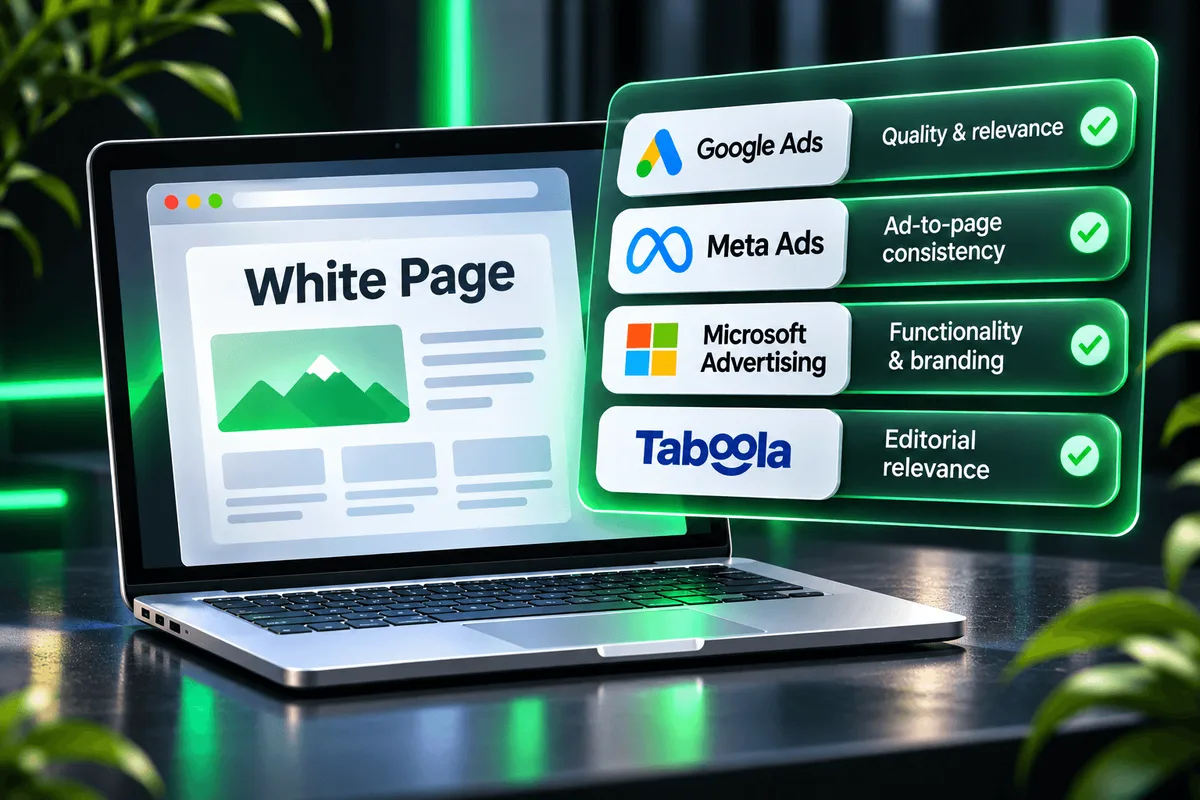
Google Ads focuses heavily on search relevance and destination quality. Meta Ads evaluates the relationship between advertising content and the landing page. Microsoft Advertising has its own requirements for destination functionality and brand consistency. Taboola, as a native advertising platform, places particular importance on content relevance and editorial quality.
This means there is no universal White Page template that automatically meets every platform's requirements.
Google Ads: Content Quality and Destination Accessibility
Google Ads has detailed destination requirements. The website must be accessible, functional, and relevant to the advertised offer.
Important points include:
- Original content: Pages should provide useful information rather than generic or duplicated text.
- Accessibility: The destination must load correctly and should not block Google's review systems unintentionally.
- Navigation: Menus, internal links, and important website sections should work properly.
- Destination consistency: The final URL must correspond to the destination represented in the ad.
- User experience: Avoid broken pages, misleading redirects, and intrusive elements.
Websites with very little original content or destinations that do not match the ad can face disapproval. Advertisers should also review additional requirements for regulated categories such as financial services, healthcare, and gambling.
Meta Ads: Consistency Between the Ad and the Website
Meta Ads places particular importance on the overall advertising experience. The landing page should support the message presented in the creative and provide visitors with clear information.
When preparing a website for Meta campaigns, pay attention to:
- Content relevance: The page should match the subject of the advertisement.
- Clear presentation: Visitors should understand what the website offers.
- Mobile usability: Text, buttons, images, and navigation should work on smartphones.
- Trust and transparency: Avoid misleading claims or information that contradicts the advertised offer.
- Consistent branding: The ad and destination should represent the same product, service, or project.
A technically functional website can still face problems if its content creates a misleading impression or violates Meta's Advertising Standards. The rules for sensitive and restricted categories also require additional attention.
Microsoft Advertising (Bing Ads): Functionality and Brand Consistency
Microsoft Advertising shares several destination-quality principles with Google Ads, but advertisers should not assume that the review processes are identical.
The platform expects the landing page to work correctly and represent the advertised brand or product.
Key areas to check:
- The final URL opens and displays the intended content.
- The website has recognizable and consistent branding.
- The landing-page language is appropriate for the ad.
- Links and navigation elements work correctly.
- The destination is accessible to the platform's review systems.
Regional accessibility is also worth checking. A website that works from the advertiser's location may behave differently in the target GEO because of hosting, CDN, or regional configuration.
Taboola: Editorial Quality and Content Relevance
Taboola works with native advertising placements, where sponsored recommendations appear alongside editorial content. Therefore, the landing page should deliver what the headline and creative promise.
The main requirements to consider are:
- Relevant content: The destination should directly relate to the promoted topic.
- Editorial value: Articles, guides, and explanations should provide useful information.
- Accurate headlines: Avoid headlines that promise something the page does not deliver.
- Clear structure: Visitors should be able to read and navigate the content easily.
- Transparency: The destination should not mislead visitors about the product or service.
Taboola also restricts deceptive redirects and practices designed to conceal the actual destination from review. Advertisers should ensure that the submitted destination accurately represents the visitor experience.
Comparison: Google Ads vs. Meta Ads vs. Bing Ads vs. Taboola
| Criteria | Google Ads | Meta Ads | Bing Ads | Taboola |
|---|---|---|---|---|
| Main focus | Relevance and destination quality | Ad-to-page consistency | Functionality and branding | Editorial relevance |
| Content | Original and useful | Clear and consistent | Relevant and accurate | Informative |
| Structure | Clear multi-page website | Consistent presentation | Functional navigation | Content-rich pages |
| Common issues | Thin content, inaccessible URL | Misleading content, policy violations | Broken destination, brand mismatch | Irrelevant or low-quality content |
The table shows the general areas to consider, not a ranking of approval difficulty. Actual requirements depend on the campaign, GEO, advertising format, and product category.
How to Prepare a White Page for Different Networks
Before launching a campaign, follow a basic preparation process:
- Define the website topic. Choose a clear subject and build the content around it.
- Create a logical structure. Include relevant content pages, About, Contact, and applicable legal information.
- Prepare original content. Each page should have a purpose and provide value to visitors.
- Check technical functionality. Test HTTPS, links, forms, mobile layout, and loading.
- Test target GEO accessibility. Make sure the website is available from the intended location.
- Review platform policies. Check the requirements for the specific network and advertised category before submitting the campaign.
For GEO testing, proxy infrastructure can help identify regional accessibility or loading issues. For example, Node Proxy residential proxies can be used to check how a website behaves from a selected location. This is useful for quality assurance and should not be confused with showing different content to reviewers and visitors.
How Does White Link Fit Into the Process?
Preparing a website for advertising requires more than installing a theme and adding a few text blocks. The structure, content, design, and technical setup should all correspond to the website's actual subject.
White Link specializes in manual White Page development, including websites with individual structures and content adapted to a selected topic. This can be useful for media buyers who need a properly prepared multi-page website rather than an unchanged generic template.
However, professional development does not guarantee advertising approval. The advertiser must still ensure that the website and promoted offer comply with the selected platform's policies.

Final Checklist Before Launch
- The website has a clear topic and relevant content.
- The landing page matches the advertisement.
- Navigation and internal links work correctly.
- The mobile version is functional.
- Contact and legal information are accurate where required.
- The destination is accessible from the target GEO.
- The website complies with the advertising network's policies.
Conclusion
Google Ads, Meta Ads, Bing Ads, and Taboola evaluate websites from different perspectives. Google emphasizes destination quality and accessibility, Meta focuses on consistency and user experience, Microsoft Advertising checks functionality and branding, while Taboola pays particular attention to editorial relevance.
If you need a White Page built around a specific topic, you can learn more about the development options at White Link.
White Page FAQ
What is a White Page in media buying?
It is the website an ad leads to: a real page with its own topic, content, navigation and contact details that the advertising network reviews before approving the campaign.
Can one White Page work for every advertising network?
Rarely without changes. Google Ads, Meta Ads, Microsoft Advertising and Taboola check different things, so a page usually needs adjusting to the network, GEO and product category.
Why does a White Page get rejected?
Typical reasons are thin or duplicated content, a destination that does not match the ad, broken links or forms, poor mobile layout and a page that reviewers cannot open from their location.
How can I check a White Page from the target GEO?
Open it through a proxy in the target country and look at loading, redirects, language and mobile layout. This is a quality check, not a way to show reviewers different content.
Does a professionally built White Page guarantee approval?
No. Development improves structure and content, but the advertiser is still responsible for the site and the offer meeting the network's policies.