Proxies in Business: Where They Are Truly Useful and What Tasks They Help Solve
 ·July 30, 2026·5 min read
What Business Tasks Proxies Solve
Brand Usage Control
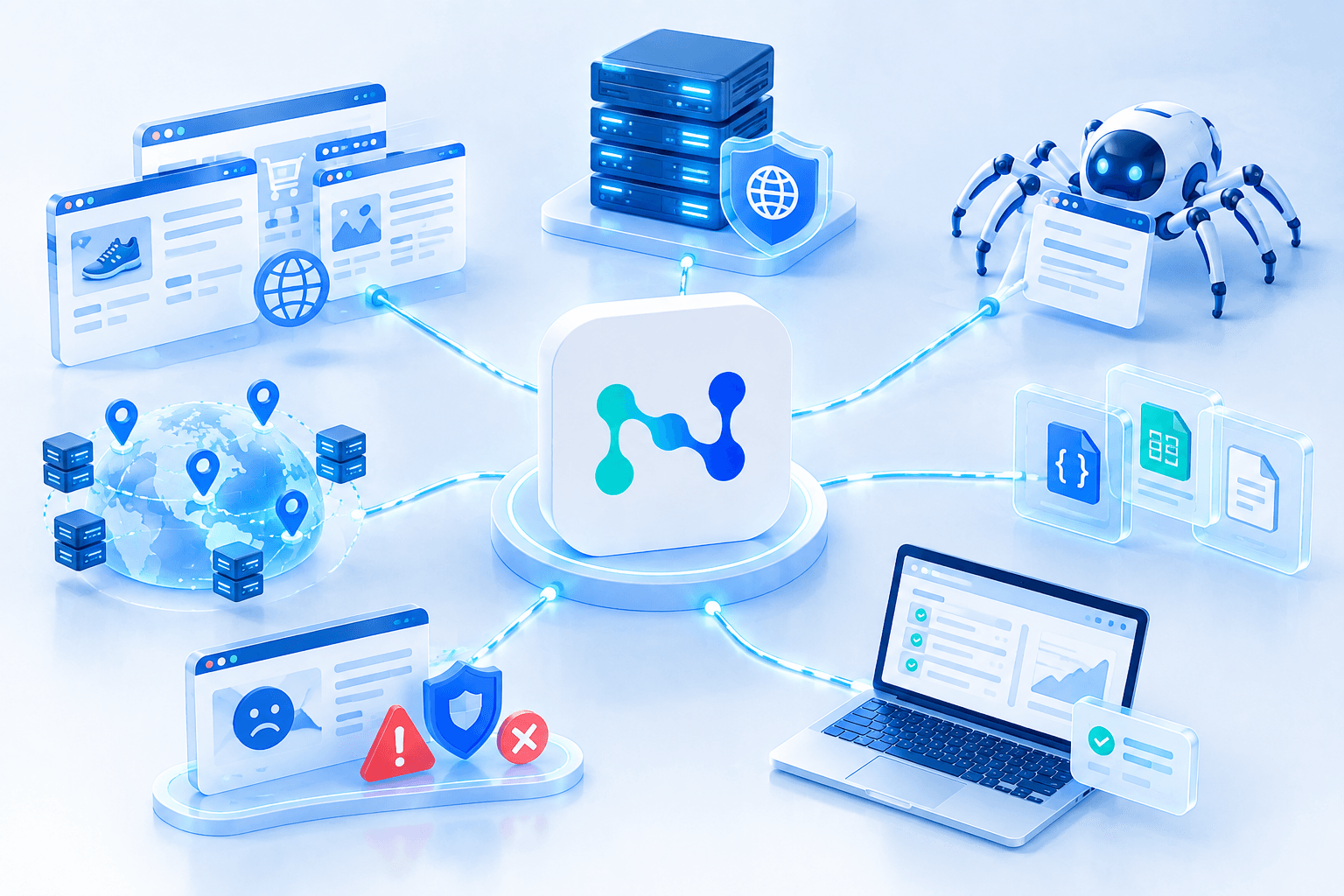
When a company operates in multiple markets or sells products through partners, distributors, and marketplaces, the risk of encountering counterfeits, unauthorized use of a trademark, and copied product listings increases. The problem becomes more complicated if access to certain websites or storefronts is restricted by region.
Proxies make it possible to view such platforms from IP addresses in the required country or city and see the content the way a local user sees it. This helps identify disputed publications, check assortments, document violations, and collect materials for further legal action or claims work.
Competitor and Market Analysis
For marketing, pricing, and product development, companies need not general assessments but specific data: what offers competitors are posting, how prices are changing, what promotions are being launched, how product listings are designed, what wording is used in advertising and content.
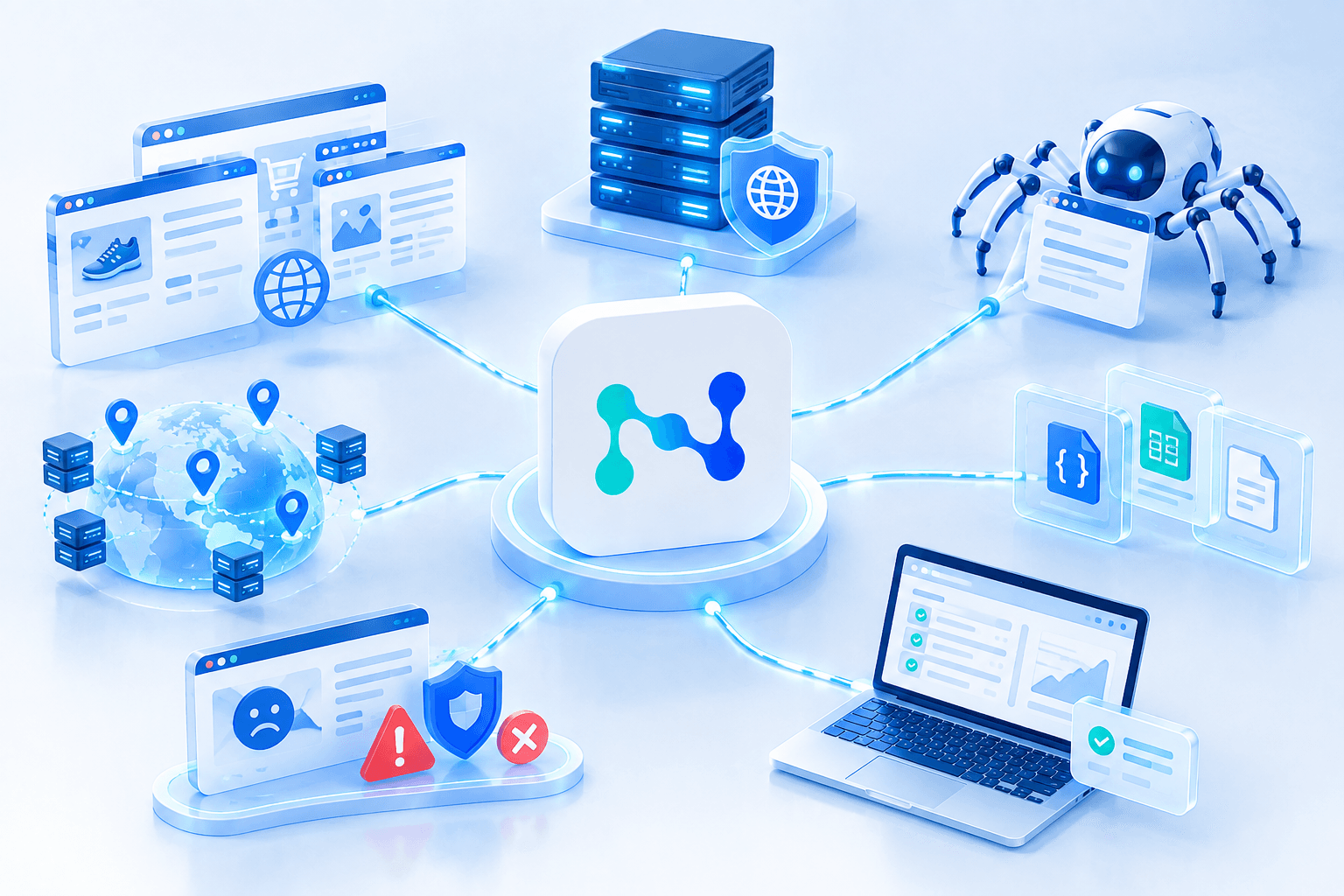
Proxies are used in collecting such data, especially if monitoring is conducted regularly and across several sources at once. They make it possible to distribute requests, work with different geolocations, and reduce the likelihood of restrictions from websites. As a result, the business gets a more complete picture of the market and can make decisions based on current rather than random or fragmented information.
Support for SEO Tasks
In search engine promotion, not only keywords matter, but also the actual picture of the search results: a site’s positions, differences between regions, competitors’ visibility, page structure, ad blocks, and changes in search results. This data cannot be assessed once and treated as permanent — it has to be checked regularly.
Proxies help collect search data from different regions, track changes in search results, and analyze how a site appears in a specific geography. This is especially important for companies operating in multiple markets or promoting several projects at the same time. Without such a tool, monitoring quickly runs into limitations in request frequency and the quality of the data obtained.
Content Aggregation and Source Monitoring
Many companies build internal processes around the constant flow of information from external sources: news websites, industry portals, catalogs, marketplaces, forums, and open databases. These materials can be used for analytics, populating internal systems, preparing reports, and promptly tracking changes in a niche.
If collection is carried out automatically, it is important to maintain request stability and avoid losing access to sources. In such scenarios, proxies help build a reliable scheme for obtaining data, especially when information needs to be collected in large volumes and from different regions.
Checking a Website and Digital Services from Different Regions
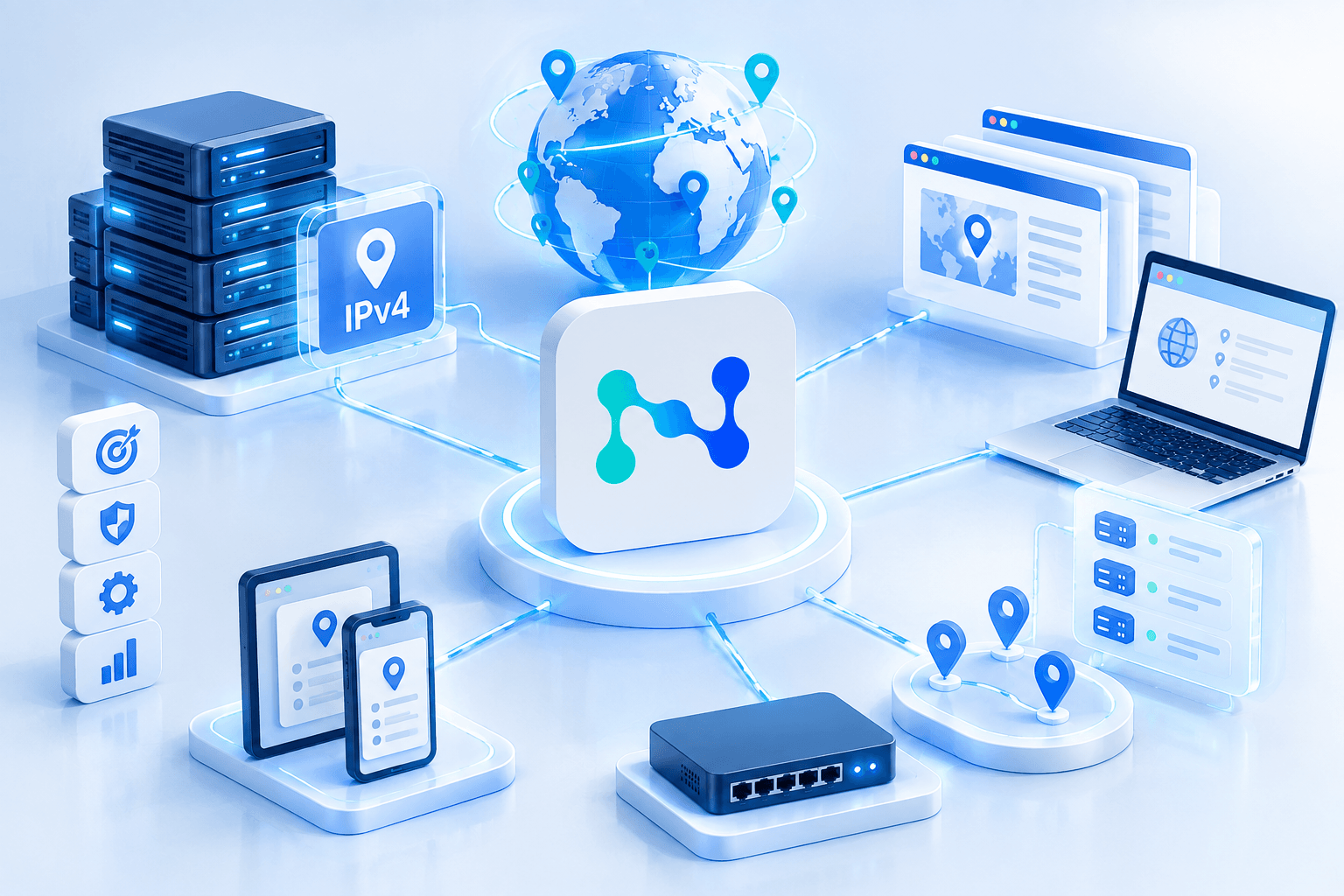
For international companies and projects with regional targeting, it is important to understand how a website or application works for users in different countries. Loading speed, availability of individual sections, correctness of localization, content composition, and the behavior of advertising blocks can differ significantly depending on the region.
Proxies make it possible to check these parameters under conditions close to real ones. This is useful during technical audits, testing of new features, evaluation of user experience, and quality control after releases.
Testing Advertising and Marketing Campaigns
Advertisements, landing pages, and search results often differ by geography. The same user scenario in different countries may show different creatives, texts, prices, or links. For marketing, this is critical: without regional verification, it is difficult to assess exactly how a campaign appears to the target audience.
With the help of proxies, companies check how ads are displayed in the required regions, monitor the correct launch of campaigns, compare local versions of advertisements, and evaluate the results of search optimization in specific locations.
Why the Type of Proxy Matters for Business
Not all proxies are equally suitable for corporate tasks. The choice depends on what exactly the company is doing: collecting data, tracking search results, testing a service, or working with a large number of accounts and interfaces.
Datacenter Proxies
Datacenter proxies are usually valued for their speed, availability, and large selection of addresses. They are suitable for some technical tasks where performance and predictable operation are important. But in scenarios related to SEO monitoring, competitor analysis, and automated data collection, such proxies are often not enough: resources identify the source of requests more quickly and react more strictly to repeated activity.
Residential Proxies
For business tasks where a more natural request profile and regional accuracy are required, residential proxies are more often chosen. They make it possible to work in a way that makes requests to websites look like ordinary user traffic from the required location. This reduces the risk of restrictions and helps obtain more accurate data during monitoring, competitor analysis, ad verification, and information collection.
Want to purchase high-quality residential proxies?
Residential & mobile proxies with sticky sessions up to 24h. Start with 750 MB for $3.50.
Private and Shared Proxies
The access model also matters separately. Private proxies are assigned to one user or one team, so they provide more control, stability, and predictability. Shared options are used by several clients at the same time, which means connection quality and address reputation may be less stable. For corporate processes where repeatability of results and reliability are important, individual access is more often chosen.
What Problems Arise from the Wrong Choice
If an unsuitable type of proxy is used, a company faces not only technical inconvenience. The main risk is receiving distorted or incomplete data. In competitor analysis, search results, and price monitoring, this is especially critical: errors at the information collection stage then carry over into strategy, media planning, SEO work, and management decisions.
Another problem is restrictions from websites and platforms. When requests look too uniform, come from a predictable pool of addresses, or do not match the user’s geography, access to data becomes unstable. As a result, the business loses time, and analytics cease to be reliable.
How to Use Proxies with Practical Benefit
Proxies produce results not by themselves, but in connection with a specific process. They are useful when a company:
• tracks the appearance of counterfeit goods and brand copies on external platforms;
• collects market data for marketing and product analytics;
• monitors a site’s positions and search results by region;
• tests advertising campaigns and local versions of pages;
• checks website speed and availability from different countries;
• builds automated collection of content and updates from external sources.
The more precisely the task is formulated, the easier it is to choose the right working format: by proxy type, geography, level of address rotation, and access model.
Conclusion
For business, proxies are an infrastructure tool that helps work with external platforms, data, and digital channels more accurately and more steadily. In practice, they are especially useful where it is necessary to see the real picture by region, collect information regularly, check website performance, and monitor a brand’s presence in the market.
The most in-demand scenario is tasks related to SEO, monitoring, analytics, and regional content verification. In such cases, the quality of the proxies directly affects the quality of the data, and therefore the accuracy of subsequent decisions. That is why, for corporate use, businesses usually choose not random or mass-market solutions, but those options that ensure stable operation, clear geography, and predictable results.