SSL/HTTPS Proxies: How Secure Traffic Works and Where Such Solutions Are Truly Useful
How an SSL/HTTPS Proxy Works
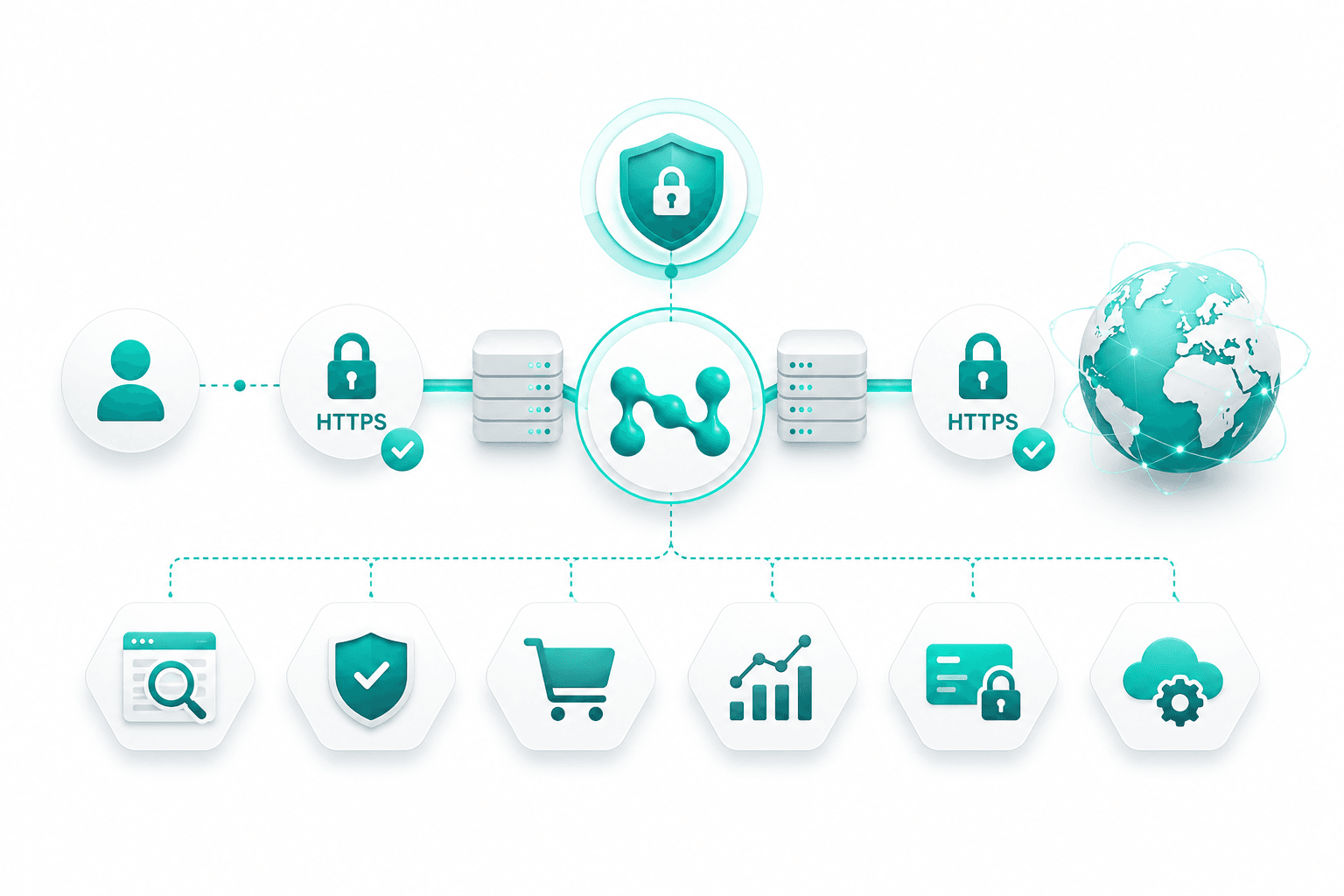
The operating mechanism is built around routing requests through an intermediary node. First, a client application — a browser, script, parser, or corporate system — sends the proxy a request to connect to a specific website. Then the proxy opens a connection to the target server. After that, a secure TLS session is formed between the client and the website, while the proxy itself forwards the encrypted traffic along the established route.
In other words, the proxy participates in data transmission, but in a typical operating model it does not necessarily analyze the contents of the traffic. Its main task is to route the request correctly, replace the original network address with its own, and ensure that the data passes through a controlled routing point.
If an HTTPS proxy is used in a browser, it is usually enough to specify the server IP address, port, and, if necessary, credentials in the connection settings. After that, all web traffic of the selected application begins to pass through the specified proxy.
What an HTTPS Proxy Provides in Practice
The main property of such solutions is the protection of data transmission between the client and the proxy or within the HTTPS session as a whole. This reduces the risk of traffic interception on intermediate sections of the network and makes work with web resources more predictable in environments where connection control and stable request transmission are important.
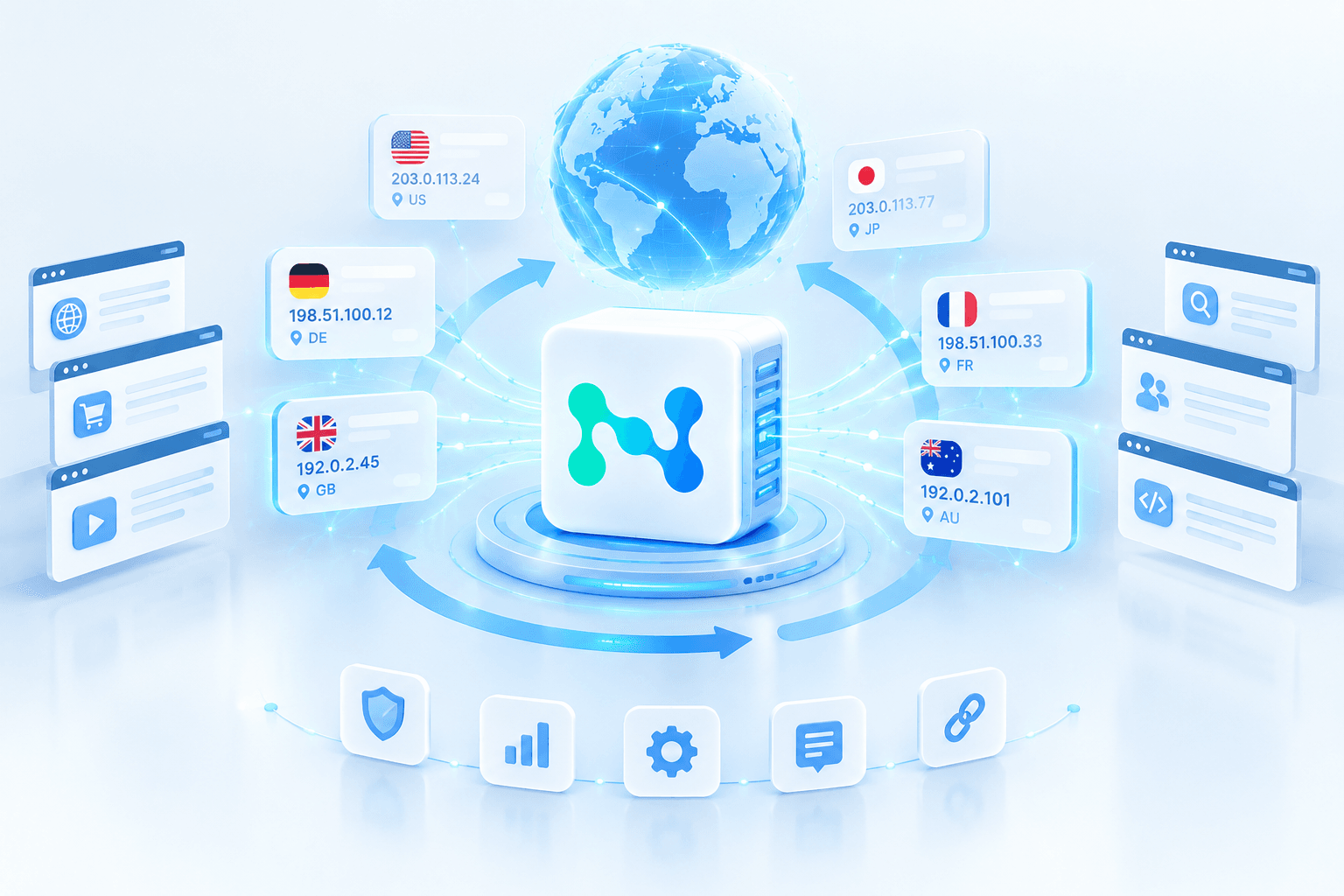
The second important advantage is the management of outbound traffic. The target website sees the address of the proxy server rather than the address of the user’s device. Because of this, it becomes possible to build more flexible resource access schemes, distribute the load across multiple addresses, and centrally organize network requests from applications, employees, or automated systems.
HTTPS proxies are useful where a combination of a secure connection and technical control over exactly how traffic exits to the external network is required. This is especially relevant for companies involved in website monitoring, ad verification, public data collection, and corporate request routing.
Main Use Cases
Web Data Collection
When working with public web sources, HTTPS proxies help build a stable process for sending a large number of requests. By routing through intermediary IP addresses, it is possible to distribute the load, reduce the likelihood of restrictions on the side of websites, and maintain the stability of parsing, monitoring, or data aggregation processes.
Automation and External Integrations
Automated systems often interact with external services through APIs, web interfaces, and internal scripts. In such cases, HTTPS proxies make it possible to route outbound traffic centrally, separate workflows by nodes, and maintain secure data transmission between the company’s infrastructure and external resources.
SEO, Advertising, and Regional SERP Verification
Proxies are often used to check how advertising campaigns, search results, or web pages are displayed in different regions. This helps analyze local results, track changes in SERPs, test the correctness of ad delivery, and verify content availability for different geographic zones.
Premium Residential Proxies for Any Task
Trusted residential IPs, a vast GEO coverage network, pay-as-you-go traffic pricing, and a high connection success rate.
Corporate Traffic Management
Within organizations, HTTPS proxies are used to control outbound connections, apply network policies, and route employee requests through a single node. This approach simplifies administration and makes it possible to establish uniform rules for access to external web resources.
Protection and Offloading of Server Infrastructure
In server architecture, HTTPS proxies can operate as reverse proxies, accepting incoming requests before they reach the application. In this role, they help redistribute the load, process TLS connections at the infrastructure edge, and forward requests to internal services in the required form. This reduces the load on application servers and simplifies scaling.
What Types of SSL/HTTPS Proxies Exist
HTTPS proxies differ not only by deployment method, but also by their function in the network.
- A forward proxy is used on the client side. It receives requests from user devices or applications and sends them to the external network. This is the typical option for browsers, parsers, corporate systems, and automation tools.
- A reverse proxy is placed in front of web servers. It receives incoming requests from the internet and distributes them among internal services. This approach is often used in infrastructure tasks where it is important to process HTTPS traffic centrally.
By the method of working with encrypted traffic, several schemes can be distinguished:
- End-to-end forwarding. The proxy simply relays encrypted data between the client and the server without terminating the encryption session on itself.
- SSL termination. The secure connection is terminated at the proxy. It decrypts the request and then forwards it further along the internal contour. This option is often used in server architecture.
- SSL bridging. The proxy decrypts the traffic, performs inspection or filtering, and then establishes a new secure connection to the next node. This approach is typical of corporate environments where traffic inspection is required.
Separately, HTTPS proxies also differ by the type of IP addresses and the usage model. In practice, residential, ISP, and data center proxies are used, as well as dedicated and shared addresses. The choice depends on the task: in some cases, performance and scalability are more important, while in others, connection stability and the quality of the network pool matter more.
When the Use of HTTPS Proxies Is Justified
Such solutions are especially appropriate in tasks where three conditions are simultaneously required: secure transmission of web traffic, controlled request routing, and the ability to work flexibly with IP infrastructure.
If the task is related to one-time everyday actions in a browser, a complex proxy scheme is often unnecessary. But when it comes to regular interaction with web resources, automated processes, corporate routing, or server architecture, HTTPS proxies become a working tool rather than an additional setting.
How to Configure an HTTPS Proxy
Basic configuration usually comes down to entering four parameters: the proxy server IP address, the port, and also the username and password if authorization is required.
In a browser, this data is specified in the network settings of the application itself. On a computer, the proxy can be set at the operating system level so that the rule applies more broadly than in a single browser. On mobile devices, the proxy is usually configured for a specific Wi-Fi network through the connection parameters.
After saving the settings, the traffic of the selected application or device begins to pass through the proxy server.
Conclusion
SSL/HTTPS proxies are a tool for secure routing of web traffic through an intermediary server. They are used where it is important not simply to send a request to a website, but to do so through a controlled infrastructure, with encrypted data transmission and the ability to manage outbound connections.
The practical value of HTTPS proxies is especially noticeable in web data collection, automation, advertising and search analytics, corporate traffic management, and server architecture. With the right configuration, such a proxy becomes not an auxiliary option, but a full-fledged part of network and application infrastructure. You can purchase high-quality residential proxies on our website node-proxy.com.