Transparent and Explicit Proxy: What the Difference Is and Which Option to Choose
 ·September 17, 2026·6 min read
A proxy server may perform the same basic task—receiving a request from a client and forwarding it to the target resource—but the way it is incorporated into the network architecture and its role in the infrastructure differ significantly. In practice, the two approaches most often compared are the transparent proxy and the explicit proxy. They solve different problems, are implemented differently, and provide different levels of traffic control.
What Is a Transparent Proxy
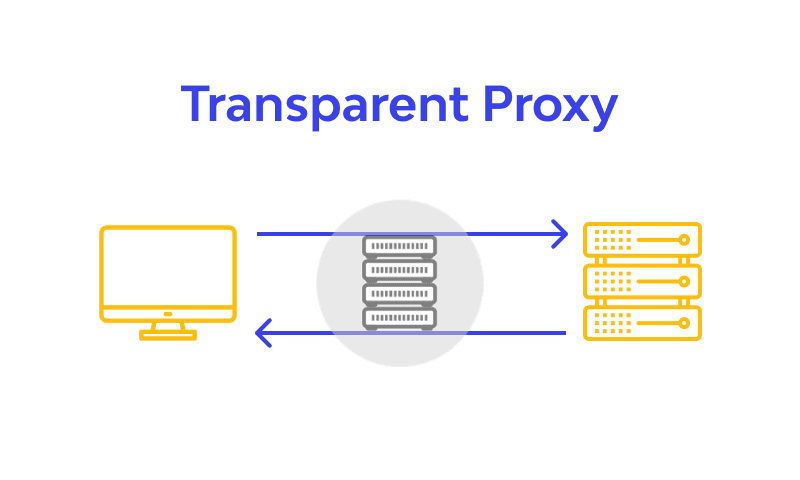
A transparent proxy operates between the user and the web resource without separate configuration on the client side. Requests are intercepted at the network level and automatically routed through an intermediary server. The user usually does not see that their traffic is passing through an additional node.
Residential and Datacenter Proxies. Global Coverage.
Access IPs across 195+ locations worldwide.
This approach is used where access and traffic processing need to be managed centrally without manually configuring each device. Transparent proxies are most often used for:
Content caching
Repeatedly requested data can be served from an intermediate cache, reducing channel load and speeding up access to typical resources.
Access filtering
An organization or internet service provider can restrict access to certain categories of websites, bandwidth-heavy content, or services that interfere with network operation.
Network policy enforcement
A transparent proxy is convenient where rules need to be applied uniformly to all users within a network segment.
Traffic monitoring
This mode is suitable for load analysis, policy compliance checks, and overall monitoring of network behavior.
The main feature of a transparent proxy is that it is implemented at the network level. The user does not choose it and usually does not configure it.
What Is an Explicit Proxy
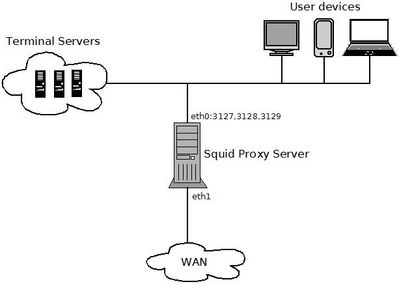
An explicit proxy is a server specified by the client or administrator. In this case, the application, browser, or corporate system knows that it is operating through a proxy and sends requests accordingly.
An explicit proxy is used where a controlled and predictable mechanism for handling web traffic is required. It makes it possible to:
Set access rules centrally
An administrator can determine which resources are available, under what conditions, and for which groups of users.
Control request routing
Traffic can be directed through selected exit points, which is important for distributed teams, testing, and corporate access policies.
Implement additional security measures
An explicit proxy can participate in filtering malicious traffic, inspecting requests, and applying security rules before data is passed to the destination resource.
Configure the client side flexibly
This mode allows explicit configuration through browser settings, system parameters, or a PAC file.
Unlike the transparent mode, an explicit proxy is a deliberately enabled infrastructure element rather than a background network mechanism.
The Key Difference Between the Two Approaches
The main difference lies in who controls proxying and how it is controlled.
A transparent proxy is enabled on the network side. The client continues to operate as if it were connecting directly to the website. Redirection occurs without its involvement.
An explicit proxy is specified directly. The client knows the proxy address and sends the request through it. This provides more configuration options but requires the environment to be prepared.
This point is what determines almost all subsequent differences: the visibility of the proxy to the user, authentication methods, deployment options, manageability, and the range of tasks it can solve.
How This Looks at the Request Level
In a transparent architecture, the client initially assumes that it is connecting to the final web server. Therefore, in the request, the destination address corresponds to the target resource, and the intermediary server must correctly receive and process this traffic as though it were the expected destination point.
In an explicit architecture, the client sends the request to a preconfigured proxy. This changes the very nature of the interaction: the proxy is perceived as a separate network node.
In practice, this affects:
• the method of traffic redirection;
• the behavior of browsers and applications;
• the authentication scheme;
• the requirements for network infrastructure;
• compatibility with specific web resources and internal security policies.
Where a Transparent Proxy Is Typically Used
A transparent proxy is appropriate where centralized management and ease of deployment are the priority.
Corporate networks
Uniform access rules can be quickly applied to all devices without reconfiguring each workstation.
Educational institutions and public networks
Transparent mode is suitable for restricting access to certain types of content and reducing channel load.
Infrastructures with a large number of clients
When there are many devices and managing them individually is inconvenient, network-level request interception simplifies operation.
Systems focused on caching
If the same information is requested repeatedly, a transparent proxy helps speed up access through intermediate data storage.
Where an Explicit Proxy Is Typically Used
An explicit proxy is chosen in cases where precise configuration, controlled traffic behavior, and more flexible administration are important.
Corporate web access filtering
A proxy can be incorporated into the access policy by department, role, application, and work scenario.
Distributed teams
When employees work from different locations and use different devices, this architecture makes it possible to manage rules more predictably.
Research and testing tasks
An explicit proxy is convenient where reproducible network behavior and fixed routing parameters are required.
Environments with increased control requirements
If it is important not merely to restrict access but to build a controlled system for inspecting and allowing traffic, an explicit proxy is the better fit.
Advantages of a Transparent Proxy
The transparent mode has strong points, especially in large networks.
Fast deployment
There is no need to change settings on every client device.
Uniform rules for the entire network segment
Policies are applied centrally and do not depend on user actions.
Reduced administrative burden on end devices
The main logic is concentrated on the network side.
Limitations of a Transparent Proxy
This approach also has noticeable limitations.
Less flexibility
User-side and application-side configuration is limited because the mechanism itself operates independently of the client.
Potential compatibility issues
Some websites and applications are sensitive to the specifics of network interception and may operate unstably.
Dependence on the quality of network configuration
Configuration errors can degrade performance or cause incorrect routing.
Limited suitability for scenarios requiring precise client-side control
If the policy must account for many individual conditions, the transparent mode may prove too coarse a tool.
Advantages of an Explicit Proxy
An explicit proxy is more often chosen where a more mature traffic management model is required.
Flexible access policy
Rules, exceptions, and routes can be configured more precisely.
Convenient integration with corporate security mechanisms
An explicit proxy is better suited to complex filtering and authentication rules.
Suitability for distributed infrastructure
Explicit configuration makes it possible to build standardized scenarios for different departments and remote employees.
Limitations of an Explicit Proxy
This option also has its drawbacks.
Configuration is required
Browsers, applications, system parameters, or a PAC file need to be configured.
Higher administrative requirements
The more flexible the architecture, the greater the demands on its maintenance.
Possible impact on speed in the event of poor configuration
Any additional node in the chain can become a source of delay if the architecture is chosen poorly.
Risk of a single point of failure
If the proxy is included in a critical route and no redundancy is provided, a failure will affect several users or services at once.
What a Business Should Choose
The choice depends not on a general idea of what a proxy is, but on the practical task at hand.
A transparent proxy is suitable if you need to quickly implement centralized filtering, basic caching, and uniform access rules without reconfiguring client devices.
An explicit proxy is better suited if a company needs flexible traffic management, precise policy configuration, predictable integration with security tools, and control over how clients interact with the network.
If the task comes down to simple network-level control at the organizational level, transparent mode is often sufficient. If scalability, manageability, and more precise access configuration matter, an explicit proxy usually proves to be the more practical solution.
Conclusion
Transparent and explicit proxies are not interchangeable options but two different approaches to organizing web access. Transparent mode is convenient for background network control and centralized rule enforcement. An explicit proxy provides more flexibility, is better suited to detailed configuration, and is easier to integrate into a managed corporate infrastructure.
Therefore, the choice should be made not by the name of the technology, but by what exactly the network requires: unobtrusive centralized intervention in traffic or an explicit, configurable, and controllable mechanism for processing it. You can try residential and datacenter on our website.