Best SERP APIs in 2026: Comparing Search Result and Rank Tracker APIs

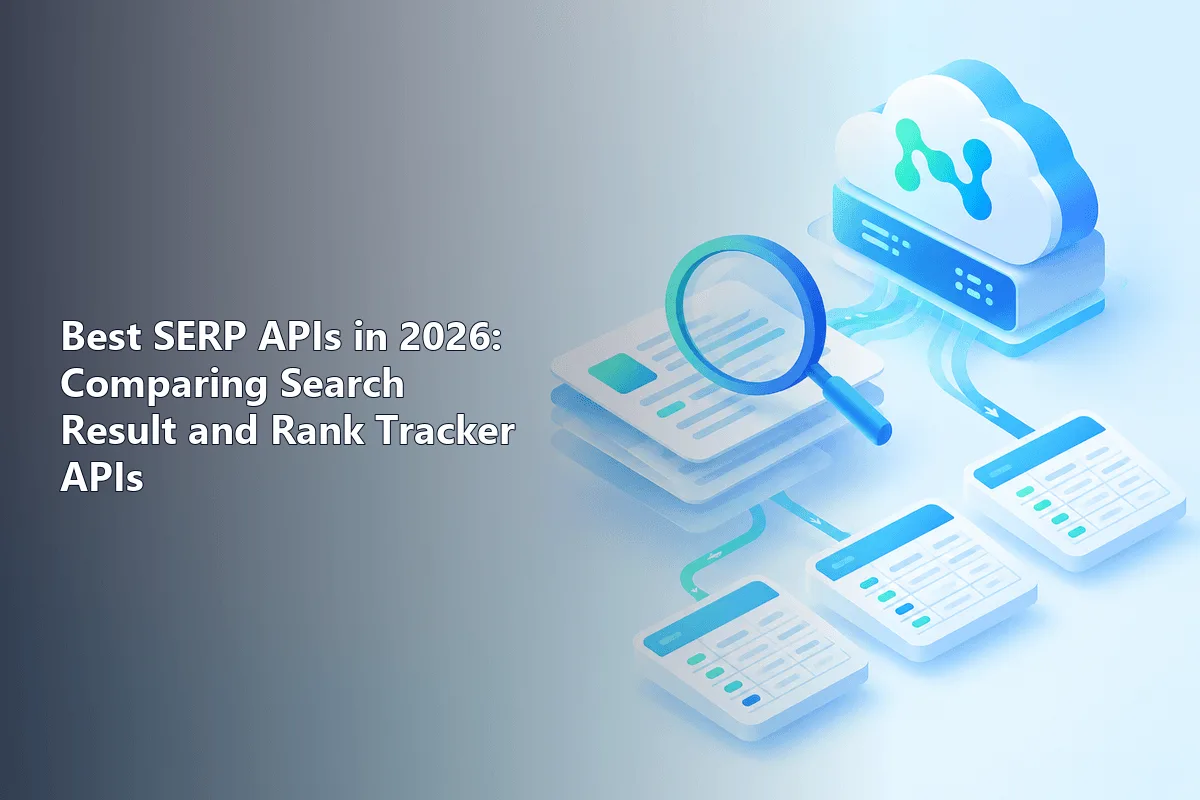
Picking a SERP API comes down to three checks: it must cover every engine you report on, pin a query to the city your keywords depend on, and keep its billing sane now that Google serves ten links per page. Run a long vendor list through those filters and two or three names usually survive. Occasionally none fits, and fetching the pages on your own through proxies turns out cheaper.
Vendor round-ups usually rank whoever paid for the slot. Below you will find something else: the five properties that separate one SERP API from another, a side-by-side table of well-known services, a way to estimate the bill per thousand keywords, and a plain description of the do-it-yourself route with proxies. Prices move every quarter, so we compare billing units rather than quoting figures.
Proxies for SERP collection
Rotating residential proxies with country and city targeting for your own search result checks
SERP API or Rank Tracker API?
Both labels get used for the same search, yet they sell different things:
- A SERP API loads the search page at the moment you ask and converts it to JSON with one key per block: organic listings, paid slots, the map pack, related questions, product carousels and, from the more recent endpoints, the AI Overview text. Storage, scoring and reporting are left to you.
- A rank tracker API belongs to an SEO platform. The platform checks your keyword list on its own schedule and the API hands back computed positions for your domain and competitors, often with history and visibility scores.
Pick the first if you build your own dashboards, feed results into an AI agent or need engines that platforms ignore. Pick the second if you already pay for a platform and only want its numbers in your BI tool.
What Changed in 2025–2026
Four events reshaped this market in about a year, and older reviews miss them:
- Google stopped honouring
num=100in September 2025. A results page now carries about ten organic links, so a top-100 check costs up to ten requests instead of one. APIs that bill per call became noticeably more expensive for deep tracking. - Microsoft shut the Bing Search APIs on August 11, 2025. Its proposed successor belongs to the Azure agent stack and feeds grounded snippets into a model, which is useless if you want a list of ranked URLs. Bing rankings therefore now come from vendors that crawl the page themselves.
- Google's Custom Search JSON API takes no new sign-ups. Projects already on it lose access when January 2027 arrives. Its output had little in common with a live google.com page in the first place, since it searched only sites you listed.
- Google filed a lawsuit against SerpApi in December 2025, claiming that the company circumvented its anti-scraping protections. Whatever the outcome, it reminds buyers that every third-party Google SERP API works without Google's blessing, and that contracts and data-use terms deserve a careful read.
Five Properties That Separate SERP APIs

Engine coverage. Google is a given. The gaps open up once you need a second engine or a Google vertical: Yandex, Baidu, Naver, DuckDuckGo, YouTube, Maps, the shopping tab. Teams reporting on Russian-language markets should verify Yandex support before anything else; plenty of Western vendors left it out or removed it.
Geo depth. Country targeting is standard. City-level location, a ZIP code or exact coordinates matter for local packs and service businesses. Ask how the vendor applies the location: by an encoded parameter alone, or by also routing the query through an exit IP in that place.
Parsing quality. Look at the JSON for a messy query in your niche, not the demo. Do sitelinks, video carousels, the map pack and AI Overviews arrive as separate typed blocks? Is the absolute position on the page reported next to the organic rank? When Google changes its markup, how fast does the parser catch up?
Billing unit. One request, one successful result, one credit with multipliers for rendering, or one page of ten links. Two plans with the same headline rate can differ several times over once you count pages, retries and premium features.
Delivery mode. Live calls answer in seconds; queued tasks are cheaper but return minutes later through a webhook or a polling endpoint. Rank tracking at scale rarely needs live speed.
Well-Known SERP APIs Side by Side
Information below comes from the vendors' public documentation as of October 2026. Check the current terms before you sign up.
| Service | Coverage in short | Where it can place a query | You pay for | Keep in mind |
|---|---|---|---|---|
| SerpApi | Widest catalogue: every Google vertical, Yandex, Baidu, Bing, Yahoo, DuckDuckGo | A named city | A monthly bundle of searches, errors not counted | Currently fighting the Google lawsuit |
| DataForSEO | Google, Bing, Yahoo, Baidu, Naver, Seznam, YouTube | A city or a latitude and longitude pair | Each task, drawn from a prepaid deposit | Queue, priority and live tiers cost differently |
| Serper | Google alone | Country, interface language, free-text place | Credit packs; pages beyond the first cost more | Lean and quick; skips AI answer blocks |
| SearchAPI.io | About twenty engines including Yandex and Baidu | A named city | A monthly bundle of searches | Uptime promise on its bigger plans |
| Zenserp | Several engines, from Google to DuckDuckGo and Naver | Country plus place name | A monthly bundle; only good replies are billed | Dedicated calls for Maps, Shopping, News |
| Bright Data | Google, Bing, Yandex, DuckDuckGo and more | City or map point | Each page it manages to return | Requests leave through the firm's own residential network |
| Oxylabs | Google and Bing among many scraping targets | City or map point | Returned pages, sold in monthly tiers | Search sits inside a general-purpose scraper |
| Yandex Search API | Yandex only | Region by its numeric code | Requests, through Yandex Cloud billing | The sole sanctioned feed of Yandex results |
In Russian-speaking SEO, XML resellers such as XMLRiver are common as well: they return Yandex and Google results in the old XML format that desktop tools understand. Treat them like any other unofficial source and read their terms.
Rank Tracker APIs: When a Platform Is Enough
AccuRanker, Ahrefs, Semrush and SE Ranking expose their rank tracking data through APIs, usually on higher tiers or for an extra allowance of units. They are billed per tracked keyword or per unit rather than per request, refresh daily or less often, and return positions already matched to your domain. That saves parsing, but you cannot ask for an unusual engine, an exotic city or an hourly check. For a broader view of what search teams use proxies and data feeds for, see our guide to SEO proxies.
Estimating the Bill per Thousand Keywords
Run this calculation before comparing price lists:
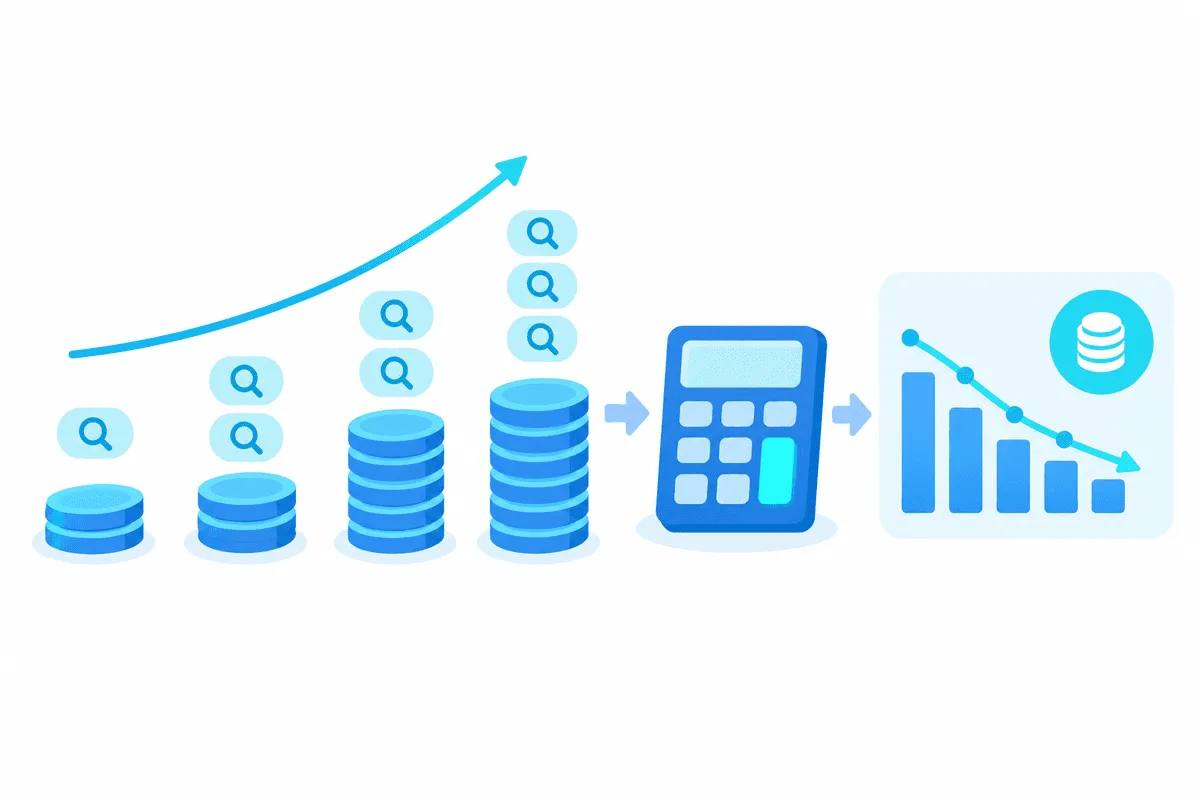
calls_per_day = keywords × locations × devices × pages_per_checkTake 1,000 keywords, three cities, desktop and mobile, and a top-30 depth that now needs three pages: 1,000 × 3 × 2 × 3 = 18,000 calls a day, or about 540,000 a month. The same list at top-10 depth costs a third of that. Multiply the result by the vendor's unit price, then add:
- retries the vendor bills even when a page fails;
- surcharges for JavaScript rendering, AI Overview extraction or HTML snapshots;
- the minimum deposit or the unused allowance that expires at month end.
Most teams end up checking the top 10 or top 20 daily and running a deep top-100 crawl once a week.
The DIY Route: Collecting SERPs Through Proxies
Building your own collector makes sense when you need an engine or a location no API sells, when volumes are large enough that per-call fees dominate, or when you want raw HTML under your own control. The pieces are a scheduler, an HTTP client or headless browser, a parser you maintain yourself and a pool of exit addresses that look like ordinary users in each city.
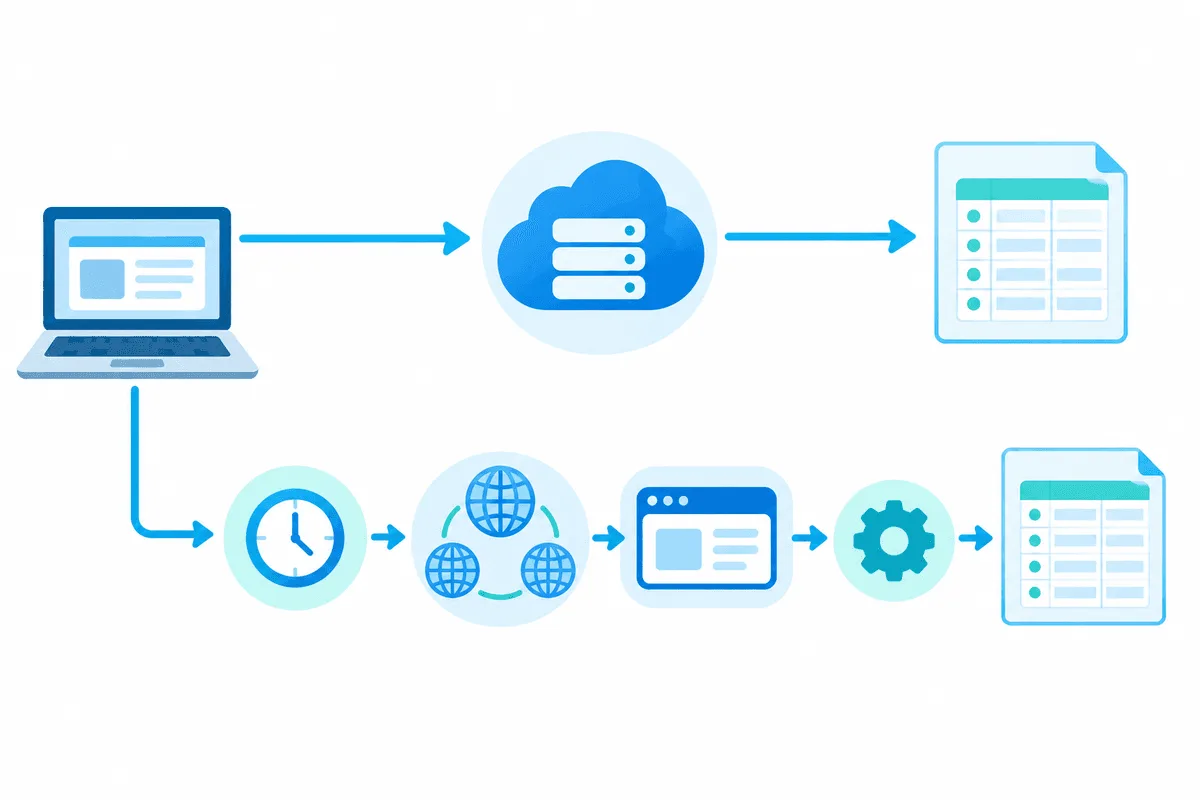
The proxy layer decides whether the collector works at all. Search engines quickly challenge datacenter ranges, so most DIY setups use rotating residential proxies with country and city selection, one query per exit and pauses of tens of seconds between queries from the same address. Our page on SERP data collection describes the pacing in more detail, and the overview of proxy server types explains why home and mobile addresses get fewer captchas than server ones.
Keep the trade-offs in view. Google's terms prohibit automated queries, markup changes break parsers without warning, and the hours spent fixing them are a real cost. Many teams therefore mix both: an API for the bulk of daily tracking and their own proxy-based checks for spot audits, rare engines and verifying that the API shows what local searchers see.
How to Choose
- List engines and locations first. Strike out every service that misses one of them.
- Request a sample for five hard queries in your niche, from two cities, and compare the JSON with what you see manually through a local exit.
- Model the monthly bill with the formula above, at the depth you really need.
- Check the delivery mode. If daily tracking can wait an hour, a queued tier is cheaper.
- Read data-use and liability terms, especially if the output feeds a product you sell.
- Keep a fallback. A second vendor or a small proxy-based checker saves the week when your main API breaks after a layout change.
SERP API FAQ
What is a SERP API?
Think of it as a hired fetcher: you send a keyword plus a location, it loads the search page somewhere on its network and replies with labelled JSON. Exit addresses, challenge pages and markup parsing stay on the vendor side, and your script reads fields like title, link and position.
Is there an official Google search results API?
No product of Google returns the page an ordinary visitor sees. Its Custom Search JSON API only looked through a list of sites you configured, stopped accepting sign-ups and will be switched off for remaining users when 2027 begins. Vendors selling complete google.com pages gather them on their own, with no licence from Google.
Which SERP API is the cheapest?
No single name wins, because the answer flips with depth and volume. A vendor that bills per ten-link page can lose to one that bills per task once you go past the top 10, and rendering surcharges shift totals again, so plug your own numbers into the formula above.
Can I still get Bing results through an API?
Not from Microsoft in the old form: its public endpoints went dark in August 2025. You can buy Bing pages from independent vendors that render and parse them, while Microsoft itself now offers only an agent-oriented grounding feature that hands snippets to a model.
Should I use a SERP API or my own scraper with proxies?
Buy access when you need results next week and have no engineer to maintain parsing code. Build when daily volume is enormous, when the engine or town you need is missing from every catalogue, or when you want a second opinion on purchased data; residential exits make that self-built route workable.