Collecting Data from Social Networks: Tasks, Approaches, and Criteria for Choosing Tools

Social networks have long been not only a communication channel, but also a major source of applied data. Posts, comments, reactions, hashtags, profile information, and engagement dynamics help companies assess audience interest, track changes in demand, monitor the competitive environment, and build working decisions more accurately. But such data can be obtained in a form suitable for analysis not manually, but only through systematic collection and processing.
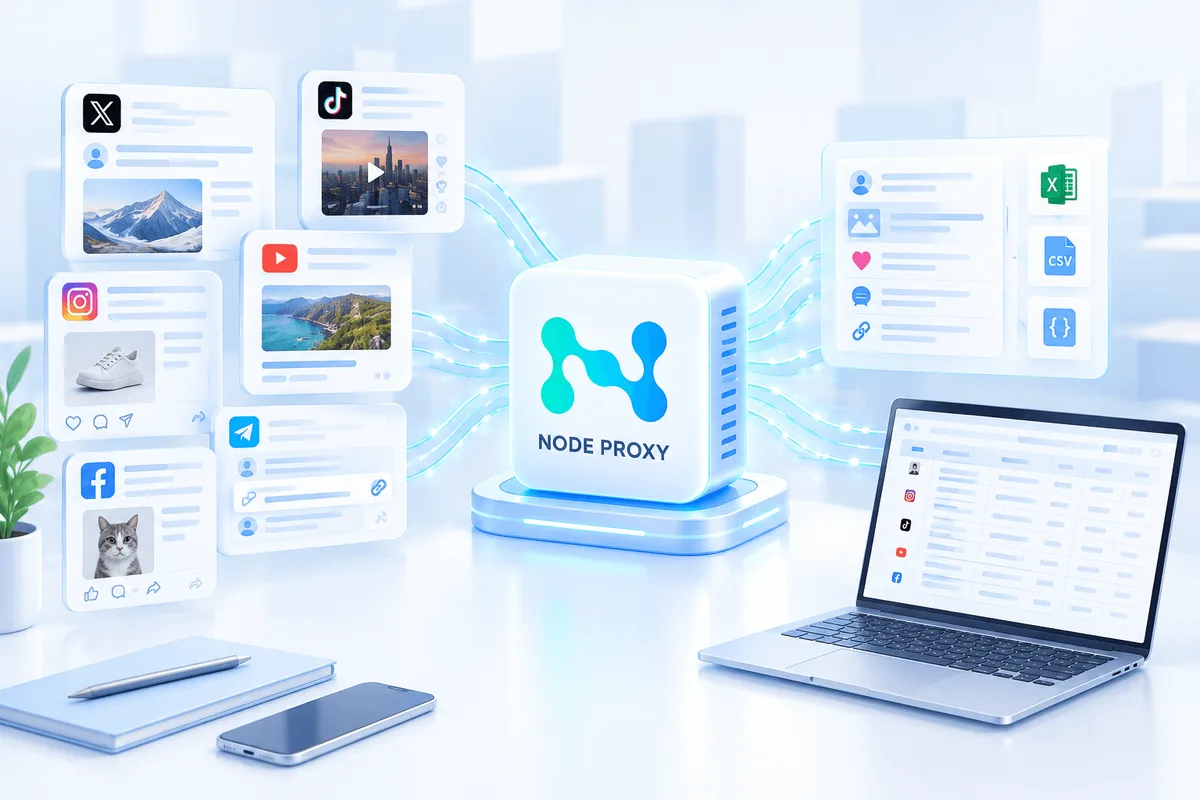
Social media scraping is the extraction of publicly available information from platforms and services. This is not about chaotic copying of individual pages, but about an organized process in which data is collected automatically, structured, and transferred for further analytics. This approach eliminates manual work, reduces the number of errors, and makes it possible to work with volumes that cannot be processed manually.

What Data Is Usually Collected
The set of available data depends on the platform and the selected tool, but most often companies work with several types of information.
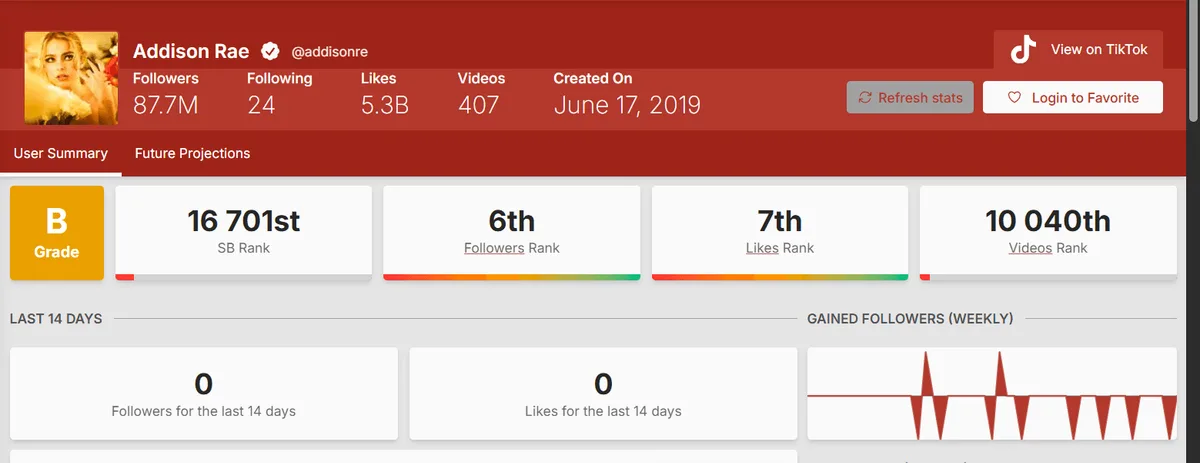
The first group includes profile data: usernames, display names, descriptions, images, information about followers and subscriptions, and sometimes geographic indicators, if they are publicly available.
The second group is publications. This includes post texts, captions, images, videos, the date and time of publication, as well as tags and links attached to the publication.
The third group is engagement metrics. These are usually likes, comments, views, reposts, retweets, saves, and other indicators that can be used to evaluate audience reaction.
Comments have separate value: their content, timestamps, replies, authors, and the nature of interaction around a specific topic. This particular data set is often used when analyzing the audience’s attitude toward a brand, product, or event.
Additionally, data on hashtags, thematic discussions, company pages, groups, and, in some cases, product information may be collected if the social platform includes marketplace elements.
Residential and Datacenter IPs for Automated Data Collection
Use web crawlers and scrapers through IPs from different locations.
Why Businesses Need to Collect Data from Social Networks
The practical value of such collection is determined not by the mere fact of obtaining information, but by how it is used in work.
Business Analytics
Social platforms make it possible to see how the audience reacts to content, which topics generate a response, which formats work better, and which techniques competitors use. Based on this data, companies adjust their content strategy, change communication priorities, and more accurately assess their own visibility in the digital environment.
Sentiment Analysis
Comments, reviews, discussions, and mentions help understand how a brand or a specific product is perceived. If the share of negative reactions grows, this may indicate a problem that requires immediate attention. If, on the contrary, the positive background strengthens, this provides grounds for consolidating successful decisions and scaling them.
Lead and Business Contact Search
In a number of scenarios, data from social networks is used to search for potential clients, partners, representatives of the target audience, or specialists from the required industry. This is especially important where it is necessary to quickly form relevant contact lists or identify active participants in a particular niche.
Trend Analysis
Social networks often become the first environment where new topics, formats, and consumer signals appear. Systematic data collection helps notice changes before they move into a mature market phase. For businesses, this means the ability to respond more quickly to audience requests and adapt the product, communication, or advertising strategy in a timely manner.
Supporting Fact-Based Decisions
When a strategy is built not on assumptions, but on real audience signals, the business gains a more reliable basis for action. Collecting data from social networks helps identify recurring complaints, frequent requests, strengths and weaknesses in communication, and then use these conclusions in marketing, product work, and customer service.
What Approaches Are Used to Collect Data
There is no universal method. The choice depends on the tasks, the team’s technical preparedness, the budget, and the scale of the project. In practice, three options are most often used: custom scripts, APIs, and no-code tools.
The Role of Proxies in Collecting Data from Social Networks
When collecting data from social networks, not only the extraction logic is important, but also the stability of the process itself. Social platforms track atypical activity: a large number of similar requests, repeated requests from one address, an excessively high frequency of actions, and other signs of automation. Because of this, even a correctly configured tool may work unstably if the network part of the process is not taken into account.
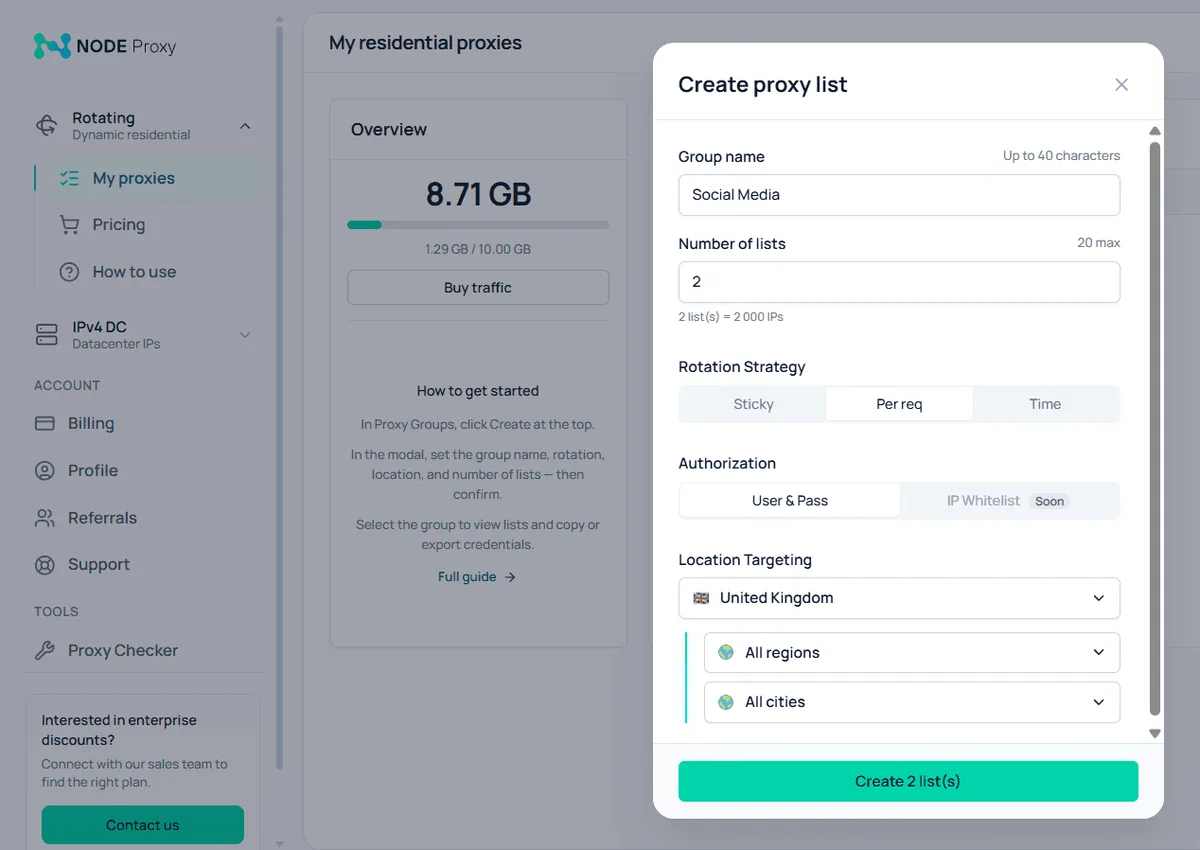
Proxies in such a scheme are used as a technical tool that helps distribute requests and reduce the risk of failures during large-scale data collection. They are especially important in cases where parsing is performed regularly, covers large volumes of pages, or is carried out across several sources at once. In more complex scenarios, proxies also make it possible to manage request routing flexibly and maintain the stability of long-running tasks.
Their significance also depends on the chosen collection approach. In custom scripts, proxies usually have to be selected, connected, and monitored separately. In scraping APIs and no-code services, this function is often already built into the platform infrastructure, which simplifies launch and reduces the load on the team. Therefore, when choosing a tool, it is important to understand in advance exactly how it handles network requests and whether such capability is included in the basic configuration.
Proxies do not replace high-quality configuration of the data collection itself, but in practical work they remain one of the key elements of a stable infrastructure. If a tool is designed for regular extraction of data from social platforms, the issue of proxy support should generally be assessed on a par with scalability, ease of configuration, and data export quality.
You can read about the role proxies play in market analysis in this article
Custom-Developed Scripts
This option is chosen in cases where flexibility, precise configuration, and control over the collection logic are needed. Such solutions are usually written in Python or JavaScript, with Python remaining the most common choice due to its clear syntax, large number of libraries, and active community.
A custom scraper allows you to define in detail exactly what data to collect, how to crawl pages, how to process pagination, how to store results, and how to integrate collection into the existing infrastructure. This is useful where template solutions do not cover the task or where non-standard logic is required.
At the same time, this approach requires serious technical preparation. It is not enough simply to write code that extracts data from a page. It is necessary to account for resilience to interface changes, correctly process dynamic content, support authorization scenarios where this is permissible, and constantly monitor operational stability. For this reason, custom scripts are justified in teams that have developers ready not only to create the tool, but also to maintain it further.
The advantage of this path is high customizability and the ability to collect data exactly in the form the business needs. The disadvantage is the high cost of development and support, as well as dependence on internal technical resources.
API
Official APIs of social platforms are the most structured and predictable way to obtain data where such access is provided. Information is usually returned in JSON or XML format, which simplifies integration with analytical systems and internal services.
The advantage of an API is that it is designed for machine-to-machine interaction and provides a more stable channel for accessing data. In addition, official access usually fits better into the established rules of the platform. This reduces operational risks and makes work more sustainable in the long term.
However, APIs have limitations. They often impose limits on the number of requests, restrict the set of available fields, and do not always allow obtaining the depth of data needed for complex analytics. As a result, APIs are well suited for tasks where reliability, predictability, and structure are important, but they work worse where maximum completeness of information or non-standard collection scenarios are required.
There are also unofficial scraping APIs. They allow access to data through the ready-made infrastructure of a service that takes over the technical details. This can be a convenient compromise between custom code and a no-code tool, but this option still requires technical understanding and assessment of the provider’s quality.
No-Code Tools
No-code solutions are aimed at users without programming skills. These are usually services with a visual interface, ready-made templates, and simple setup scenarios. They make it possible to launch data collection much faster than with custom development.
The advantage of this approach is accessibility. The user specifies the source, selects the required fields, configures the frequency, and receives the finished result in a table, file, or through integration with external systems. Many services additionally support export to CSV, JSON, Excel, databases, Google Sheets, and other environments.
Another important advantage is built-in technical functions. Many platforms already include tools for session management, processing dynamic pages, routing requests, and integration with automated workflows. This reduces the amount of manual configuration.
But no-code tools strongly depend on the specific provider. Different services vary in stability, cost, the number of supported platforms, and depth of configuration. For small and medium-sized tasks, this is often a convenient solution, but under large-scale loads, costs can grow quickly, and flexibility limitations can become noticeable.
What to Consider When Choosing a Tool
The choice of a tool should not be reduced only to price or the popularity of the service. It is much more important to understand how well the solution fits a specific work scenario.
Customizability
A good tool should allow you to define exactly what data is collected, from which pages, under what conditions, and at what frequency. It is important to be able to select the necessary fields separately and not overload the export with unnecessary information.
Scalability
If today it is necessary to collect data on one topic, and tomorrow on dozens of pages and several platforms, the tool must withstand the growth in load. It is important to assess in advance whether it is capable of processing large data sets and working with several sources in parallel.
Ease of Use
Even a functional service loses value if working with it requires unnecessary actions and constant intervention by a specialist. A convenient interface, clear setup logic, and transparent documentation directly affect launch speed and daily operation.
Data Format and Quality
The result must be suitable for analysis without additional lengthy cleaning. The better the tool structures data at the output, the easier it is to integrate it into reports, BI systems, CRM, or research processes.
Integrations
If the data will later be used in spreadsheets, analytical dashboards, automated scenarios, or internal services, it is important to check how easily the tool transfers results into the existing infrastructure.
Legality and Ethics
The key issue here is not only the technical ability to obtain data, but also the nature of the information and the purposes of its use. When it comes to publicly available data and its use for analytics, marketing research, demand assessment, or strategy development, such collection is usually considered within the scope of acceptable business practice.
But any actions related to obtaining closed user data, account credentials, payment information, or other sensitive information go beyond these limits. The same applies to cases where data is used not for analysis, but for unfair actions.
Therefore, when working with data from social networks, it is important to follow several principles at once: collect only publicly available information, clearly limit the purposes of use, stay within the rules of the platform, and not replace a research task with actions that affect users’ private information.
Conclusion
Collecting data from social networks is not a separate technical operation, but part of an analytical system that helps companies see audience reactions, track trends, evaluate content effectiveness, and make decisions based on real signals rather than assumptions.
For some tasks, a no-code tool with ready-made templates is sufficient. For others, an API with predictable access to data is required. In more complex cases, custom development is justified. The main selection criterion here is not the universality of the tool, but its fit for a specific task: what data is needed, in what volume, with what regularity, and how it will be used further.
If this is done correctly, data from social networks turns from a fragmented stream of publications and reactions into a working source of insights for marketing, product, and strategy. You can purchase high-quality residential and datacenter proxies on our website node-proxy.com.