How to Reduce the Risk of Being Blocked During Web Scraping


Web scraping is needed when data is available on website pages but is not provided through an API or is exported in an inconvenient format. In practice, the task comes down not only to extracting information, but also to doing so carefully: without overloading the server, without creating a suspicious request profile, and without breaking the process at the first restrictions imposed by the site. To avoid getting blocked, keep a moderate request rate with random delays, send consistent browser headers, back off on errors, and distribute requests through a proxy pool.
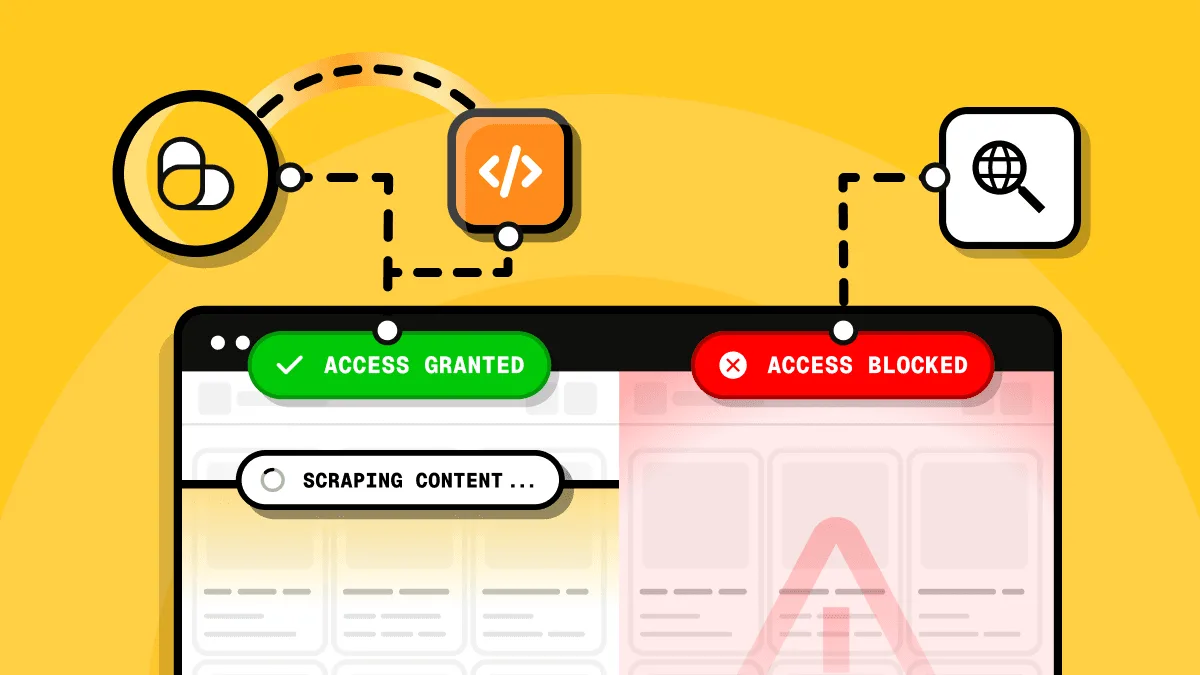
Most large resources already have basic protection against automated data collection. It tracks request frequency, repetitive behavior, the client’s technical parameters, errors, page transitions, and other signs by which automated traffic differs from ordinary user traffic. That is why resilient scraping is built not on a single technique, but on a set of coordinated rules.
Where resilient scraping begins
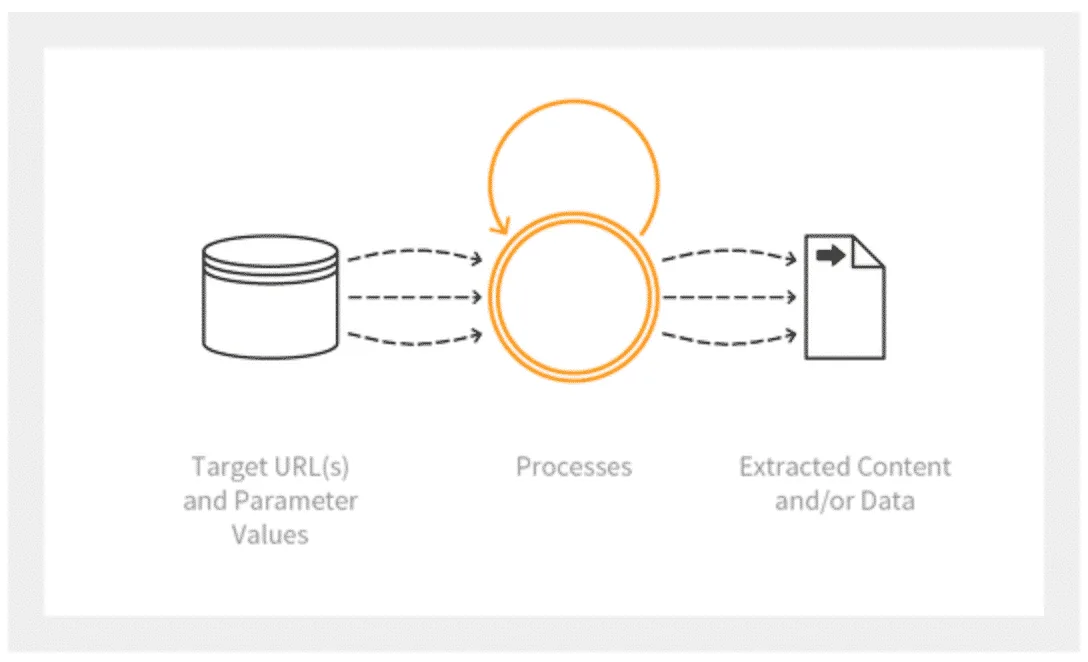
The first thing to check is whether the site has an official API. This is the most predictable way to obtain data: it usually has clear limits, a stable response structure, and a lower risk of running into layout changes. If there is no API or it does not cover the required scenarios, you have to work with the site’s HTML, JavaScript, and network requests.
Next, it is important to determine how exactly the content is generated. If the page returns ready-made HTML, a regular HTTP client and parser are sufficient. If the data appears only after JavaScript execution, scrolling, opening filters, or other actions, browser automation will be required. A mistake at this stage is costly: you can spend time on a parser that is technically incapable of obtaining the required result.
A Reliable Foundation for Scraping
Node Proxy's residential network for web data projects.
Request behavior should look natural
One of the most noticeable signs of automation is an overly regular request pattern. When requests come at identical intervals, especially over a long period of time, this is easy to detect on the site’s side. That is why fixed pauses are better replaced with random delays within a reasonable range.
But not only randomness matters; the intensity itself matters as well. Even a well-randomized request flow will look suspicious if it is too dense. The load should correspond to the type of resource, the volume of pages, and the server’s response. For this, it is useful to limit parallelism, distribute queues, and avoid aggressively crawling large sections without necessity.
Request headers should look consistent
A site evaluates not only the request address, but also its technical profile. If the client sends an incomplete or uncharacteristic set of headers, this increases the likelihood of restrictions. User-Agent matters first and foremost, but the matter does not end there.
Servers also usually analyze Accept, Accept-Language, Accept-Encoding, Connection, Cache-Control, Referer, and sometimes cookies or application service headers. It is important not simply to insert a popular User-Agent, but to assemble a consistent set of parameters. For example, the language, encodings, and browser type should not contradict one another. The closer the request profile is to that of a real browser, the fewer unnecessary questions the protection system has.
Referer plays a separate role. For many pages, it matters where the user came from: from search, from a catalog page, from a product card, or from another internal section. Direct access to complex URLs with parameters may look unnatural, whereas a correctly built chain of transitions makes the behavior more plausible.
Web Scraping Blocks FAQ
How do I avoid getting blocked while scraping?
Keep the request rate moderate with random delays, send a consistent set of browser headers, handle sessions and cookies, slow down on errors and distribute requests through a proxy pool.
Why do websites block scrapers?
Websites track request frequency, identical intervals, inconsistent headers and unnatural navigation. When traffic looks automated, they respond with errors, CAPTCHA or IP blocks.
What do 403 and 429 errors mean when scraping?
A 403 error means access was denied, often because the request looks suspicious. A 429 error means too many requests were sent in a short time, so delays should be increased.
Do proxies alone prevent blocks?
No. Proxies spread the load across different IP addresses, but if requests are too frequent or headers are inconsistent, blocks will still happen.
Browser automation is not always necessary, but sometimes it is unavoidable
Many modern sites build the page only after the base HTML has loaded. Content is inserted by scripts, loaded in parts, depends on interface events and session state. In such cases, a simple HTML parser does not see the final document in the form in which the user sees it.
In such situations, headless browsers and automation tools such as Playwright, Puppeteer, or Selenium are used. They make it possible to open the page, wait for JavaScript to execute, work with buttons, forms, filters, and content loading. This approach is more resource-intensive, but it is better suited to complex interfaces.
At the same time, browser automation requires careful configuration. If every browser instance is launched with the same parameters, an empty history, the same set of environment characteristics, and the same sequence of actions, this also forms a pattern. For stable operation, it is necessary to manage sessions, cookies, the order of actions, timings, and the handling of dynamic elements.
Server errors should be treated as a signal, not as a reason to push harder
A good scraper not only obtains data, but also knows how to respond correctly to refusal. Errors 403, 429, 503, unexpected redirects, empty responses, placeholders instead of content, or a sharp slowdown in response time are all signs that the current strategy is no longer suitable.
Instead of repeated attempts at the same pace, it is better to enable an adaptive scheme: increase delays, reduce parallelism, postpone problematic URLs, rebuild the queue, and analyze what exactly changed. For this, backoff logic is used: after each repeated failure, the pause before the next attempt increases. Such a mechanism helps avoid worsening restrictions and preserves the operability of the process.
It is also useful to keep statistics on status codes, response times, and the number of failed requests per domain, section, or specific page template. This makes it possible to quickly understand where the problem is related to protection, and where it is caused by a change in site structure or an error in the parser itself. Typical failures are covered in our article on website parsing errors.
Markup traps must not be ignored
Some sites use elements that are visible in HTML but are not intended for ordinary interaction. These may be hidden links, form fields, or service blocks that are absent from the real user scenario. If a parser mechanically traverses all detected elements in sequence, it begins to behave in a way that a person does not.
Therefore, before automatically following links and filling out forms, it is useful to filter elements by visibility and purpose. CSS properties, the element’s position in the document, its role in the interface, and the context in which it appears should all be taken into account. Such filtering reduces the risk of false actions and at the same time improves the quality of the collected data.
CAPTCHA is not a separate problem, but a symptom
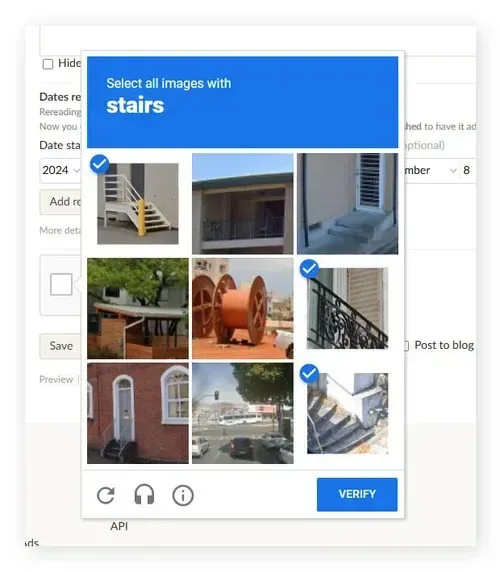
If a site has started regularly showing CAPTCHA, this usually means that the traffic already looks suspicious. In such a situation, it is better not to regard CAPTCHA as the only barrier that simply needs to be removed. It is far more important to understand why the system reached this stage.
Most often, the reason lies in overly frequent requests, repetitive actions, an unstable session, inconsistent headers, or unsuccessful crawling logic. Until these problems are resolved, additional mechanisms only mask the cause, but do not make the process resilient.
Optimization reduces both load and the risk of restrictions
The fewer unnecessary requests the parser makes, the better. Therefore, it is useful to eliminate duplicates in advance, cache already collected data, save intermediate results, and not request the same page repeatedly without necessity. This not only speeds up collection, but also makes the behavior more careful.
It is also important to design the crawling queue correctly. There is no need to launch a continuous crawl across the entire site if data is needed only from certain sections. It is better to use targeted routes, URL normalization, link deduplication, and explicit priority rules. The more precise the crawling logic, the lower the load and the easier it is to control the quality of the result.
Distributing requests through proxies
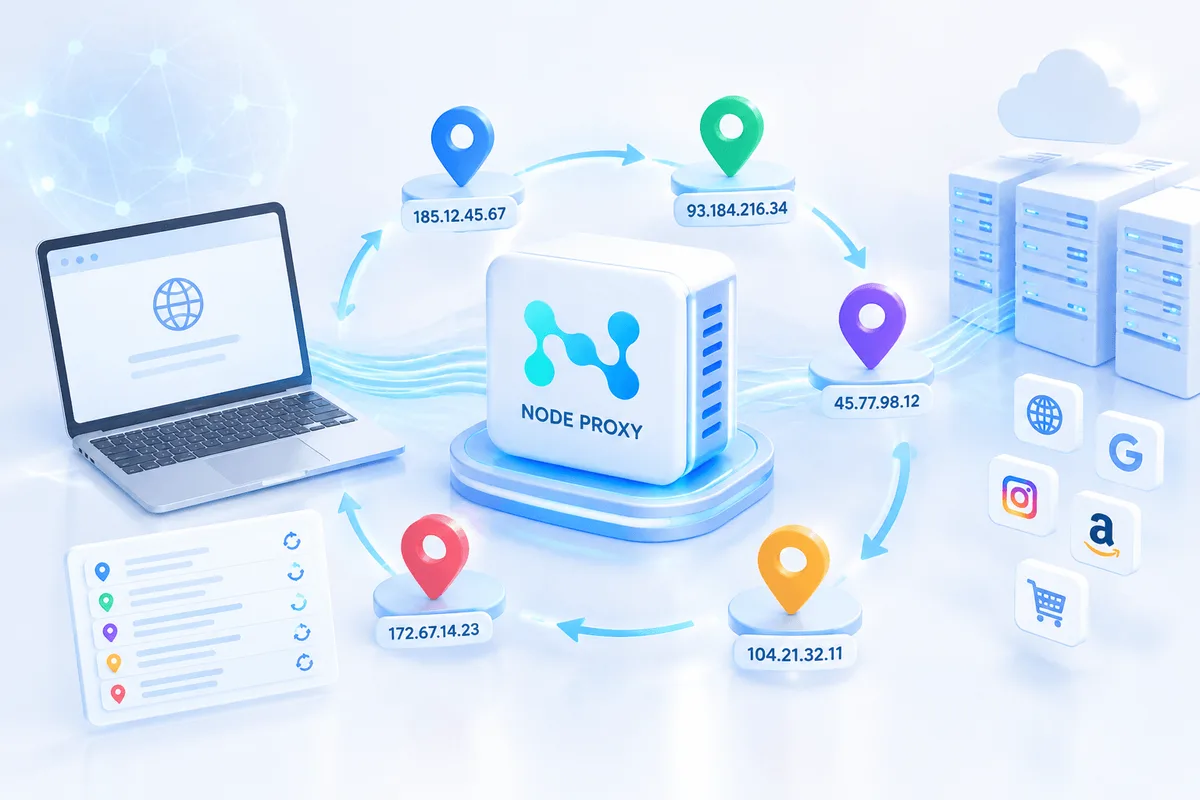
If the entire flow of requests comes from a single IP address, the site links the requests together more quickly and imposes restrictions more often. Therefore, when working with large volumes of data, a proxy pool is usually used, through which requests are distributed across different addresses. This helps avoid concentrating the load at one point and reduces the likelihood that the activity will be interpreted as anomalous.
However, a proxy by itself does not solve the problem. If requests still come too frequently, with the same headers, according to a template-based scenario, and without proper error handling, blocks will still remain. Proxies work only as part of an overall scheme in which crawl speed, header structure, session logic, and parser behavior on problematic pages are all controlled at the same time.
For practical work, pool stability, predictable connection speed, and clear rotation rules are important. Addresses can be changed on every request, by timer, by session, or after signs of restriction appear. The specific strategy depends on the type of site and on how sensitively it reacts to frequent switching. Excessively abrupt address changes can also look unnatural, so rotation should be built into the overall crawling logic rather than used chaotically.
Free solutions in such tasks are usually less reliable: they have unstable availability, low speed, and unpredictable routing quality (see are free proxies safe). In production scenarios, what matters is not the formal fact of having proxies, but the ability to maintain the connection consistently, control the error rate, and understand in advance how the system will behave as the load grows. For large-scale scraping, residential proxies are a common choice.
What most often leads to blocks
In practice, problems usually arise not because of a single factor, but because of their combination. The most typical causes are an excessively high request frequency, identical intervals between requests, a contradictory set of headers, the absence of proper session handling, attempts to parse JavaScript-driven sites as static HTML, ignoring errors, and repeated requests to problematic pages without a pause.
No less often, failures begin after changes on the site’s side. If the response structure suddenly changes, new redirects appear, pages begin loading differently, or part of the data moves to a background API, the old scenario quickly starts producing errors. That is why stable scraping is not a one-time setup, but constant monitoring of how the target resource behaves.
Conclusion
The risk of being blocked during web scraping can be reduced if the task is treated not as a mass export of pages, but as a controlled technical process. This requires moderate speed, random delays, correct headers, an understanding of how the content is generated, careful error handling, filtering of markup traps, and reducing the number of unnecessary requests.