Running More Than One Amazon Seller Account: What the Rules Permit and How to Stay Compliant

Out of the box, Amazon expects each merchant to operate a single Seller Central account per region. A second one becomes acceptable only when a genuine commercial reason sits behind it, for instance two brands that really are managed as independent businesses, and only while every account you already hold is healthy. Spinning up extra profiles without such a reason, or to keep trading after a deactivation, endangers all of the accounts Amazon associates with you.
In short, a second seller account is possible in some situations, as long as it is disclosed and follows Amazon's terms. This guide unpacks the wording of the policy, the justifications Amazon recognises, how the request process has looked, what every account must have of its own, which built-in features frequently remove the need for another account, and what role proxies can honestly play.
Proxies for seller teams
Static IPs that give each workspace a stable address for Seller Central access
The Policy in Plain Words
Amazon's help content on running several Seller Central accounts has repeated three principles for years:
- Single account as the baseline. A merchant runs one account per selling region, such as North America or Europe.
- Exceptions tied to a real commercial purpose. Amazon illustrates this with examples instead of an exhaustive list.
- Every account must be healthy. Should any one of them fall into poor standing, Amazon reserves the right to switch off the whole group until things are corrected.
The route to permission has shifted. For many years merchants were told to ask Seller Support for an exception before registering a second account. Newer posts by Amazon staff in the seller forums, along with write-ups by lawyers who represent sellers, describe a looser approach in which an account backed by a real purpose may be opened without a prior green light. Since the phrasing varies across marketplaces and help-page versions, read the live page inside your own Seller Central and, whenever something is ambiguous, put the question to Seller Support in writing before registering.
Justifications Amazon Recognises
Help articles and staff replies point to scenarios like these:
| Scenario | Why it may warrant another account |
|---|---|
| Several brands, each operated as its own company | Distinct catalogues, staff and books |
| Contract manufacturing for two unrelated clients | Every client sells through an account of its own |
| An Amazon programme that demands a dedicated account | The separation is a condition of the programme |
| Different legal entities with different owners | Each entity files and pays taxes independently |
Grounds that fail include experimenting with listings, sidestepping category gating, listing identical products twice, inflating ratings, or replacing a deactivated account.
Requesting or Registering the Additional Account
Step 1. Review your health dashboard
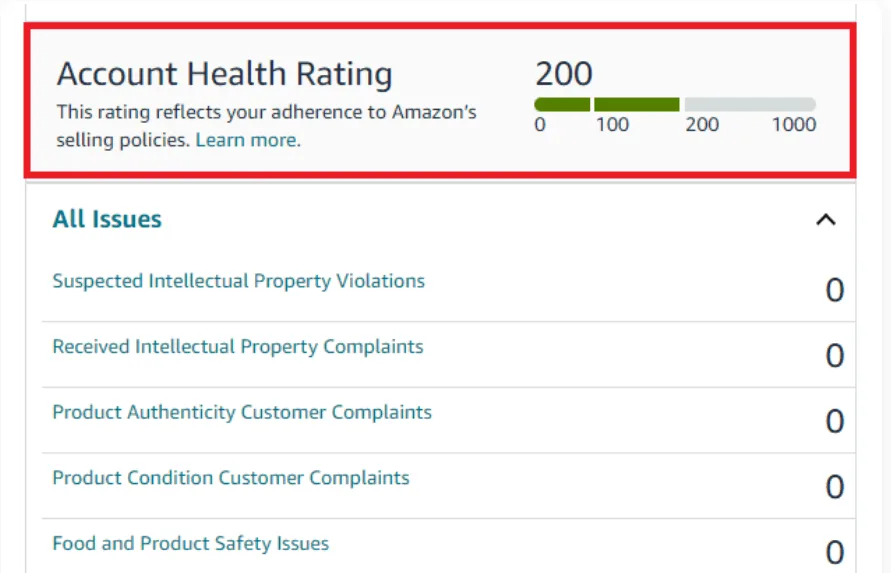
Open Account Health inside Seller Central and clear any open policy warnings, late-dispatch issues or outstanding balances before going further.
Step 2. Write down the commercial purpose
Draft a short profile of the second business: its legal entity, brand, catalogue and the people who run it. Keep incorporation papers, tax identifiers and, for brands, trademark or Brand Registry evidence ready.
Step 3. Reach out to Seller Support
From Seller Central go to Help, open a support case and pick the category related to your account. Explain which additional account you intend to open and for what reason. Even in marketplaces where approval is no longer formally needed, a written reply becomes useful evidence if the accounts are ever reviewed.
Step 4. Register using that business's own data
Enter the legal name, address, bank details and contacts belonging to the company that will actually run the new account. Never borrow the first company's data and never invent any of it.
Step 5. Complete identity verification
Amazon checks sellers through documents and occasionally a video interview. The individual and the company in those documents must be the ones behind the account.
What Each Account Has to Own
Consultants and help texts agree on the same separation checklist:
- its own business bank account for payouts;
- an email address that no other Amazon account uses;
- a payment card dedicated to that account's fees;
- a catalogue that does not overlap with the sibling account;
- registration details of the entity that operates it.
None of this is meant to conceal the accounts from one another. Once disclosed, Amazon is aware they belong together; the separation simply keeps each account's business records clean and coherent, so trouble in one stays contained.

Built-In Options That Often Make a Second Account Unnecessary
| Goal | Feature inside a single account |
|---|---|
| Selling several brands | Keep all brands in one account and enrol each in Brand Registry |
| Reaching other countries | Global selling plus a unified account that joins a region's marketplaces |
| Giving staff or agencies access | Seller Central user permissions with a personal login per person |
| Serving trade buyers | Business pricing and quantity tiers for Amazon Business customers |
| Shopping as a family | Amazon Household on the buyer side |
Quite often these tools cover the requirement without the extra accounting, fees and exposure to linked enforcement.

How Proxies and Browser Profiles Fit In
Proxies are not a disguise that turns one merchant into two. Amazon weighs identity, banking, tax and catalogue data far more heavily than any IP address, and masking a relationship through network tricks conflicts with the duty to supply truthful information.
There are, however, sensible uses:
- Predictable access for a team. Employees and agencies working from various cities hit fewer security prompts when Seller Central always sees a familiar address. Static proxies pin one IP to each workspace for exactly this.
- Agencies with many clients. Every client's Seller Central lives in a separate browser profile so cookies and sessions never cross. Profile-based work is described in our article on multi-accounting with browser profiles, and per-tool instructions are gathered in the antidetect browser setup hub.
- Previewing foreign storefronts. To see how listings, prices and delivery estimates appear to shoppers abroad, open the marketplace through an address in that country. Our guide to connecting a proxy for Amazon covers the setup, and the Amazon proxies page lists fitting options.
Stay away from free public proxies. Their addresses are frequently flagged, which brings captchas and failures such as the one dissected in our article about the Amazon Sorry, something went wrong page.
What Goes Wrong With Undisclosed or Linked Accounts
- Chain deactivation. When one account is shut down, others that Amazon regards as connected can follow.
- Held payouts. Disbursements may be paused for the duration of the review.
- Slow recovery. Typically the original account has to be restored before the connected ones are even looked at.
- Stranded stock. Inventory in fulfilment centres may have to be removed or destroyed if the accounts stay closed.
After a deactivation, use Account Health: study the notice, draft a plan of action that tackles the underlying cause, and submit it. Launching a fresh account to keep selling meanwhile violates the policy and nearly always deepens the hole.
Other platforms reason along similar lines; it is instructive to set Amazon's stance next to the rules for multiple Shopify stores.
Multiple Amazon Seller Accounts FAQ
Is it allowed to hold two Amazon seller accounts?
Yes, provided a genuine commercial purpose exists, such as two brands operated as independent companies, and every account you hold is healthy. Read the live help page in Seller Central and confirm with Seller Support beforehand.
Must Amazon approve a second seller account first?
In the past an exception request to Seller Support was mandatory. More recent guidance suggests advance approval is not always demanded, yet practice differs between marketplaces, so a written confirmation is the safer path.
Can one person keep a shopping account alongside a selling account?
Certainly. Plenty of merchants keep a private shopping profile next to their seller profile. Register the seller side with its own email and keep company purchases apart from personal ones.
What if Amazon connects my accounts?
When the accounts are disclosed and each serves a real purpose, the connection itself causes no harm. If one connected account gets deactivated, though, Amazon may suspend the rest until the matter is settled.
Can a proxy keep Amazon from connecting my accounts?
No, and attempting to hide related accounts violates Amazon's rules. Connections are drawn chiefly from identity, banking, tax and catalogue data; proxies only help with steady team access and with previewing regional storefronts.