Regional Prices: How Geo-Pricing Works and How to Compare It With Proxies

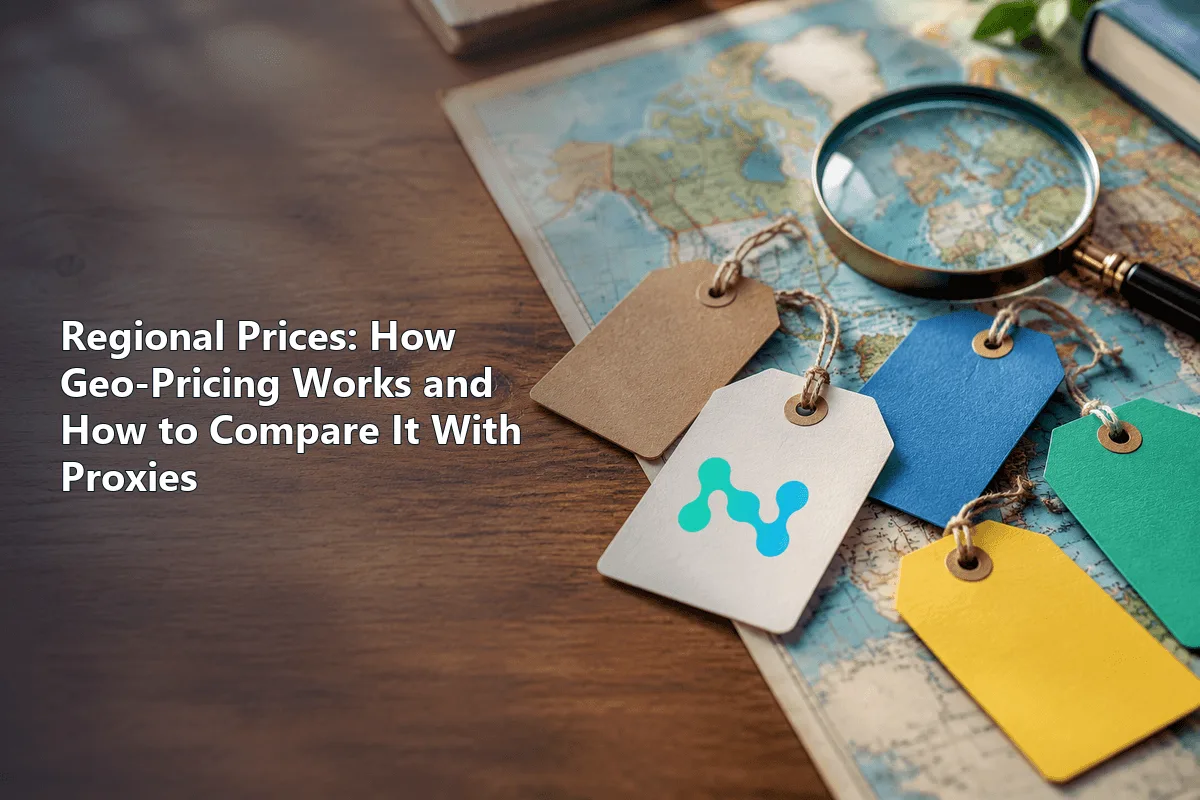
The same game, subscription or pair of sneakers can cost noticeably different amounts depending on the country a store thinks you are in. A proxy located in another country lets you see the public price shown there, which is useful for research, budgeting a trip or checking your own pricing. Whether you can actually pay that price is a separate question: stores tie the final amount to your account region, billing address and card country, and their terms usually require these to be genuine.
Many guides stop at the phrase save money with a VPN. Here we look at why regional pricing exists, which signals a checkout really checks, the lawful ways to pay a local price, and a clean method for comparing prices across countries without polluting the results.
Proxies for price research
Residential IPs by country to see the prices local shoppers see
Why Prices Differ Between Countries
Price differences are rarely random. Most of them come from a handful of factors:
- Purchasing power. Digital goods cost the seller almost nothing to copy, so publishers lower prices in markets where salaries are lower rather than lose those buyers entirely.
- Taxes. VAT and sales tax rates vary from zero to over twenty percent, and many stores show prices with tax included.
- Currency. A store may fix a local price and adjust it only occasionally, so exchange-rate swings create temporary gaps.
- Competition and distribution. Local rivals, distributor margins and import duties push physical goods up or down.
- Licensing. Rights holders sell content per territory, and the licence fee differs.
- Shipping and returns. Delivery and return costs are built into prices of physical products.
How a site maps visitors to countries in the first place is covered in our explainer on IP geolocation.
How Stores Decide Which Price You See
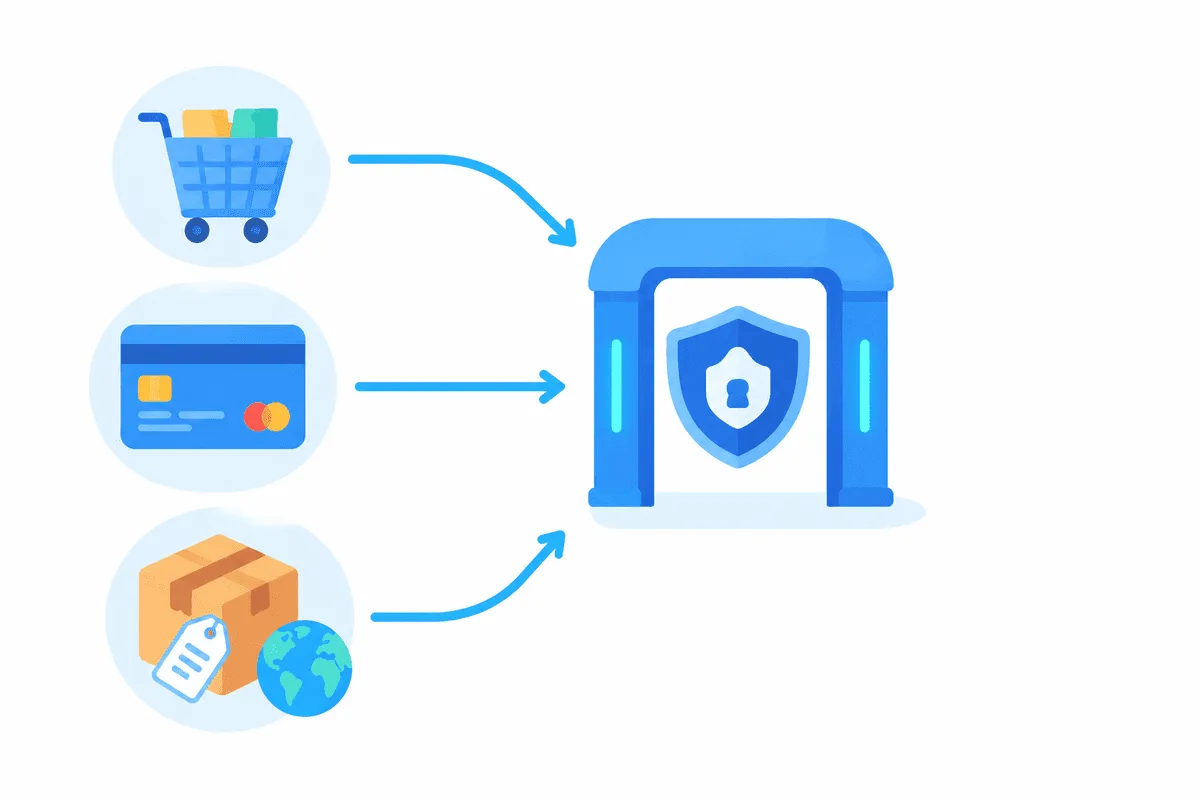
The displayed price and the price you are charged are not always calculated from the same data. Browsing is usually driven by the IP address and cookies, while checkout relies on information that is much harder to change.
| Signal | Used for browsing | Used at checkout |
|---|---|---|
| IP address country | Often | Sometimes, as a fraud signal |
| Language and cookies | Often | Rarely |
| Account or store region | Sometimes | Usually |
| Billing address | No | Yes |
| Card issuing country | No | Often, read from the card number |
| Delivery address | No | Yes, for physical goods |
| App store or platform region | Yes | Yes |
This explains why a cheaper price seen through a foreign address often disappears at the payment step, or why an order goes through and is cancelled later. Mismatched signals are also a classic pattern for card fraud, so they can trigger extra verification even for honest buyers.
Where Regional Pricing Is Most Visible
- Games and software. Digital storefronts publish separate price lists per country and often lock activation keys to a region.
- Subscriptions. Streaming, music and productivity services set local prices, and the account region usually follows the payment method.
- App stores. Changing the store country typically requires a payment method from the new country and can affect existing subscriptions.
- Travel. Airlines and booking sites may show different fares by point of sale, currency and market.
- Fashion and electronics. Brand sites in different countries list different recommended retail prices.
Each of these platforms publishes its own rules on region changes. Some allow a change only after a move, limit how often it can happen, or require a local payment method. Reading those rules first saves money and accounts.
Lawful Ways to Pay a Local Price
There are honest routes to a lower regional price, and none of them involves pretending to be somewhere else:
- You moved. If you now live in another country, most platforms let you switch the account or store region officially, usually with a local payment method.
- You are travelling. Buying in a store or app while physically in the country is normal; check whether licences and keys work back home.
- Cross-border shopping in the EU. Regulation 2018/302 on unjustified geo-blocking lets consumers buy from online shops in other member states on the same terms as locals, with some exceptions such as audiovisual content. The shop may deliver only within its usual area, so you may need to collect the parcel there.
- Local editions and official resellers. Some publishers sell regional editions through authorised retailers; buy those for use where the licence allows.
- Ask the seller. Business buyers can often get a quote in their own currency or a regional discount.
- Pay in the right currency. When a card terminal or checkout offers to convert to your home currency, the conversion rate is frequently worse than your bank's.
What we do not cover, and do not recommend, is using a proxy plus a foreign payment method to claim residence in a cheaper country. Store terms usually forbid misrepresenting your location, and the typical results are cancelled orders, revoked keys or a closed account.
Comparing Regional Prices With Proxies
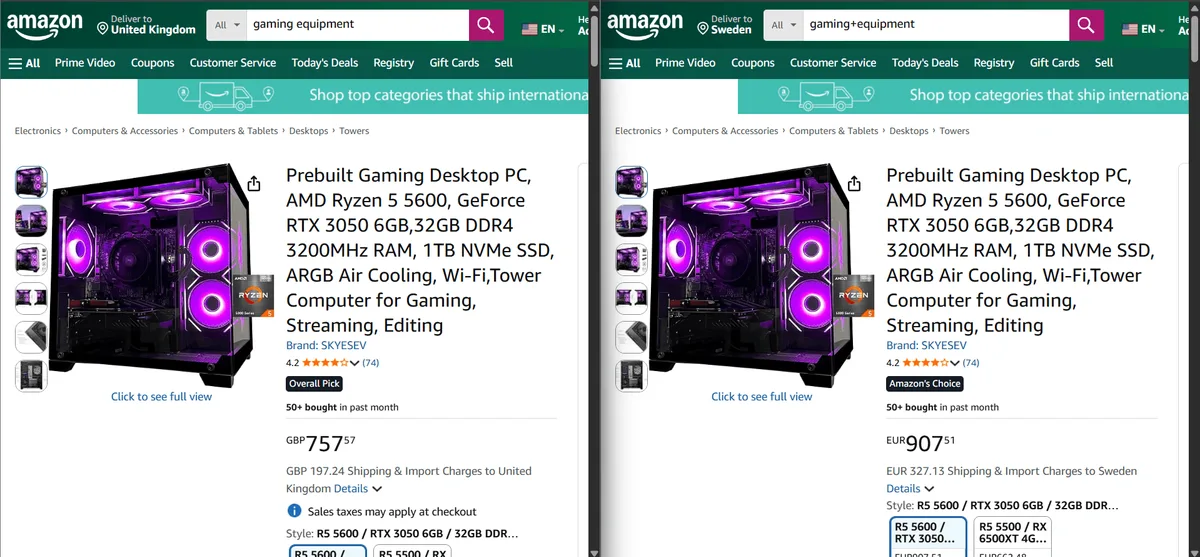
Price research is where proxies earn their keep. Brands check how resellers price their products abroad, analysts track inflation in digital goods, and travellers want to know what a service costs before they arrive. A tidy workflow looks like this.
Step 1. Choose markets and products
List the countries and the exact product variants, including edition, size and subscription term. Comparing a monthly plan in one country with an annual plan in another is a common source of fake savings.
Step 2. Use one clean browser profile per country
Cookies, saved currency and logged-in sessions override what the IP says. Open each country in its own profile, logged out, with language and time zone set to that market.

Step 3. Route each profile through an address in that country
Residential addresses see the same prices as ordinary local shoppers, while datacenter ranges sometimes get a default or international version of the page. Residential proxies with country targeting cover most markets from one account. Before recording anything, confirm the exit location as described in our guide on how to check proxy geolocation.
Step 4. Normalise the numbers
Record the price with and without tax, the currency and the date. Convert all prices at one rate source on the same day, and add shipping where relevant.
| Market | Local price | Tax included | Rate date | Price in EUR | Notes |
|---|---|---|---|---|---|
| Country A | 59.99 | Yes | same day | converted | launch discount |
| Country B | 4 499 | Yes | same day | converted | annual plan only |
Step 5. Repeat or automate
One snapshot can mislead because of sales and currency swings. For regular tracking across many products, the approach in our article on price monitoring with proxies scales the same idea into a scheduled pipeline, and the price monitoring use case page outlines typical setups.
Mistakes That Distort Price Comparisons
- Mixing tax-inclusive and tax-exclusive prices. US stores usually show prices before sales tax, European stores after VAT.
- Leftover cookies. A remembered currency or country selector overrides geolocation.
- Datacenter addresses. Some stores show a generic international price to hosting ranges.
- Ignoring the exchange-rate date. A week can be enough to flip a conclusion for volatile currencies.
- Comparing different editions. Regional versions may lack languages, features or warranty.
Teams that collect such data at scale may also find our overview of proxies in market analytics useful for planning volume and pacing.
Regional Prices FAQ
Why are prices different in different countries?
Sellers adjust prices to local purchasing power, taxes, currency, competition, licensing and delivery costs. Digital goods show the largest gaps because copying them costs almost nothing.
Can a proxy show me prices from another country?
Yes, for the public part of a store. A proxy in the target country, combined with a clean browser profile, usually displays the local price list, which is useful for research and comparison.
Can I buy at a cheaper regional price with a proxy?
Usually not legitimately. Checkout relies on your account region, billing address and card country, and store terms generally forbid misrepresenting where you live, so orders may be cancelled or accounts closed.
Is it legal to shop from another country's online store?
Buying from foreign stores is normally legal, and in the EU the geo-blocking regulation protects shoppers buying from other member states. Import duties, licence restrictions and the store's own terms still apply.
Which proxies are best for price research?
Residential proxies with country targeting, because stores treat them like ordinary local visitors. Keep one browser profile per country and confirm the exit location before recording prices.