How to Check Proxy Geolocation and Why It Matters


To check proxy geolocation, connect through the proxy and look up its exit IP in one or more IP geolocation services or a proxy checker: they show the country, city and provider associated with the address. Proxy geolocation is one of those parameters that is not always important, but in a number of tasks it becomes critical. If a server is advertised as being located in one country but is actually identified as being in another, this can affect operational accuracy, traffic routing, access to local content, and the correct execution of scenarios where regional association matters.
In practice, mismatches between the declared and actual location occur regularly. That is why, when choosing and using a proxy, it is useful not to rely solely on the pricing plan description, but to separately verify where the server is identified under real conditions.
Why Check Proxy Geolocation
In many everyday scenarios, the exact location of a proxy does not become critical. If the connection is stable, the speed is satisfactory, and tasks are completed without failures, the user may not notice any difference. But in cases where the server’s region affects the result, checking geolocation becomes mandatory.
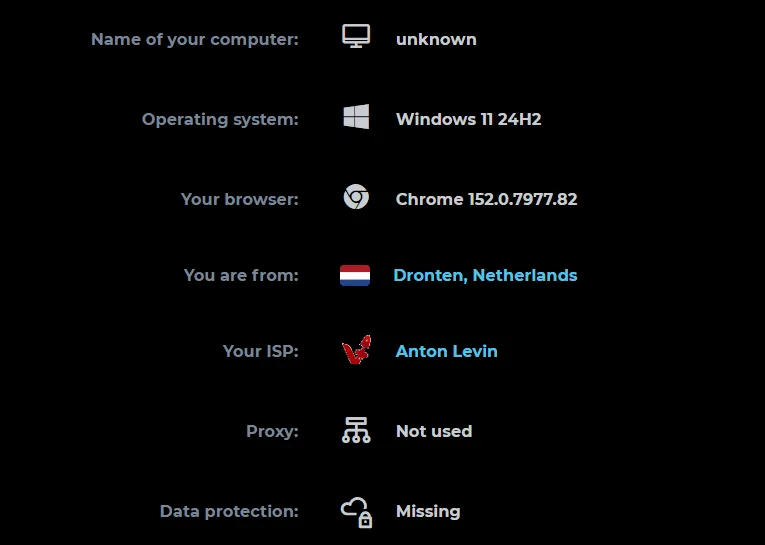
This is especially important if you need to work with services that are sensitive to the country and city of the connection, or if the proxy is being purchased for a specific regional task. In such a situation, it is not enough to rely only on the provider’s information. It is necessary to make sure that the service characteristics match what has been declared. Checking the location is also essential when you test how a website adapts to the user's location.
Checking geolocation helps solve several issues at once: to understand whether the server really belongs to the required region, to assess the accuracy of the declared parameters, and to identify discrepancies in time before they affect work processes.
Residential Proxies for Your Needs
Real IP addresses from the locations you need.
How to Check the Actual Location of a Proxy
Specialized services and programs are used for verification that analyze connection parameters. Such tools make it possible to determine the country and city with which the proxy is associated, as well as to obtain additional technical information about the server.
Typically, the check includes several basic parameters:
- determining the country and city;
- checking the protocol type;
- assessing connection speed;
- analyzing operational stability;
- collecting general server information.
The most useful services are those that provide not just one indicator, but a whole set of characteristics at once. This makes it possible to evaluate a proxy not only from the standpoint of geography, but also from the standpoint of overall connection quality.
At the same time, it is important to consider the data source. Free online checkers often provide incomplete or contradictory information. One service may identify the proxy as being in one country, while another identifies it as being in another. This difference is due to the fact that platforms use different IP address databases, update them at different intervals, and interpret network data differently.
For this reason, the greatest trust is usually placed in proven professional tools that are specifically focused on proxy and server parameter diagnostics. For example, the free proxy checker shows whether a proxy is alive, its exit IP and its location.
We explored this issue in more detail in the article IP Geolocation: How It Works, Accuracy, and Uses.
Why Verification Results May Differ
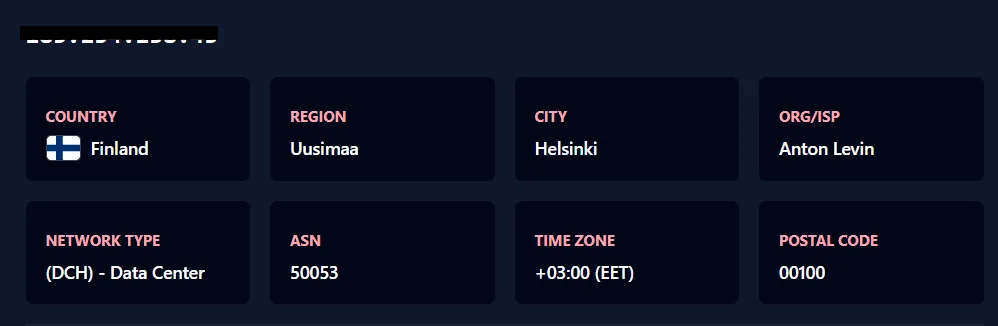
Determining proxy geolocation cannot be considered an absolutely precise procedure. Even if the server is operating correctly, different systems may show different results. The reason is that IP geolocation is not a physical measurement, but a correlation of the address with information from network databases and registries.
Several factors influence the final result. First, a provider may use infrastructure in which the address pool is associated with one country, while part of the network routes is associated with another. Second, geolocation databases are not updated simultaneously. Third, some services determine not only the country where the IP is registered, but also the nearest network point of presence.
That is why a single check does not always provide a final answer. A more reliable approach is to compare results across several sources and correlate them with the technical parameters of the proxy itself.
What to Do If the Geolocation Does Not Match the Declared One
If the verification shows a discrepancy, the first thing to do is assess whether it affects your tasks. The very fact of a mismatch does not always mean that the service is unsuitable. In some cases, the server works correctly, provides the required speed and stability, and the discrepancy is due precisely to the way the IP is identified in third-party databases.
If the proxy performs its function and the region is not a strict requirement, the situation can be left unchanged. But even in this case, it is useful to record the verification result so that you understand the actual characteristics of the server being used in the future.
How to Choose Proxies with Correct Geolocation
It is easier to prevent the problem at the selection stage than to deal with it after connection. Therefore, the main criterion here is not only the price or the basic set of characteristics, but also the provider’s transparency.
A reliable provider usually explains in advance which countries and cities the servers are available in, how their location is determined, and what nuances may arise during verification. The more thoroughly a company describes its infrastructure and the more confidently it answers technical questions, the lower the risk of getting a server with unpredictable parameters.
It is useful to follow several rules.
Choose providers with a stable reputation
Companies with a clear operating history and adequate support are less likely to hide the specifics of their infrastructure. If a provider has experience, open communication, and clear service conditions, the likelihood of unpleasant surprises is noticeably lower.
State regional requirements immediately
The more precisely the task is formulated, the higher the chance of getting a suitable server. If a specific country or even city is important for the work, this should be discussed before connection, not after.
Check parameters immediately after access is granted
Even if the provider inspires confidence, it is better to conduct your own verification. This makes it possible to immediately ensure that the proxy meets expectations in terms of geography, speed, and stability.
Do not rely on only one verification service
One source may be wrong or may use an outdated database. For a more objective picture, it is worth comparing data in at least several tools.
What to Look at Besides Geolocation
Location is an important parameter, but not the only one. Even if the country is identified correctly, this still does not guarantee that the proxy will be suitable for permanent use. In practice, connection stability, response speed, route quality, and the predictability of server behavior under load are no less important.
Therefore, a full verification should answer not only the question “where is the proxy located,” but also the question “how suitable is it for the task.” In some cases, these parameters are what determine the practical value of the service.
Proxy Geolocation FAQ
How do I check the location of a proxy?
Connect through the proxy and look up its exit IP in an IP geolocation service or a proxy checker. Compare the country and city in two or three tools, because each one uses its own database.
Why do different services show different proxy locations?
IP geolocation is based on databases, not physical measurement. Services use different databases, update them at different times and sometimes show the network point of presence instead of the registration country.
What should I do if the proxy location does not match?
First check whether the mismatch affects your task. If the region is critical, contact the provider or choose another proxy in the required country, then verify it again.
Can I choose the city of a proxy?
It depends on the provider and proxy type. Check which countries and cities are available before buying and verify the location right after you receive access.
Conclusion
Checking proxy geolocation is not necessary in every case, but in tasks with regional targeting it helps avoid errors even before work begins. At the same time, it is important to understand that IP geolocation is not determined with absolute precision: different services may show different results, and this does not always indicate a problem on the provider’s side.
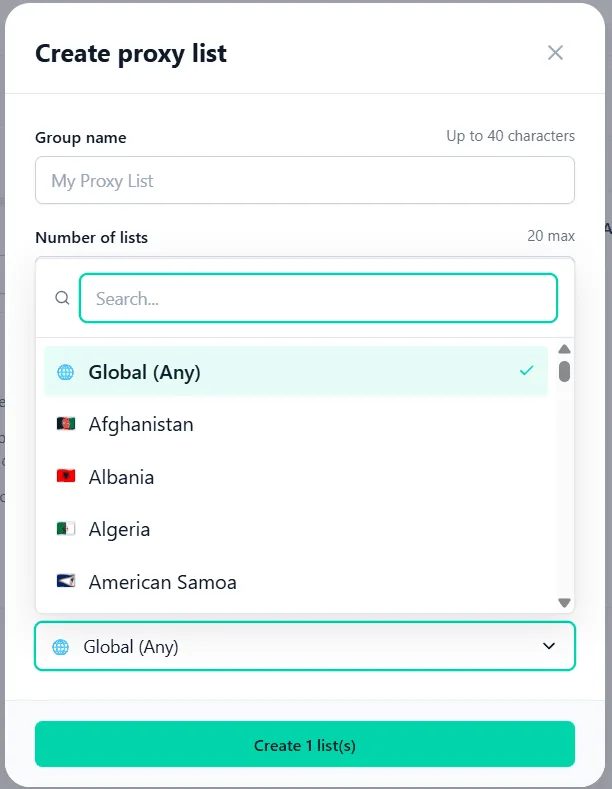
The most reasonable approach is to use several verification tools and evaluate not only the country and city, but also the accompanying technical parameters. Node Proxy offers residential proxies with GEO selection, and all available countries are listed on the proxy locations page.