Web Crawler vs Web Scraper: Key Differences and How They Work Together

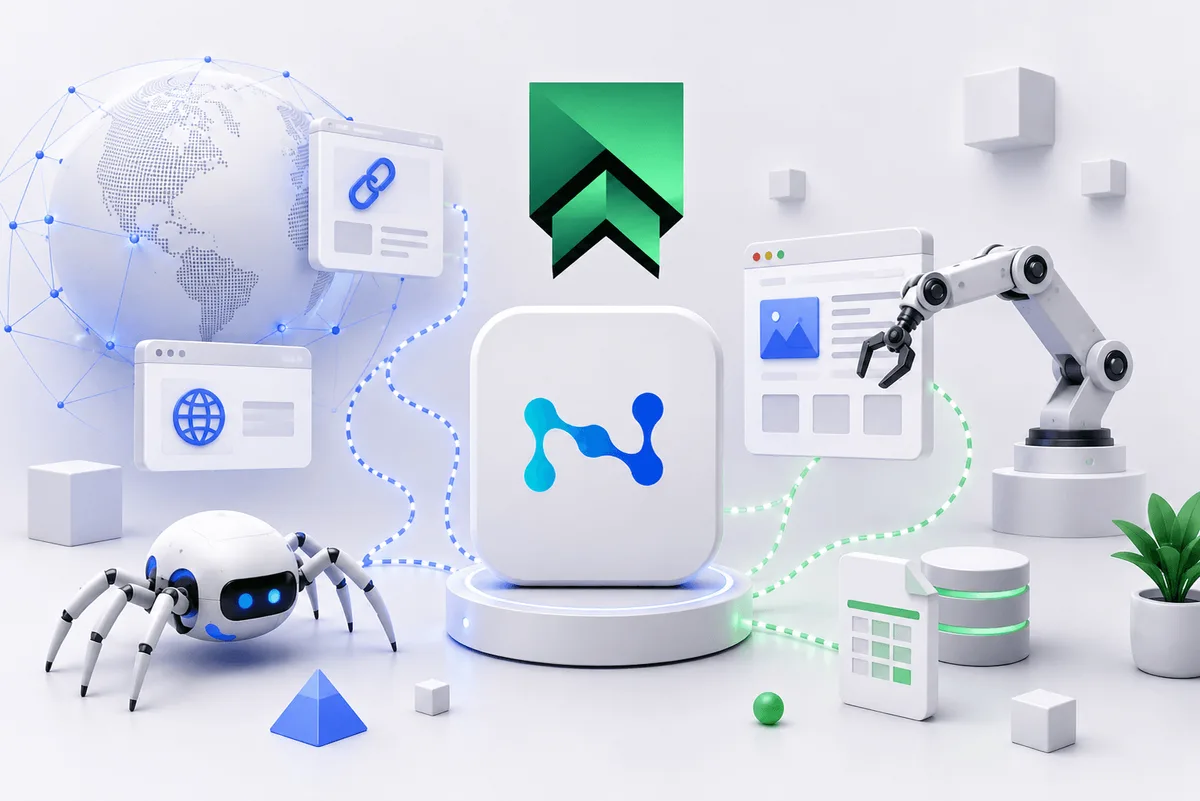
Web crawling and web scraping are often mentioned together, which is why they are frequently perceived as the same thing. In practice, these are different processes with different tasks. A crawler is responsible for discovering and traversing pages, while a scraper is responsible for extracting the needed information from already discovered addresses. One helps determine where the data is located; the other turns page content into a workable body of information.
This distinction is important not only from a technical standpoint. For business, analytics, SEO, and automation, the difference between these tools is directly related to how data collection is organized: what exactly is being sought, at what scale, how it is processed, and for what tasks it is then used.
Crawling for Reach. Scraping for Data.
Residential proxies for flexible web data workflows.
What Is Web Crawling
Web crawling is the automated traversal of pages on the internet to discover new URLs, relationships between pages, and the structure of a website. A crawler begins with a set of seed links, follows them, analyzes the pages it finds, and extracts new links from them for further traversal.
The main task of a crawler is not to collect specific values such as a price, product name, or description, but to build a map of the available content. In essence, it is responsible for navigation: determining which pages exist, how they are connected to one another, and which of them should be visited next.
That is why crawling underlies the work of search engines. Before a page can appear in search results, it must be discovered, scanned, and passed to the index. If a page is poorly accessible for crawling, its visibility in search decreases regardless of the quality of the content itself.

What Is Web Scraping
Web scraping is the extraction of specific data from web pages with subsequent storage in a structured format. Unlike crawling, the focus here is not on finding pages, but on the content of already known URLs.
A scraper loads a page, analyzes its HTML or rendered structure, finds the required elements, and stores the result in a convenient format: for example, in a table, a JSON file, or a database (see JSON vs CSV). This makes web content suitable for further analysis, monitoring, automation, and reporting.
If a crawler answers the question “where are the needed pages located,” then a scraper answers the question “what data should be taken from those pages.”
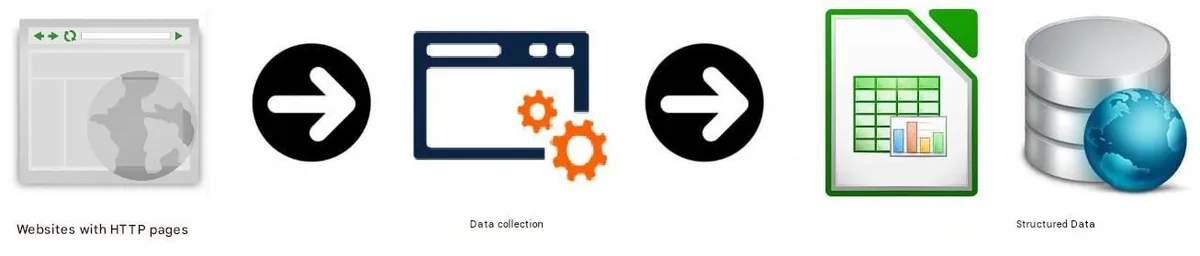
How a Web Crawler Works
A crawler’s operation is usually built according to a fairly clear scheme:
- It receives an initial list of URLs.
- It follows those addresses and analyzes the content of the pages.
- It finds new links.
- It adds them to the crawl queue.
- It repeats the process according to the specified rules.
At the same time, not only the logic of traversal matters, but also the order in which pages are visited. On large websites and in large-scale projects, a crawler has to decide which pages to visit first, how often to return to already known URLs, and how not to waste resources on duplicate or low-value content.
For this reason, crawling is closely tied to planning, prioritization, and filtering. Without these mechanisms, traversal quickly becomes inefficient.
How a Web Scraper Works
A scraper usually operates differently. It takes a specific page and performs a sequence of steps:
- It sends a request to the page.
- It receives the HTML or ready-rendered content.
- It parses the document structure.
- It finds the required fields based on predefined attributes.
- It extracts and stores the data.
In simple cases, this is sufficient. But modern websites often use dynamic content loading, so tools capable of working with pages after JavaScript execution are often used for data extraction. This is especially important where the required elements are not present in the original HTML and appear only after the interface is rendered.
The result of a scraper’s work is not a list of links, but a ready-made dataset suitable for analysis or transfer to other systems.
Web Crawler vs Web Scraper: The Key Difference
The main difference between these tools lies in their purpose.
A crawler is engaged in discovering pages and building a route through a site or a set of sites. Its result is a list of URLs, a map of a resource’s structure, or a set of pages suitable for further processing.
A scraper is engaged in extracting information from specific pages. Its result is structured data: prices, names, specifications, descriptions, contacts, metadata, keywords, and other required fields.
In other words, a crawler works at the navigation level, while a scraper works at the content level.
Why They Are Often Used Together
In real-world projects, crawling and scraping rarely exist in isolation. Most often, they form a single process.
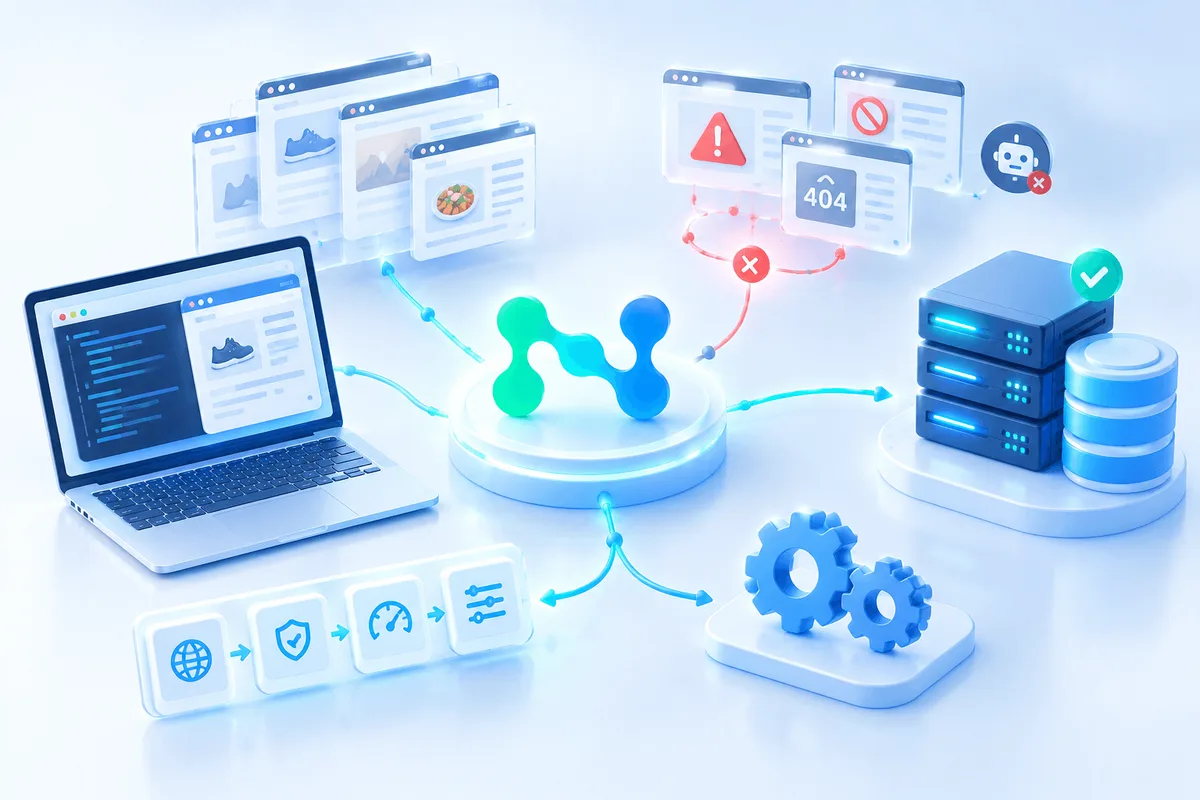
First, the crawler finds relevant pages: product cards, catalog sections, articles, company profiles, search results, or other target URLs. Then the scraper processes the discovered pages and extracts the necessary data from them.
This approach is especially useful when the structure of a resource is unknown in advance or when the number of pages is too large to list addresses manually. The crawler automates the search for targets, while the scraper automates content collection. Together, they make it possible to build a complete pipeline for working with web data.
Where Web Scraping Is Used in Practice
Scraping is used where data is updated regularly, distributed across many pages, and needed in a structured form.
The most common scenarios are:
Price Monitoring
Companies track product prices, assortment changes, promotions, and item availability among competitors. This helps them adjust their own pricing policy and respond to the market more quickly. For such tasks, price monitoring proxies are used.
Market Analysis
Collecting data from industry websites makes it possible to see demand dynamics, the structure of offerings, product characteristics, and changes in how market players are positioned.
SEO Research
Scraping is used to analyze keywords, content, page structure, metadata, and link-related factors. This helps assess competitors and shape a more precise promotion strategy.
Lead Generation and Enrichment
Companies collect publicly available information about businesses, contacts, areas of specialization, and other attributes that help segment audiences and build sales processes.
Research and Analytics
For reports, reviews, and internal research, web data often becomes an important source of factual information. In this case, the value of scraping lies not only in speed, but also in scale.
Data Preparation for Automation and AI
Structured datasets are used to train models, configure internal tools, build classifiers, chat solutions, and analytical systems.
What Matters in Large-Scale Data Collection
At the level of a small task, data collection may look fairly straightforward. But as the scale increases, practical difficulties quickly appear.
First, planning becomes more important. It is necessary to manage queues, crawl schedules, repeat visits to pages, and load distribution.
Second, data quality becomes critical. It is not enough simply to obtain information from a page — it must be checked, cleaned, brought to a uniform format, and deduplicated.
Third, maintenance becomes more complex. Even small changes in a site’s structure can disrupt the extraction logic, so data collection systems require constant monitoring and updates.
Finally, in large-scale work, compliance with data access rules, awareness of technical limitations, and careful interaction with source websites become especially important.
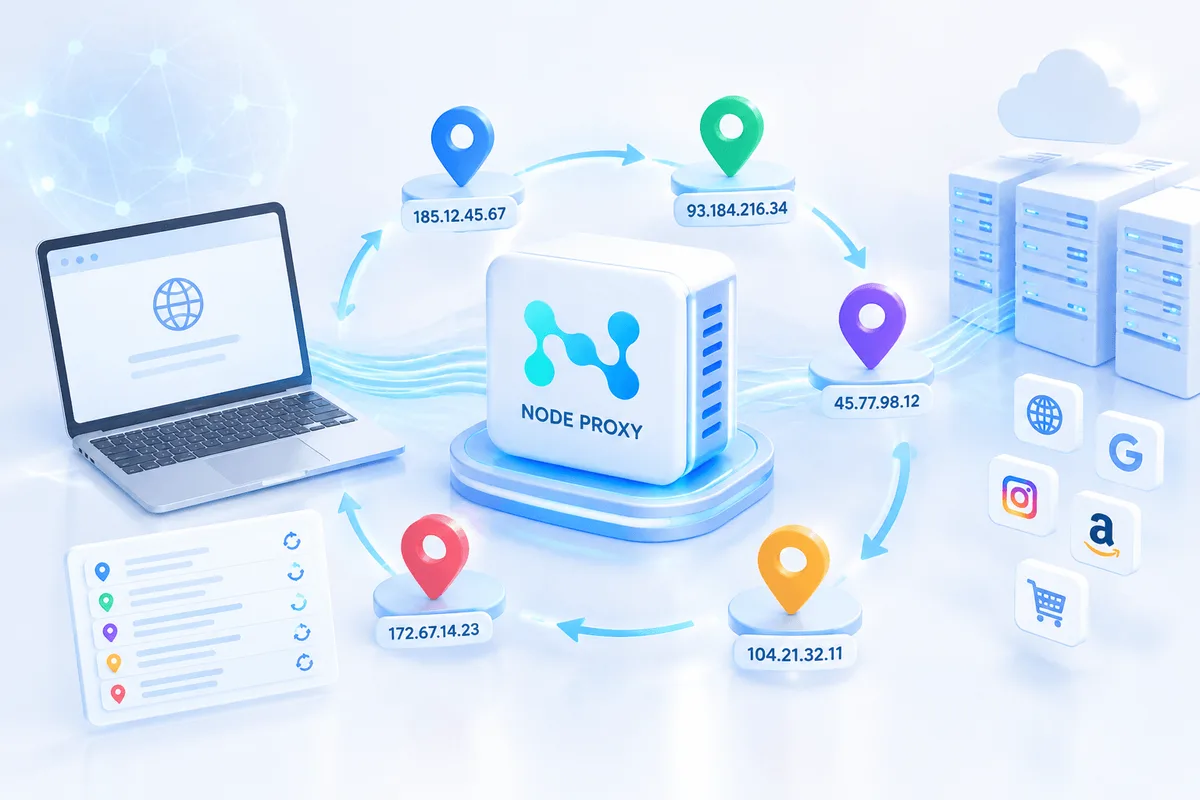
Residential proxies and rotating proxies can also be important when collecting large volumes of data, helping maintain stable scraping and reduce the risk of restrictions from target websites. More tips are in our guide on how to reduce the risk of being blocked during web scraping.
Why Crawling Matters for SEO
Crawling is directly related to how accessible a website is to search engines. If pages are difficult to discover or are poorly connected to one another, some content may remain outside the index.
To improve a site’s crawl accessibility, attention is usually paid to several things:
- logical internal linking;
- an XML sitemap;
- correct robots.txt configuration;
- a clean and understandable URL structure;
- high page loading speed;
- reducing the volume of duplicate content.
All of this helps search bots find pages faster, understand a resource’s structure more accurately, and process updates more efficiently.
What the Practical Value Is for Business
From a business perspective, the value of these tools lies in different things.
Crawling helps cover large volumes of pages and avoid missing important sections, updates, and new URLs. This is important for indexing, site audits, change monitoring, and building systematic data collection.
Scraping turns discovered pages into working material for decision-making. It is what makes it possible to analyze prices, assortments, reviews, market signals, SEO indicators, and other data that can be relied on in operational and strategic work.
When both processes are built correctly, a company gains not just access to information, but a reproducible mechanism for collecting and updating it.
Web Crawler vs Web Scraper FAQ
What is the difference between a web crawler and a web scraper?
A web crawler discovers pages by following links and builds a map of a website. A web scraper extracts specific data, such as prices or descriptions, from known pages and saves it in a structured format.
Is a search engine bot a crawler or a scraper?
A search engine bot is a crawler. It traverses pages, discovers new URLs and passes content to the index, rather than extracting individual fields for a dataset.
Can a crawler and a scraper be used together?
Yes, and this is the most common setup. The crawler finds target pages, such as product cards or articles, and the scraper extracts the required data from them.
Why do scrapers use proxies?
At a large scale, proxies distribute requests between different IP addresses, which reduces the risk of restrictions from target websites and helps collect regional data.
Conclusion
A web crawler and a web scraper solve different tasks, although they often participate in the same process. A crawler discovers pages and builds the traversal route. A scraper extracts specific data from those pages and converts it into a structured form.
That is precisely why they should not be contrasted. For most practical tasks, they do not compete, but complement one another. Crawling provides coverage and navigation, while scraping provides precision and a useful result. Together, they form the foundation for systematic web data collection, analytics, SEO monitoring, and business research.