Proxies for TikTok: How to Choose and Use Them
 ·September 23, 2026·5 min read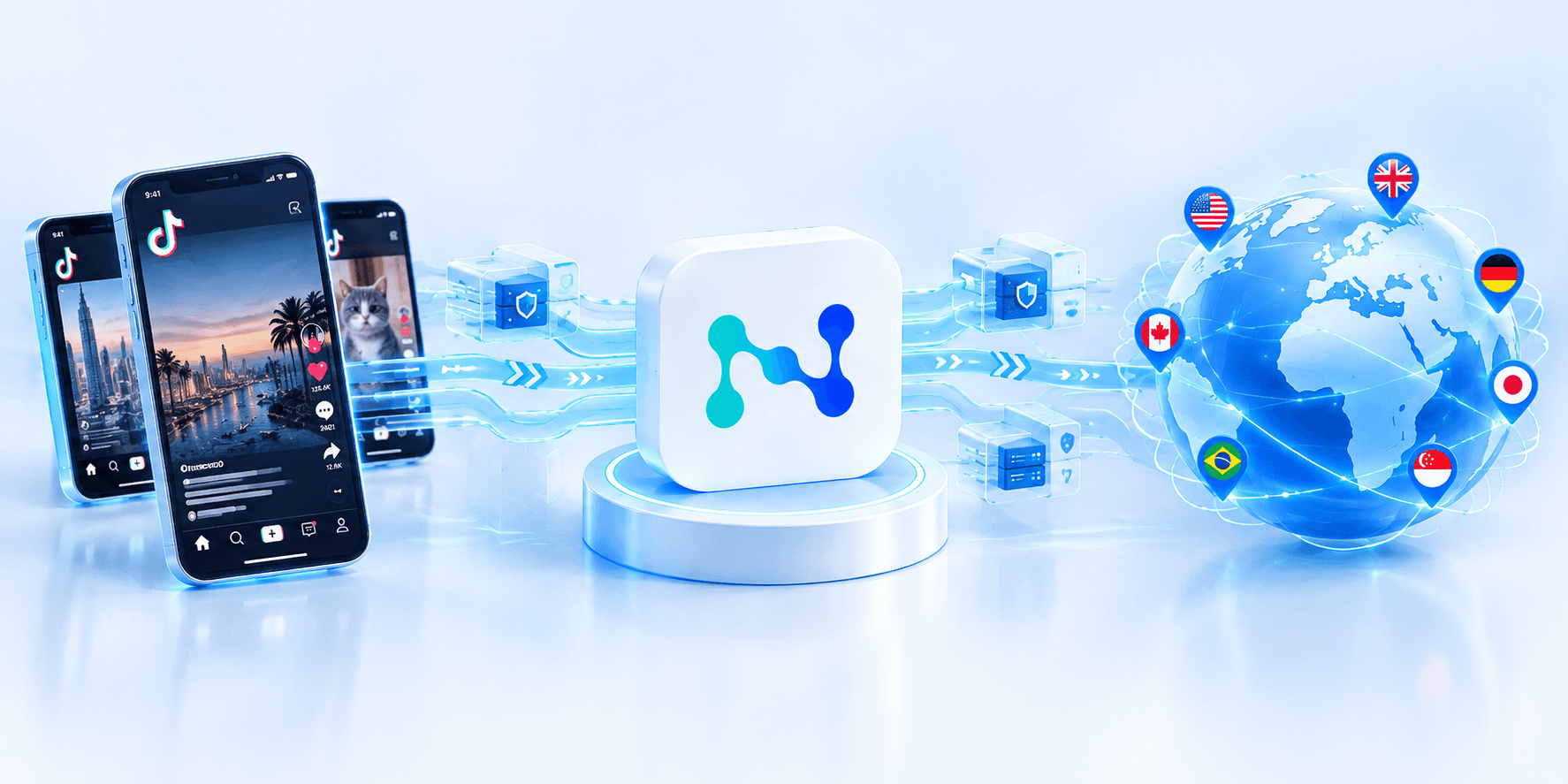
TikTok has long ceased to be just a platform for short videos. For brands, agencies, content marketing teams, and traffic specialists, it is a working environment where it is often necessary to run multiple accounts, test different formats, work with local markets, and separate tasks by project. At this stage, it quickly becomes apparent that the platform closely monitors technical and behavioral signals: repeated logins, identical network parameters, mismatched environments, and abrupt activity patterns.
That is why proxies in TikTok are used not as a formal setting, but as part of a broader workflow structure. They help separate the network identity of accounts, select the required connection geography, and reduce the number of conflicting signals that the platform may associate with one another. But proxies alone do not solve the problem completely: the type of IP, connection stability, rotation logic, and consistency of all environment parameters also matter.
What Are Proxies for TikTok
A proxy server is an intermediary node through which internet traffic passes before reaching TikTok. As a result, the platform sees not the user’s original IP address, but the proxy’s address. In practice, this is needed in cases where it is necessary to separate work sessions, use different geographic connection points, or reduce the likelihood that multiple accounts will be perceived as linked.
For TikTok, this is especially important because the system evaluates not only actions within the account, but also the context in which those actions are performed. If several profiles operate from the same network, with identical environment parameters and according to a similar scenario, the risk of restrictions increases.
The Right IP for Every Account
Configure residential connections around your workflows.
When Proxies Are Actually Needed
Proxies are usually used in three typical scenarios.
The first is working with multiple accounts. This is relevant when a team has separate profiles for different products, regions, content formats, or advertising hypotheses. Without separating the network environment, such accounts are easier to correlate with one another.
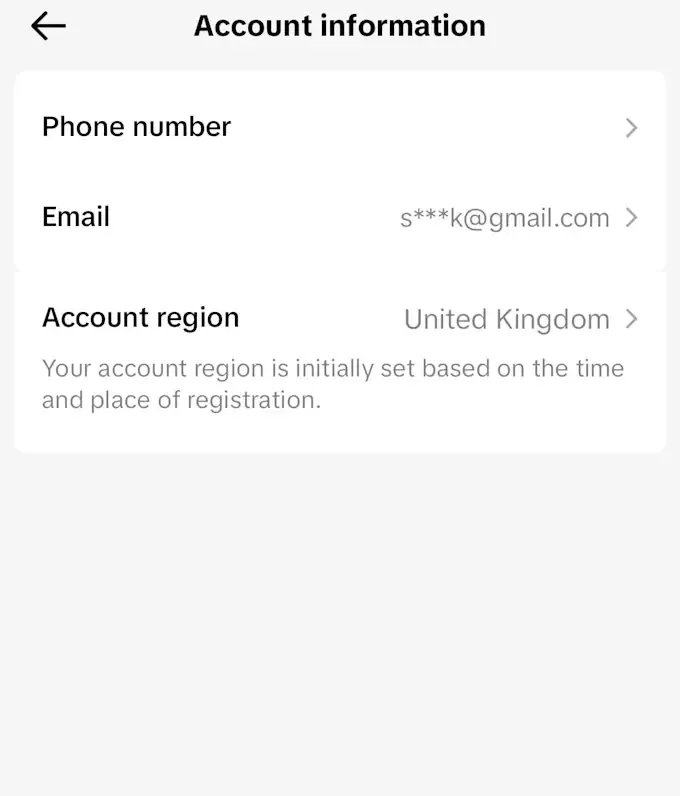
The second is working with regional feeds and local content. TikTok takes connection geography into account, so the IP address affects what content is available and what the recommendation feed looks like.
The third is scaling operational work. When the number of accounts grows, manually switching between them within the same environment begins to create too many repeated signals. In such a situation, proxies become part of the infrastructure.
Why One Proxy Is Not Enough
One of the most common mistakes is to assume that changing the IP is sufficient for safe and stable operation. In practice, TikTok analyzes not only the network, but also a combination of other indicators: browser parameters, language, time zone, device characteristics, cookies, session history, and the overall pattern of actions.
If the IP changes while the rest of the environment remains the same, a contradiction arises. For the platform, this does not look like a new user, but like the same system simply connecting through a different address. Therefore, a proxy only makes sense when used together with isolated profiles, separate cookies, and a logically configured environment.
Put simply, good results come not from the mere fact of changing the IP, but from a consistent configuration: a separate profile, a separate address, a clear geography, a stable action history, and the absence of conflicting parameters.
What Types of Proxies Are Suitable for TikTok
For working with TikTok, three main types of proxies are usually considered: data center, residential, and mobile. They differ significantly in how they appear to the platform and how stable they are in real tasks.
Data Center Proxies
This is the most affordable and fastest option. These IPs are issued by data centers rather than by ordinary internet providers for home users. Their main advantage is price and speed. Their main disadvantage is predictability. Such addresses are easier to identify as server-based and are therefore less suitable for environments where the natural origin of the network is important.
For TikTok, data center proxies are usually considered the least successful choice. They may work for certain tasks, but in scenarios involving multiple accounts or sensitive moderation, they create more risks than advantages.
Residential Proxies
Residential IPs are tied to ordinary home connections, so to the platform they look closer to standard user traffic. This makes them a more balanced option for TikTok: they are realistic enough, provide reasonable stability, and in most cases do not require a budget at the level of mobile solutions.
Residential proxies are usually the default choice for team workflows, multi-account scenarios, and tasks where a specific connection geography is needed without excessive costs.
You can read about the differences between proxy types in our article, "Resident and Server Proxies: How to Choose the Right Type for Your Work Tasks".
Mobile Proxies
Mobile proxies use the addresses of cellular operators. Since most of TikTok’s audience consumes content from mobile devices, such traffic appears as natural as possible to the platform. This is the main strength of mobile IPs.
But they also have limitations: they are noticeably more expensive, and connection quality depends on the characteristics of the mobile network. For one or two priority accounts, mobile proxies may be justified. For a broad pool of working profiles, they often turn out to be too costly.
Which Option to Choose
If a practical selection framework is needed, it looks like this:
• data center proxies — only when minimal cost is critical and increased risk is acceptable;
• residential proxies — the main working option for most tasks in TikTok;
Both of these proxy options can be purchased on our website.
• mobile proxies — a solution for scenarios where maximum connection naturalness is the priority and budget is not the main constraint.
In real work, residential proxies most often come out ahead. They provide the most reasonable balance between quality, stability, and costs.
How TikTok Detects Problematic Connections

TikTok’s moderation system does not operate based on a single indicator, but on a combination of factors. Four groups of signals are the most important.
Network Matches
If multiple accounts regularly log in from one IP or from addresses that behave too similarly, the platform may treat them as a linked group. This is especially noticeable when actions are performed around the same time and according to a repetitive pattern.
Environment Mismatch
Suspicion is raised in situations where the IP geography does not match the language, time zone, device parameters, or other profile characteristics. If an account connects as if from one country, while all other signals point to another, this looks unnatural.
Behavioral Patterns
The platform evaluates not only the fact of activity, but also its rhythm. Sudden spikes in actions, identical intervals, overly dense sessions, and repeated scenarios make an account more visible to anti-fraud systems.
Data Overlap Between Profiles
Even with separate IPs, accounts can be linked through a shared environment: identical cookies, similar browser profiles, repeated technical parameters, or the absence of isolation between sessions.
How to Use Proxies Correctly
Effective setup is based on several fundamental rules.
One Account — One Environment
Each account needs its own working environment: a separate browser profile, its own IP, its own cookie history, and a predictable usage scenario. This is not unnecessary redundancy, but the basic logic of separation.
Stable Geography
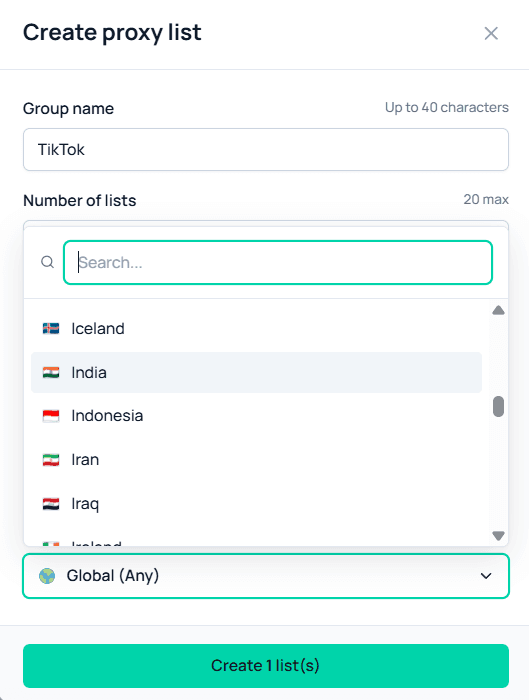
If an account operates for a specific market, it is better to stick to one country and, where possible, one region. Frequent changes in geography create unnecessary signals and reduce the overall consistency of the environment.
Moderate IP Rotation
Rotation is useful not in itself, but when it does not destroy the naturalness of the session. Changing addresses too often for the same profile looks worse than a stable connection from a clear location.
Consistency of Parameters
The IP, interface language, time zone, and device type should not contradict one another. The more logical the entire set of parameters looks, the fewer grounds there are for suspicion.
Gradual Launch of New Accounts
New profiles should not be immediately loaded with intense activity. Any account is better introduced into working mode gradually: first ordinary actions, then moderate expansion of activity. For the platform, this looks much more natural than an abrupt start.
Typical Mistakes
Even with a good proxy solution, problems most often arise because of basic setup errors.
The first mistake is using free proxies. Such addresses are often overloaded, unstable, and have long been used by many third-party users. As a result, they provide poor connection quality and a bad IP reputation.
The second is using one proxy for several accounts. This nullifies the very idea of environment separation: the platform continues to see a common network feature and gains a reason to group the profiles together.
The third is abrupt location changes. If today a profile connects from one region, tomorrow from another, and then from a third, this looks less natural than operating within one stable geography.
The fourth is trying to solve everything through the IP alone. Without a separate environment, separate sessions, and consistent parameters, even a high-quality proxy does not provide the full effect.
The fifth is excessively rapid growth in activity on new accounts. Restrictions often arise not because of the proxy itself, but because the overall behavior model looks unnatural.
Practical Conclusion
For TikTok, proxies make sense when they are used as part of a holistic workflow rather than as a standalone “change IP” button. The platform evaluates not one parameter, but the overall picture: network, environment, session history, and the nature of activity. Therefore, stable results come not from a random set of settings, but from a systematic approach to account isolation.
If the goal is stable work with multiple profiles, market testing, or separation of project streams, residential proxies are the optimal choice in most cases. They provide the most even balance between connection realism, cost, and quality. Mobile solutions are suitable for more expensive and sensitive scenarios, while data center proxies are more of a compromise option with a noticeably greater number of limitations.