AI Web Scraping: How to Automate Data Collection


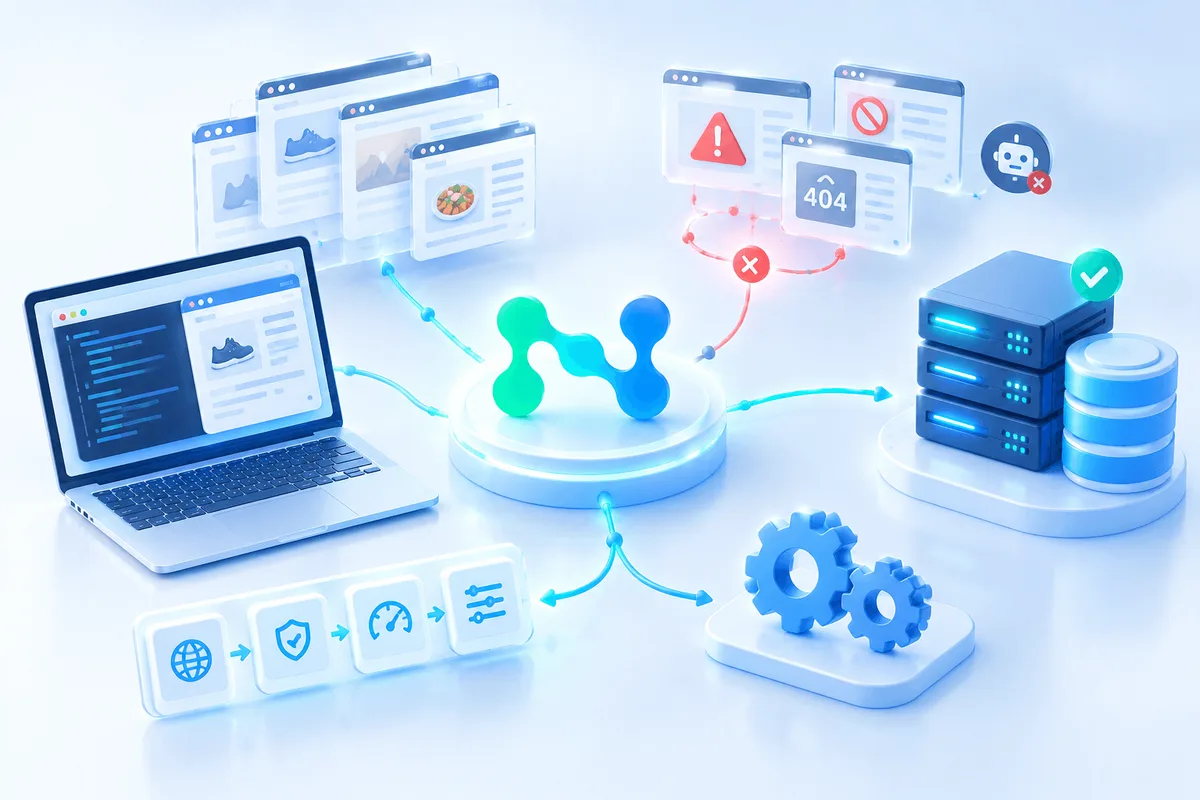
AI web scraping is the automated collection of data from websites with the help of machine learning and natural language processing, which extract, clean and structure information for analysis. Modern business is becoming increasingly dependent on data. It is needed for market analysis, price tracking, review analysis, demand monitoring, and product decision-making. Against this backdrop, web scraping has long become a working tool for the automated extraction of information from websites. With the emergence of artificial intelligence, its capabilities have expanded significantly: systems have learned to work better with unstructured content, adapt to page changes, and prepare data for analysis immediately.
However, along with increased efficiency, the requirements for the quality of the process itself have also grown. Today, it is no longer enough to simply collect as much information as possible. It is important to understand what data may be extracted, how to do so properly, and where the line lies between useful automation and risky practice. That is why any discussion of AI-powered web scraping inevitably goes beyond technology and touches on issues of data governance, compliance with platform rules, source data quality, and internal control.
What Is AI-Powered Web Scraping
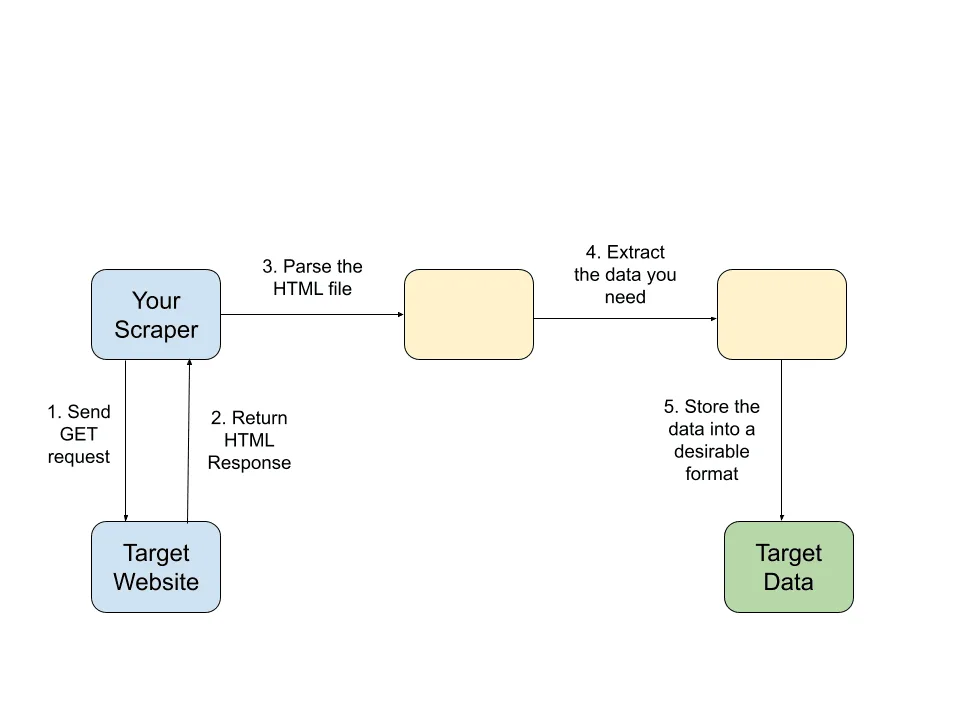
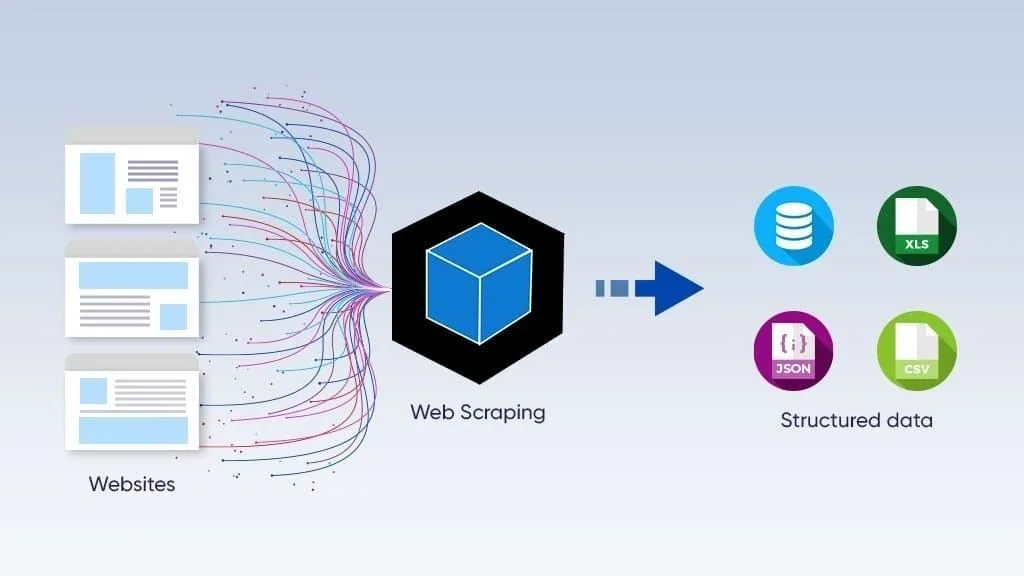
Web scraping is the automated extraction of data from web pages with its subsequent conversion into a format suitable for use: spreadsheets, databases, analytical reports. In the classic version, a scraper operates according to predefined rules: it finds the required elements on a page, reads them, and stores the result. How a scraper differs from a crawler that discovers pages is explained in web crawler vs web scraper.
An AI-based approach works more broadly. Such systems not only extract fragments of HTML code but are also able to interpret the content of pages. They can process natural language, identify entities, classify text, analyze images, clean datasets of noise, and adjust extraction logic when a site’s structure changes. As a result, scraping becomes not just a way of copying information, but part of a more complex data processing pipeline.
In practice, this means that AI can help where traditional parsing quickly breaks down: with unstable layouts, large amounts of textual content, mixed data formats, and frequent website updates.
Proxies for Web Data Infrastructure
Residential IPs for crawling pages and scraping the collected data.
How the AI Approach Differs from the Traditional One
The main difference lies in adaptability. A conventional scraper relies on rigidly defined selectors and rules. If a site changes its page structure, blocks, class names, or the way information is displayed, such a tool has to be manually reconfigured.
AI models are capable of recognizing patterns and adapting to changes without a complete rebuild of the logic. They work better with dynamic pages, unstructured texts, and data that cannot be neatly extracted using a simple set of rules. In addition, AI helps not only collect information but also convert it into a more useful form: remove unnecessary elements, merge similar records, extract key signals, and sort by meaning.
But this is also where the main difficulty lies. The smarter the system, the higher the risk of losing process transparency. If a conventional parser acts predictably, an AI tool may expand its scope, extract more than was originally intended, and affect sensitive categories of data unless strict limitations are defined in advance.
What Technologies Are Used in AI Scraping
This approach is usually based on a combination of several methods.
- Natural language processing helps work with long texts: reviews, descriptions, news, comments, product cards, and publications. The model can extract key facts, identify the topic, perform classification, and prepare concise summaries.
- Machine learning is used to recognize patterns on pages and adapt to changing website structures. This reduces dependence on constant manual reconfiguration.
- Image recognition is useful in cases where part of the information is presented not as text but as graphic elements. This approach helps extract data from banners, cards, screenshots, and other visual blocks.
- Data cleaning and transformation tools make it possible to filter out irrelevant fragments, eliminate duplicates, bring records to a uniform format, and reduce the amount of manual post-processing.
Together, these technologies turn scraping from a technical page-collection operation into a full-fledged mechanism of primary analytics.
Where Businesses Use AI-Powered Web Scraping
There are many use cases, but in practice several areas are the most common.
Price and Assortment Monitoring
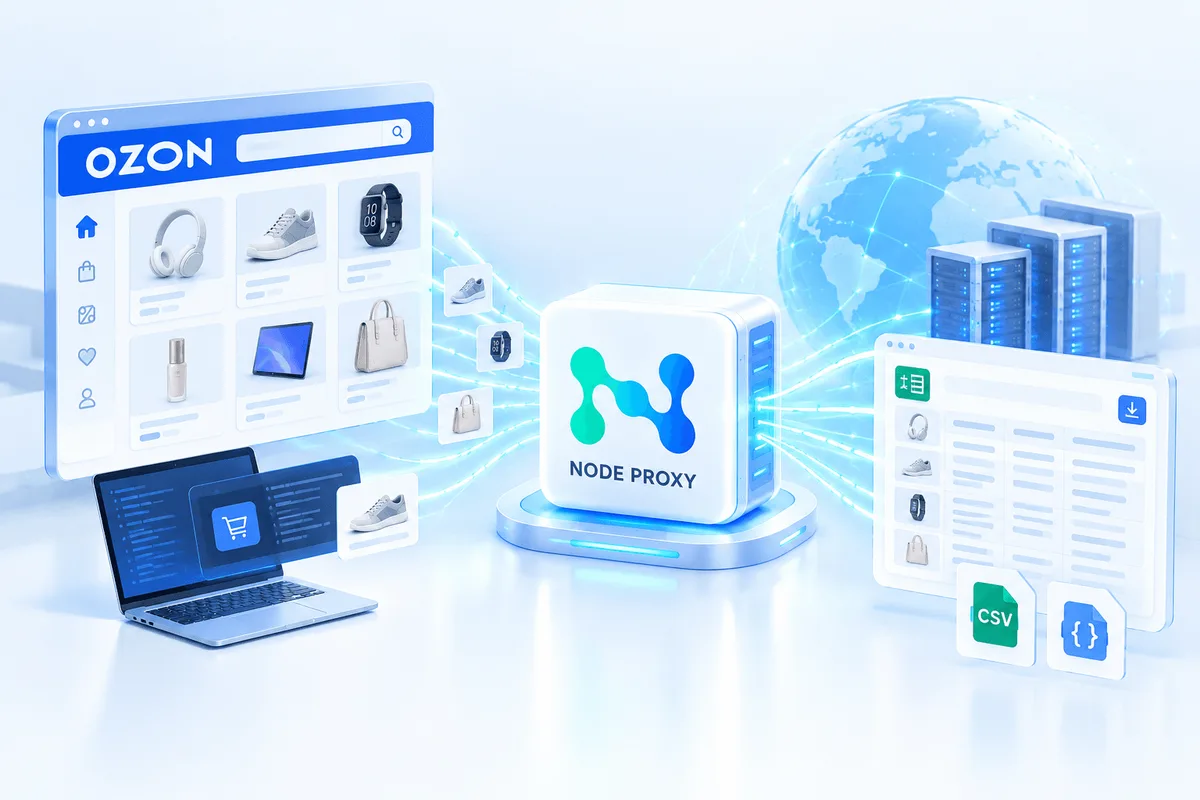
Companies track product cards, item availability, changes in descriptions, promotions, and price dynamics. This makes it possible to adjust their own pricing strategy in a timely manner and respond more quickly to market actions.
Analysis of Reviews and Feedback
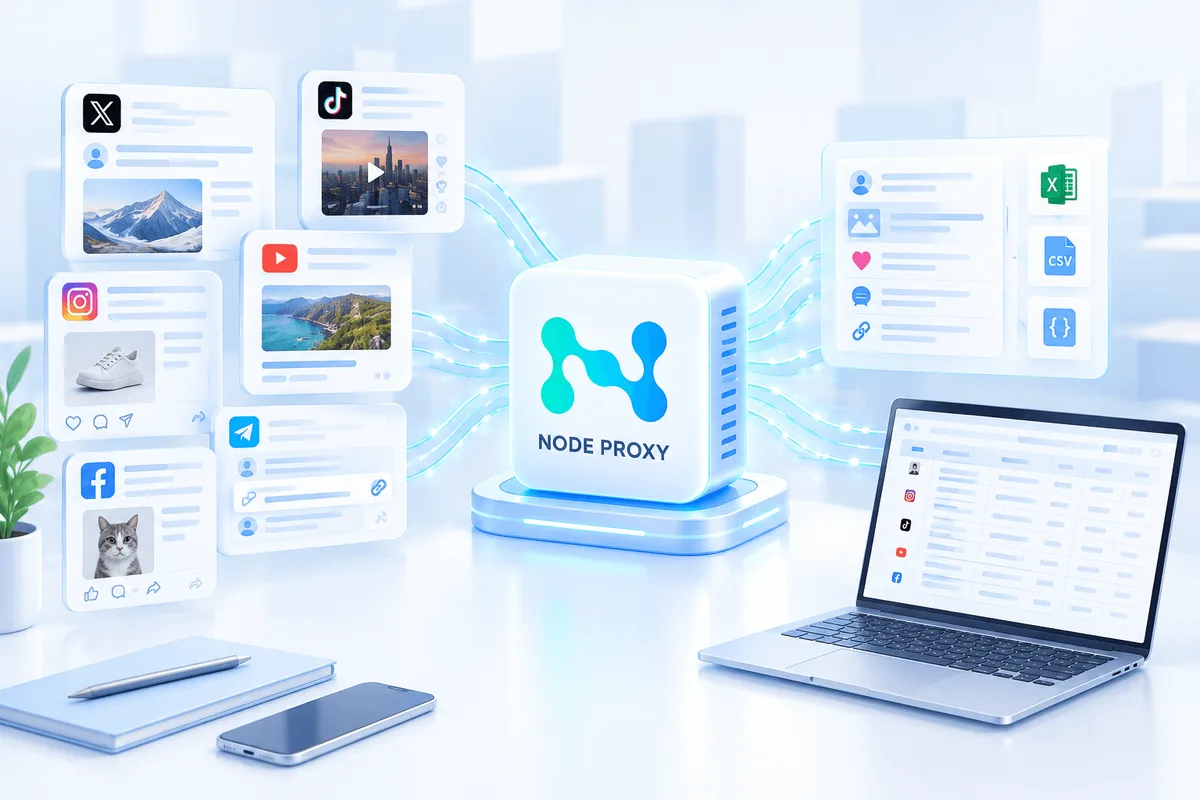
AI helps collect and process large volumes of reviews, comments, and discussions. As a result, a business receives not just a set of messages, but a structured picture: which problems recur, what users praise, and which topics affect product perception. The same applies to collecting data from social networks, where posts and comments are mostly unstructured text.
Marketing and Competitive Research
Scraping is used to monitor publications, product changes, positioning, content activity, and other open signals. If the process is organized correctly, it provides a steady flow of data for analytics without manual monitoring of dozens of sources.
Collection of Industry Information
In research, medical, and analytical projects, automated extraction helps work with large volumes of publications, descriptions, reports, and open materials. AI is especially useful here at the stage of sorting and extracting meaningful fragments.
Preparing Data for Internal Models and Reporting
In many companies, scraping is not used on its own, but as part of an overall system: data is collected, cleaned, combined with other sources, and then transferred to BI tools, recommendation systems, or internal machine learning models.
The Main Advantages of AI Scraping
This approach does indeed have strong advantages, which is why it has become in demand.
- High processing speed. AI scrapers are capable of working with large volumes of information faster than manual processes and faster than many classical scenarios that require constant fine-tuning.
- Reduced volume of routine work. The team does not have to spend as much time on repetitive operations related to data collection and initial cleaning.
- Adaptation to website changes. When page structures change, an AI-based system often remains operational longer than a script with rigid rules.
- Better quality of the final dataset. Due to noise filtering, classification, and normalization, records become more suitable for further analysis.
- The ability to work in a continuous update mode. For tasks where timeliness matters, automated collection followed by processing provides a noticeable advantage.
At the same time, all of these benefits make sense only when the process is manageable and constrained by clear rules.
The Main Disadvantage: Growing Complexity and Risk
The main drawback of AI scraping is not speed, cost, or setup as such. The key problem is that automation increases the likelihood of going beyond the original task.
If a traditional scraper usually extracts strictly specified fields, an AI-based system may capture additional data that it considers useful. As a result, the dataset may include unnecessary text fragments, personal information, sensitive user content, or materials that were not intended for use.
The danger is amplified by scale. An error in a manual process affects a limited volume of information. An error in an automated system is quickly replicated across thousands of pages and turns into a systemic problem. At the same time, the consequences concern not only compliance, but also product quality. If analytics is built or a model is trained on incorrectly collected data, the distortions spread further throughout the entire chain.
That is why the main weakness of AI scraping is not artificial intelligence itself, but the false sense that it can operate without constant human oversight.
What Needs to Be Considered Before Launching a Project
Before starting any AI scraping project, it is worth answering several basic questions.
- What specific data is needed for the task?
Not in general terms, but by fields, types, and sources.
- Does it include any information that requires a special processing regime?
If so, the architecture must be designed with this in mind from the very beginning.
- Does the collection comply with the rules of the specific website and the company’s internal policy?
This must be checked before launch, not after a disputed situation arises.
- Who will use the collected data, and in what context?
This determines not only the storage structure, but also the level of quality control.
- How will the process audit be organized?
Without logs, source descriptions, and transparent processing logic, it becomes difficult to manage such a system.
The earlier these questions are defined, the lower the chance that the project will turn into an opaque flow of data with unpredictable consequences.
The Role of Proxies in Web Scraping Infrastructure
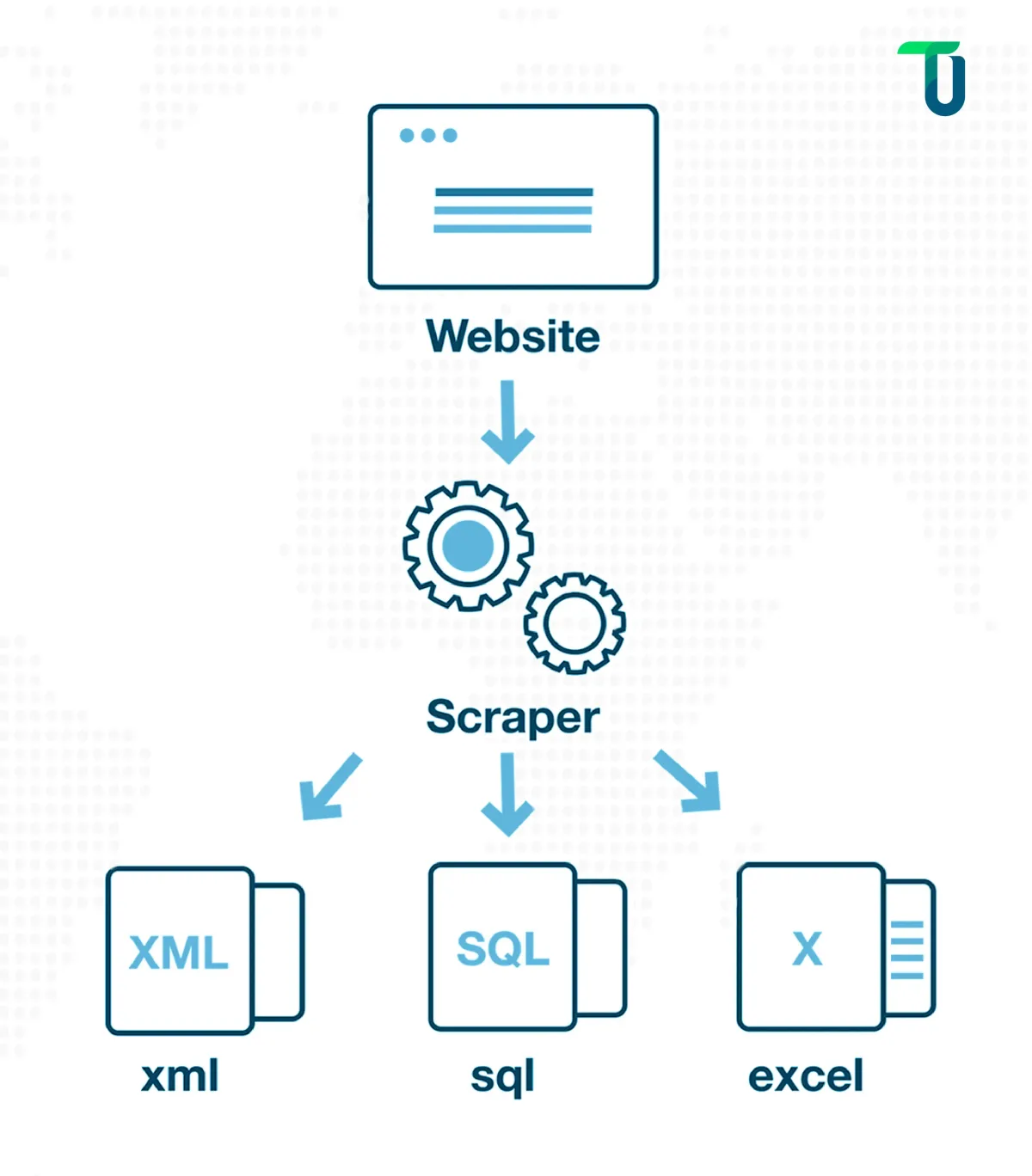
It is also worth mentioning the infrastructural side of the process separately. In web scraping projects, proxies can be used as a way to organize requests more carefully and steadily. In distributed systems, they help distribute traffic evenly, reduce the load on individual nodes, maintain fault tolerance, and manage the geography of connection points if this is necessary for the correct retrieval of publicly available data from different regions. We cover this in more detail in how to reduce the risk of being blocked during web scraping.
For business, this is important primarily from an operational standpoint. When data collection runs continuously, the infrastructure must be predictable: with request rate control, logging, error monitoring, and the ability to scale the load flexibly. In such a scheme, proxies become part of the technical architecture alongside task queues, logging systems, and data cleaning mechanisms. By themselves, they do not solve issues of quality, legality, or the ethics of data collection, but they help build a more stable and manageable process. For such workloads, residential proxies and rotating proxies are the most common choice.
How to Build a Working Strategy
In practice, a sustainable approach is built around several rules.
Define the Boundaries First, Then Automate
It is necessary to define in advance the permissible categories of data, sources, collection frequency, and use cases. This should be a clear internal framework.
Restrict the Model Not Only Technically, but Logically
The AI system must understand which data should be skipped, which should be considered irrelevant, and which should be sent for additional review. Filters, classifiers, exclusion rules, and post-processing help here.
Document the Sources and Processing Stages
Without this, it is impossible either to maintain quality or to deal with disputed cases. A good project always leaves a trail: what was collected, when, from where, and for what purpose.
Review the Rules Periodically
What was acceptable and useful at the first stage may, over time, stop corresponding to current tasks. Sources change, models change, business goals change. That means the collection process cannot be left without revision.
AI or Traditional Scraping: What to Choose
There is no universal answer. If a project requires high predictability, fine manual tuning, and full control over extraction logic, the classical approach often proves more convenient. It is easier to audit and better suited to stable, well-structured sources.
If, however, the work involves a large volume of unstructured data, frequent layout changes, complex textual arrays, or the need to quickly turn information into an analytical format, AI tools provide a noticeable advantage.
In practice, the best result often comes not from opposition, but from combination. The basic collection layer can remain strictly controlled, while AI can be used where classification, cleaning, enrichment, and adaptation to change are needed.
AI Web Scraping FAQ
What is AI web scraping?
AI web scraping is the automated extraction of data from websites with the help of machine learning, natural language processing and other AI methods. Besides collecting page content, such systems interpret, clean and structure it for analysis.
How is AI scraping different from traditional scraping?
A traditional scraper follows fixed selectors and breaks when the page layout changes. An AI scraper recognizes patterns, adapts to changes more easily and works better with unstructured text.
What are the risks of AI data scraping?
An AI system may collect more than the task requires, including personal or sensitive data, and errors spread quickly across thousands of pages. Clear data boundaries, logging and human review reduce these risks.
Why do AI scrapers need proxies?
Proxies distribute requests across many IP addresses, help access regional versions of public pages and keep continuous collection stable. They are part of the infrastructure, but they do not replace rate limits and quality control.
Conclusion
AI-powered web scraping gives businesses a powerful way to collect and process large volumes of information faster than is possible manually or within strictly template-based scenarios. It helps work with dynamic pages, unstructured texts, reviews, descriptions, and regularly updated sources. But its value is determined not by the level of automation, but by the quality of management.
The stronger the role of AI in the process, the more important it becomes to clearly limit the task, control the types of data being collected, document the system’s actions, and regularly verify the result. This is what a mature approach consists of: using automation not for maximum coverage, but for precise, relevant, and usable data.