Proxies in Web Scraping: How to Choose the Right Data Collection Setup and Avoid Technical Failures
 ·September 19, 2026·6 min read
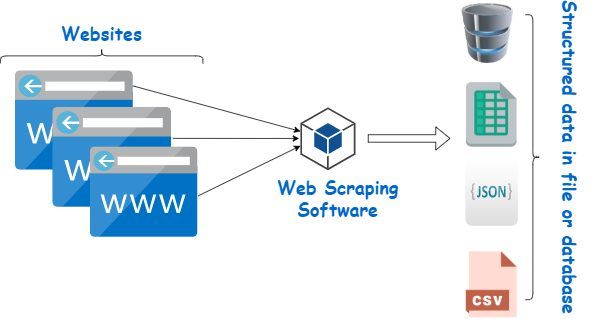
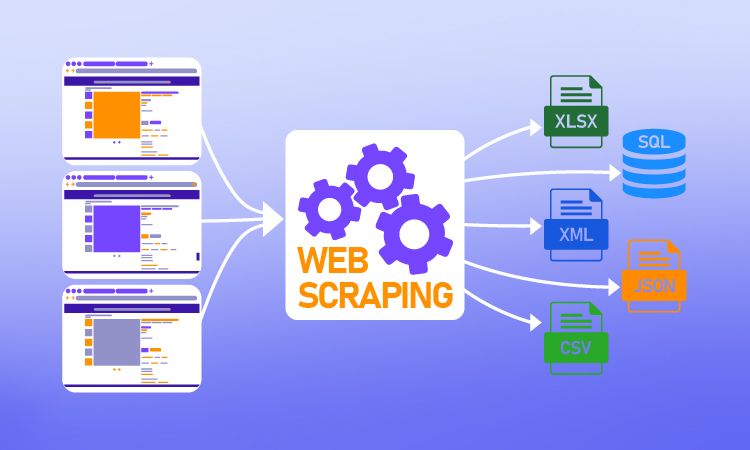
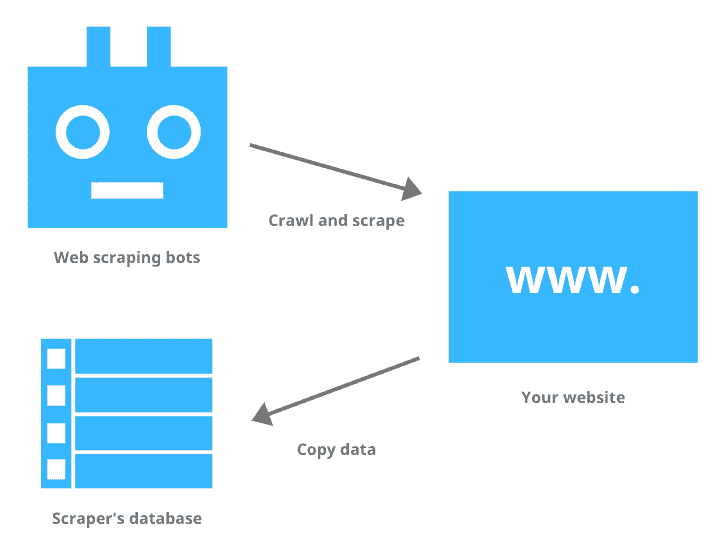
Web scraping is used where data must be collected regularly, in large volumes, and from different sources. Manual collection quickly stops working in such tasks: it is slow, scales poorly, and produces more errors. Automation solves this problem, but it brings another one with it: websites track atypical activity, limit request frequency, and block connections if the load looks suspicious. In this context, proxies are not an additional tool, but one of the basic parts of data collection infrastructure.
A proxy server acts as an intermediary node between the scraper and the target website. The request passes through it first and only then goes to the required resource. As a result, the site sees not the address of the original machine, but the proxy IP. For web scraping, this is important for several reasons. First, it becomes easier to distribute requests across different IPs and avoid limits associated with a single address. Second, it makes it possible to access websites as if the traffic were coming from a specific region. Third, such a setup allows for scalable data collection, where the load is not concentrated at a single point.
The core idea here is to manage the scraper’s network profile. If dozens, hundreds, or thousands of requests are sent in sequence from a single IP, this looks like automated activity. If requests are distributed, the frequency is controlled, and the access pattern itself is arranged carefully, the probability of strict restrictions becomes noticeably lower. That is why proxies in web scraping are primarily a tool for load distribution and resilience management.
Infrastructure for Crawling and Scraping
Residential and datacenter proxies for automated information collection from the web.
What Tasks Proxies Solve in Data Collection
The main task of proxies is to reduce the risk of blocks during large-scale information extraction. It is not difficult for websites to detect repetitive requests from a single address, especially if they are repeated at high speed. When requests go through a proxy pool, the load is distributed, and each individual point looks less suspicious.
The second task is working with geographically dependent content. Many websites show different content depending on the user’s country, city, or language. This is especially important for price monitoring, local search results, product catalogs, job listings, transportation services, and travel services. Without proxies, in such scenarios it is difficult to obtain data exactly in the form in which it is seen by a user from the required region.
The third task is scaling. As long as the project is small, a few connections and manual setup may be enough. But as request volume grows, a system is needed that can change IPs, track errors, redistribute the load, and maintain stable scraper operation over a long period of time.
IPv4 and IPv6: What to Consider in Practice
When choosing proxies, not only the IP type matters, but also the version of the internet protocol. Today, IPv4 and IPv6 are used. IPv4 still remains the main standard for most websites and services. Addresses in this format are limited in number, which is why they are more expensive and more valuable in commercial proxy infrastructure.
IPv6 provides an incomparably larger pool of addresses, but in web scraping its use depends not on theoretical advantages, but on the compatibility of the target site. If the resource works correctly with IPv6, this option can reduce proxy costs. But if support is limited or unstable, the scraper will still have to be built on IPv4. Therefore, the choice between IPv4 and IPv6 is not a question of protocol novelty, but a question of practical compatibility with a specific target.
HTTP, HTTPS, and SOCKS: How Proxy Protocols Differ
For web scraping tasks, HTTP, HTTPS, and SOCKS proxies are used most often. The difference between them is related not only to the data transfer format, but also to what traffic they serve and how they fit into the project architecture.
HTTP proxies are suitable for ordinary web traffic and typical scenarios where the scraper works through HTTP requests to pages or APIs. This is a common and straightforward option, especially if the project relies on standard request libraries.
HTTPS proxies work on the same principle, but through a secure connection. If it is important in the process to transfer data over an encrypted channel, this option is preferable.
SOCKS proxies operate at a lower level and support different types of traffic, not only HTTP. SOCKS5 is used most often. This protocol is convenient where a more universal way of routing connections is needed, including for non-standard scenarios and certain types of browser automation.
We covered the differences between SOCKS5 and HTTP proxies, how they work, and how to choose the right option for different use cases in a separate article.
In practice, protocol choice is more often determined by compatibility with the tool stack than by abstract advantages. If a library or infrastructure works more simply and more stably with HTTP, there is no problem in that. If a more flexible transport layer is needed, it makes sense to look toward SOCKS5.
Main Types of Proxies for Web Scraping
The choice of proxy type affects three parameters at once: cost, probability of being blocked, and connection stability. There is no universal option — the appropriate type is determined by the nature of the website, the request volume, and the session requirements.
Datacenter Proxies
This is the most affordable and usually the fastest type of proxy. Such IPs are issued from datacenter infrastructure and are well suited for large-scale data collection from websites without strict anti-bot protection. Their advantages are high speed, low latency, predictability, and relatively low cost.
The downside is that such addresses are more often recognized as technical infrastructure rather than ordinary user connections. Therefore, for sensitive platforms where traffic quality is analyzed, a datacenter proxy pool alone is often not enough.
Residential Proxies
Residential IPs are tied to addresses that internet providers assign to ordinary user devices. Because of this, they look more natural to websites and are less likely to fall under strict restrictions. That is why they are often used on platforms with stricter protection mechanisms.
But residential proxies also have a downside: they are more expensive, and maintaining the same session can be less stable if the provider builds its infrastructure on address rotation. This is a good option where request success matters more than the minimum cost of each connection.
Static Residential or ISP Proxies
This option is often seen as a compromise between datacenter and residential proxies. On the one hand, such IPs inspire more trust because they are associated with internet providers. On the other hand, they provide more stable operation and a more predictable session than typical rotating residential addresses.
ISP proxies are suitable for tasks where the connection needs to be maintained longer, multi-step scenarios must be completed, and reliability must not be lost in the process. They usually cost more than datacenter proxies, but less than the most complex mobile configurations.
Mobile Proxies
Mobile proxies use IPs belonging to mobile operator networks. Such traffic is often perceived by websites as less risky, especially on platforms with a pronounced mobile audience. For this reason, mobile proxies are considered one of the most resilient options from the standpoint of passing anti-bot filters.
However, they are expensive, not always fast, and less suitable where long-term fixation of a single session is needed. They are used selectively — when conventional setups no longer provide an acceptable percentage of successful requests or when the target strongly depends on the mobile environment.
What Proxy Rotation Is and Why It Is Difficult to Scale Without It
Even a good proxy pool does not produce an effect by itself if the scraper uses addresses monotonously. Under serious load, IP rotation is needed — changing the address either for every request or according to a certain rule: after a set number of requests, by time, by page type, or in response to an error.
Rotation reduces the risk that a website will associate a large volume of activity with a single source. This is especially important when crawling catalogs, product pages, search results, forums, and other large sets of pages. If requests are distributed across a pool of addresses, the load looks less concentrated, and blocking one IP does not stop the entire process.
Rotation can be manual or automatic. Manual setup is suitable for tests, local tasks, and small experiments. But as soon as continuous data collection is involved, automation becomes indispensable. The scraper must independently choose an address, track failed attempts, exclude problematic proxies, and retry requests according to clear rules.
How to Integrate Proxies Into a Scraper
Technically, proxy integration depends on the stack being used. In simple projects, it is enough to specify the host, port, and, if necessary, authentication parameters in the HTTP client settings. This is how proxies can be connected to requests in Python, Node.js, and other popular environments.
But substituting a proxy into a request by itself is only the basic level. Stable operation usually requires separate pool management logic: selecting an address, controlling the number of attempts, handling timeouts, reusing connections, collecting success statistics, and excluding unstable nodes. Without this, even an expensive proxy pool quickly turns into a source of failures.
If a website returns content only after JavaScript execution, HTTP requests alone may not be enough. In such cases, headless browsers are used. They make it possible to wait for full page rendering, execute client-side scenarios, and extract data after dynamic elements have loaded. But browser automation comes at a cost: it is significantly heavier in terms of traffic and resources, which means proxy and budget requirements are higher here.
Why Blocks Occur Even When Proxies Are Used
A common mistake is to assume that the presence of proxies automatically solves the detection problem. In practice, websites analyze not only the IP, but also the overall request behavior. Even a good address pool will not help if the scraper accesses the site too quickly, always with the same headers, without pauses, without cookies, and without logic resembling a real user session.
To reduce the risk of restrictions, several measures are usually applied at once:
• add random delays between requests;
• change the user-agent and other headers;
• distribute requests across addresses and do not overload one IP;
• handle cookies and session data correctly;
• monitor response codes and reduce intensity when there are signs of restriction;
• do not access pages with increased protection or complex multi-step scenarios unnecessarily.
If the server starts returning errors, showing CAPTCHA, or returning 429 Too Many Requests, this is a signal not only of an IP problem, but also that the scraper’s behavior as a whole needs to be reconsidered.
CAPTCHA, Anti-Bot Mechanisms, and Behavioral Signals
Modern websites are not limited to basic IP-based filtering. They check client behavior, the sequence of actions, browser profile, the nature of headers, session stability, and other signs of automation. Therefore, proxies are only part of the solution.
In practice, what helps is not aggressive expansion of the address pool, but a more careful request architecture. The less the scraper differs from a predictable browser-based scenario, the higher the chance of stable operation. For dynamic and protected websites, this is often not enough, so headless browsers, browser fingerprint management, proper cookie handling, and retries based on adaptive rules are brought into use.
It is also important not to treat CAPTCHA as a separate problem. More often, it is a consequence of the fact that the website has already recognized a suspicious interaction pattern. Therefore, it is more effective not to fight each CAPTCHA separately, but to reduce the probability of their appearance through speed control, rotation, IP quality, and the overall plausibility of requests.
Budget and Bandwidth: Where Costs Are Usually Underestimated
The cost of proxies in web scraping depends not only on the tariff price, but also on how much traffic the project itself consumes. This is especially noticeable on dynamic websites, in browser automation, and on pages with a large number of images, scripts, and auxiliary resources.
If the scraper retrieves only the required HTML or targeted data from an API, consumption may remain moderate. But if the project uses a headless browser and loads full pages with all resources, traffic volume increases many times over. As a result, a proxy plan that seems cheap at first glance may turn out to be expensive in actual operation.
Several practical measures help reduce costs: request only the necessary pages, avoid reloading data that has already been processed, cache results, disable unnecessary resources in the browser, filter out images and heavy elements, and use response compression where possible. As the project grows, these small things begin to affect the budget directly.
Typical Problems When Working With Proxies
Even properly selected proxies do not eliminate technical failures. The most common problems are timeouts, authentication errors, unstable speed, limits on parallel connections, and a drop in the percentage of successful requests.
Timeouts usually indicate either an overloaded proxy or a route that is too slow to the target website. In such a case, it becomes necessary either to change the pool or to adjust waiting and retry settings.
Authentication errors are most often associated with incorrect credentials, an improperly assembled connection string, or mistakes in the configuration format.
Low request success is a more complex problem. It may indicate poor IP quality, overly uniform scraper behavior, incorrect rotation, excessive request speed, or incompatibility between the proxy type and the task. A single isolated fix rarely helps here: usually it is necessary to look simultaneously at the network layer, the request logic, and the profile of the target website.
Free and Paid Proxies: Which Is More Cost-Effective in Practice
Free proxies seem like a convenient entry point, but in real projects they almost always lose to paid ones in total cost. Their main problem lies not only in low speed or frequent blocks, but in unpredictability. Today an address works, tomorrow it does not. In addition, such proxies are often already known to websites, used by too many people, and do not provide stable success rates.
For testing an idea or a learning example, this may be enough. But as soon as the task becomes regular, the engineering costs of checking, replacing, and supporting free lists outweigh any formal savings. Paid proxies are more expensive at the outset, but they provide more predictable performance, geotargeting, support, quality control, and ultimately require less manual intervention.
When It Is Better to Use Not Only Proxies, but Also Ready-Made Scraping Services
In some projects, complexity begins to accumulate faster than the data volume itself grows. Rotation must be maintained, CAPTCHA must be handled, JavaScript rendering must be taken into account, sessions must be monitored, browser fingerprints must be updated, and the budget must be controlled in parallel. In such cases, companies often move from a simple proxy pool to specialized scraping services that take on part of the infrastructure tasks.
This approach is convenient when what matters is not so much independently managing every network layer, but obtaining a predictable result. But here everything depends on the task. If the team has a strong engineering base and a clear target with stable requirements, its own proxy-based infrastructure may be justified. If the priority is rapid deployment and reduced operational complexity, a ready-made service proves more practical.
How to Choose Proxies for a Specific Project
Choosing proxies should not be reduced to provider rankings or to the general formula “the more expensive, the better.” It is much more useful to start from the scenario.
- If public data must be collected from relatively simple websites at large scale, datacenter proxies with competent rotation and a sound retry system are often enough.
- If the site is sensitive to traffic quality, analyzes behavior, and strictly restricts automation, it is worth looking toward residential or ISP proxies.
- If geolocation is critical, it is important to check whether the provider has addresses in the required countries or cities and how stably they work in those regions.
- If the project is built on headless browsers, it is necessary to evaluate in advance not only the IP price, but also traffic volume, parallelism, session stability, and support for the required protocols.
Conclusion
Proxies in web scraping are needed not by themselves, but as part of a managed data collection system. They help distribute the load, reduce the probability of blocks, work with geographically dependent content, and scale the project without relying on a single IP address. But scraper stability is determined not only by the proxy type. It is influenced by request frequency, rotation, error handling, session management, dynamic content loading, and the overall profile of client behavior.
For simple tasks, datacenter proxies and basic rotation may be sufficient. For more demanding websites, residential or ISP solutions are usually required, and sometimes full-fledged scraping services with built-in protection against typical restrictions as well. The correct choice here is built not around fashionable categories, but around the specific load, the type of website, and the stability requirements.